Supermarkets and food retail
Entrances where customers and carts frequently move from outside into the sales area.

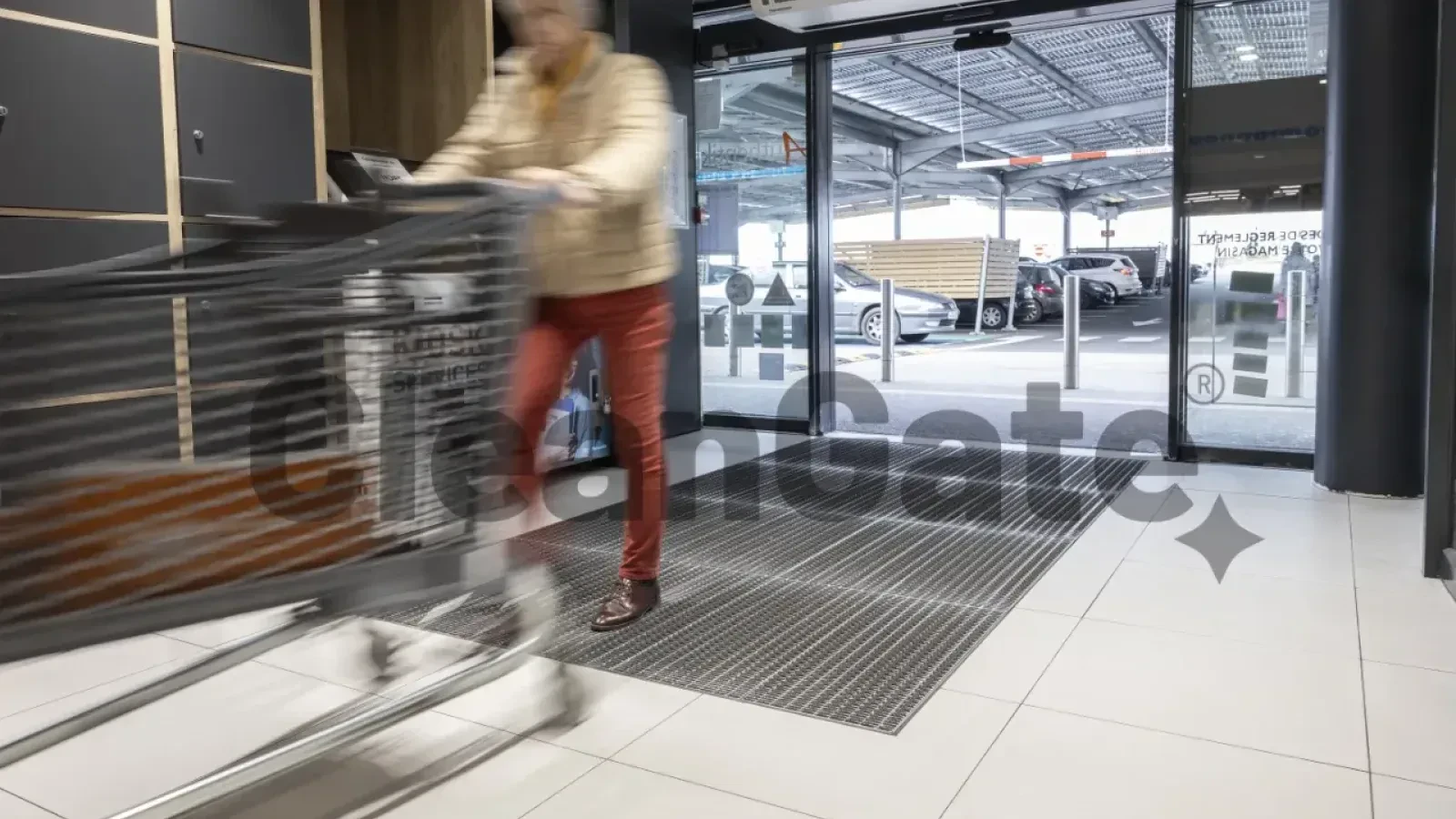
In supermarkets, shopping centres, showrooms and public buildings, water, mud, dust and salt marks appear quickly after the entrance. They do not come only from footwear: carts, trolleys and small wheels carry dirt along the visible customer route.

CleanGate is the active system for soles and small wheels in the ProfilGate family, developed in Germany by HEUTE Maschinenfabrik GmbH & Co. KG for supermarket, retail and high-traffic entrances. SEVENSEAS supports local entrance review, configuration, documentation, installation and service.
CleanGate fits entrances with heavy traffic, weather exposure and small wheels crossing the same area as pedestrians. The difference from a passive surface is controlled mechanical contact with soles and wheels on the route already being used.
A good entrance depends on position, contact length, door integration, cleaning access and who maintains the system after peak periods. Once these details are clear, CleanGate can be compared properly with textile mats, aluminium entrance mats or a combined zone.
CleanGate works well when the active surface sits on the real route, not beside it. Before quotation, review flow, space, doors, small wheels, dirt type and cleaning routine.
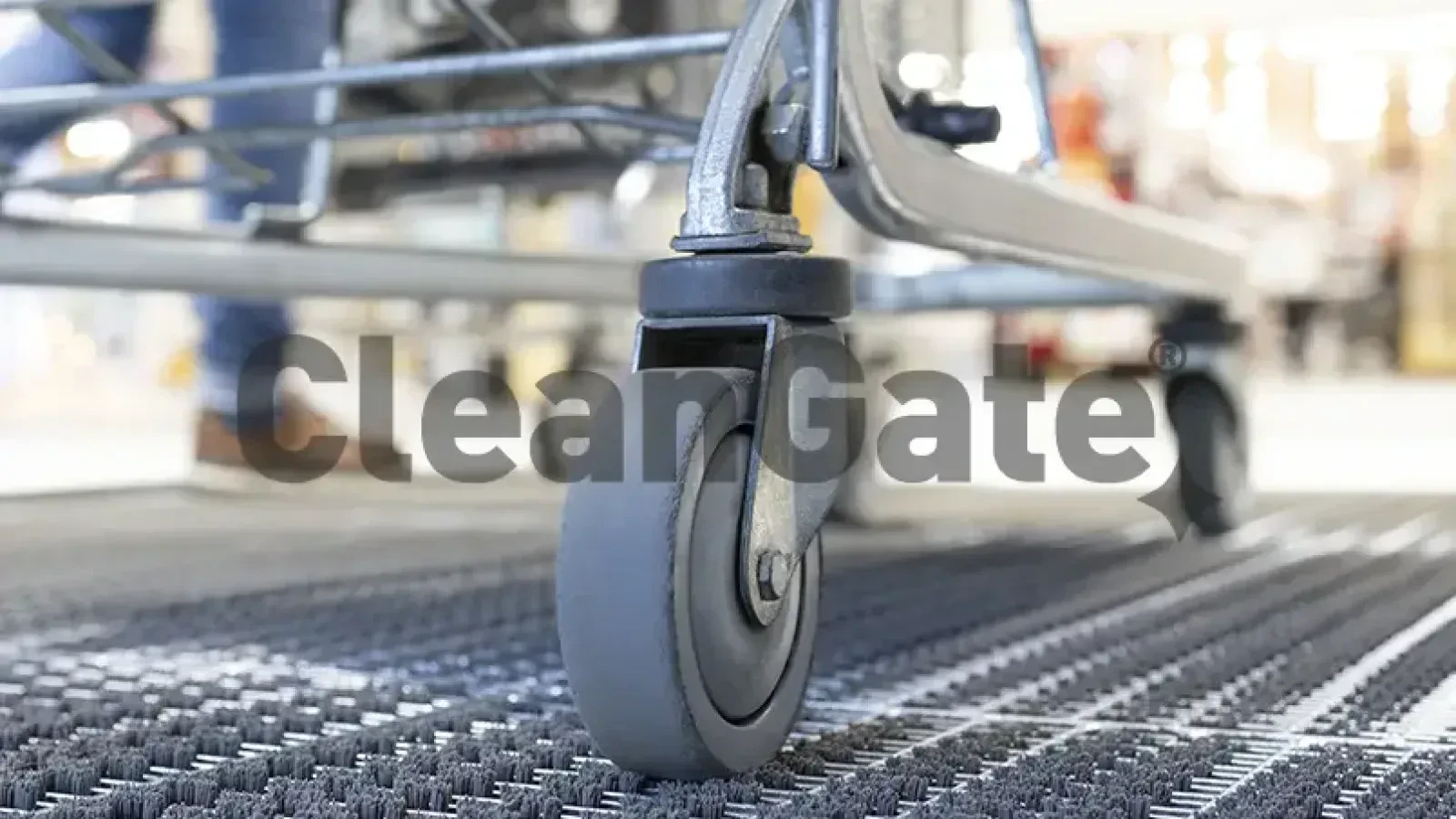
The system works best when pedestrians and carts naturally cross the surface. If the entrance makes bypass easy, performance drops even when the product itself is right.
Doors, vestibule, entrance direction and cart position should be read together. That is where the CleanGate position becomes clear.
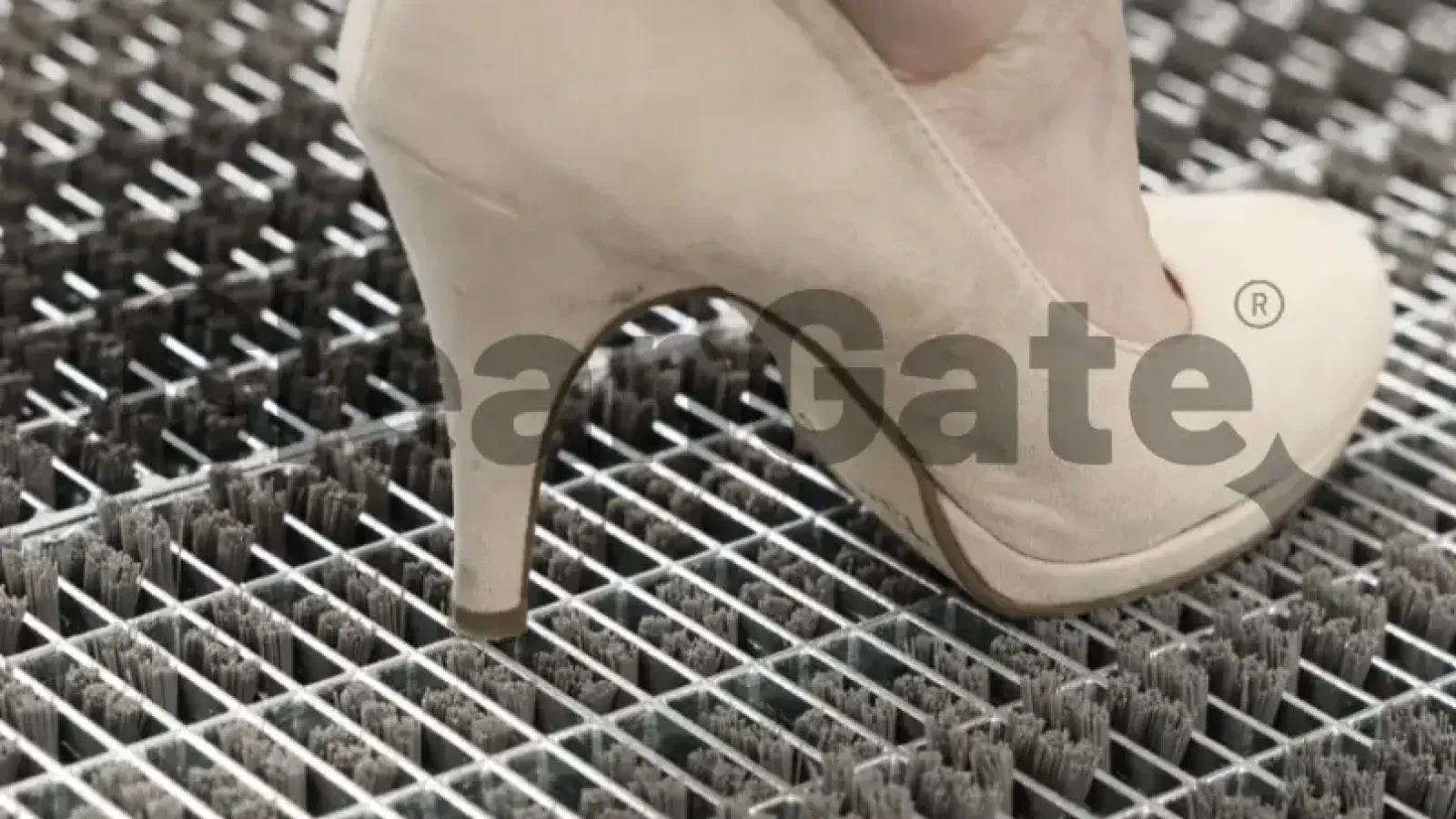
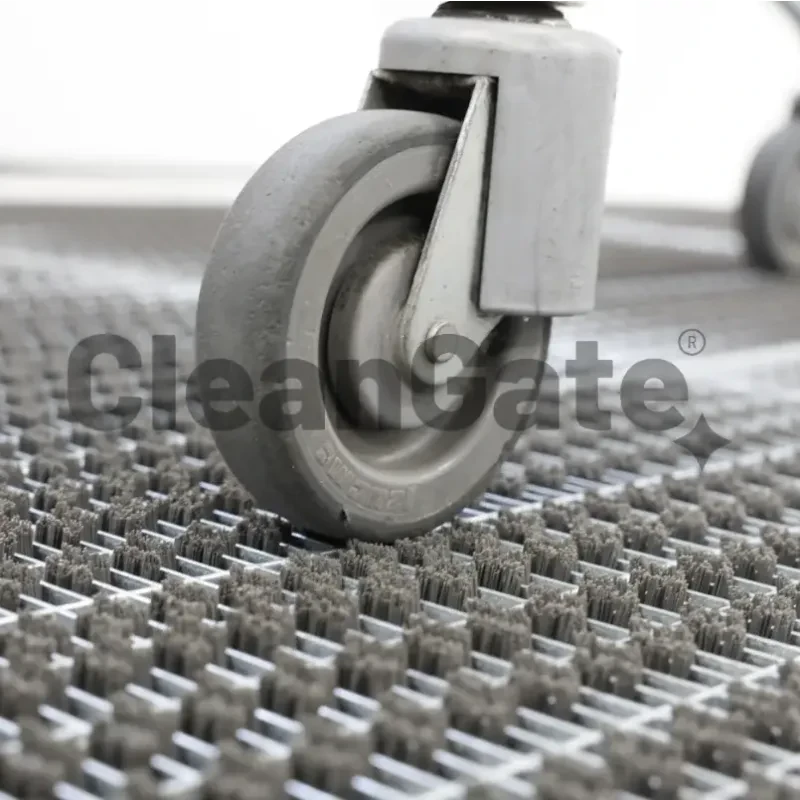
The CleanGate difference is active contact with soles and small wheels. Shopping carts, trolleys, wheelchairs and light deliveries should be treated as part of the flow, not as exceptions.
Contact depends on length, crossing direction, speed and user behaviour. A short zone can look correct in plan and still work poorly during peak traffic.
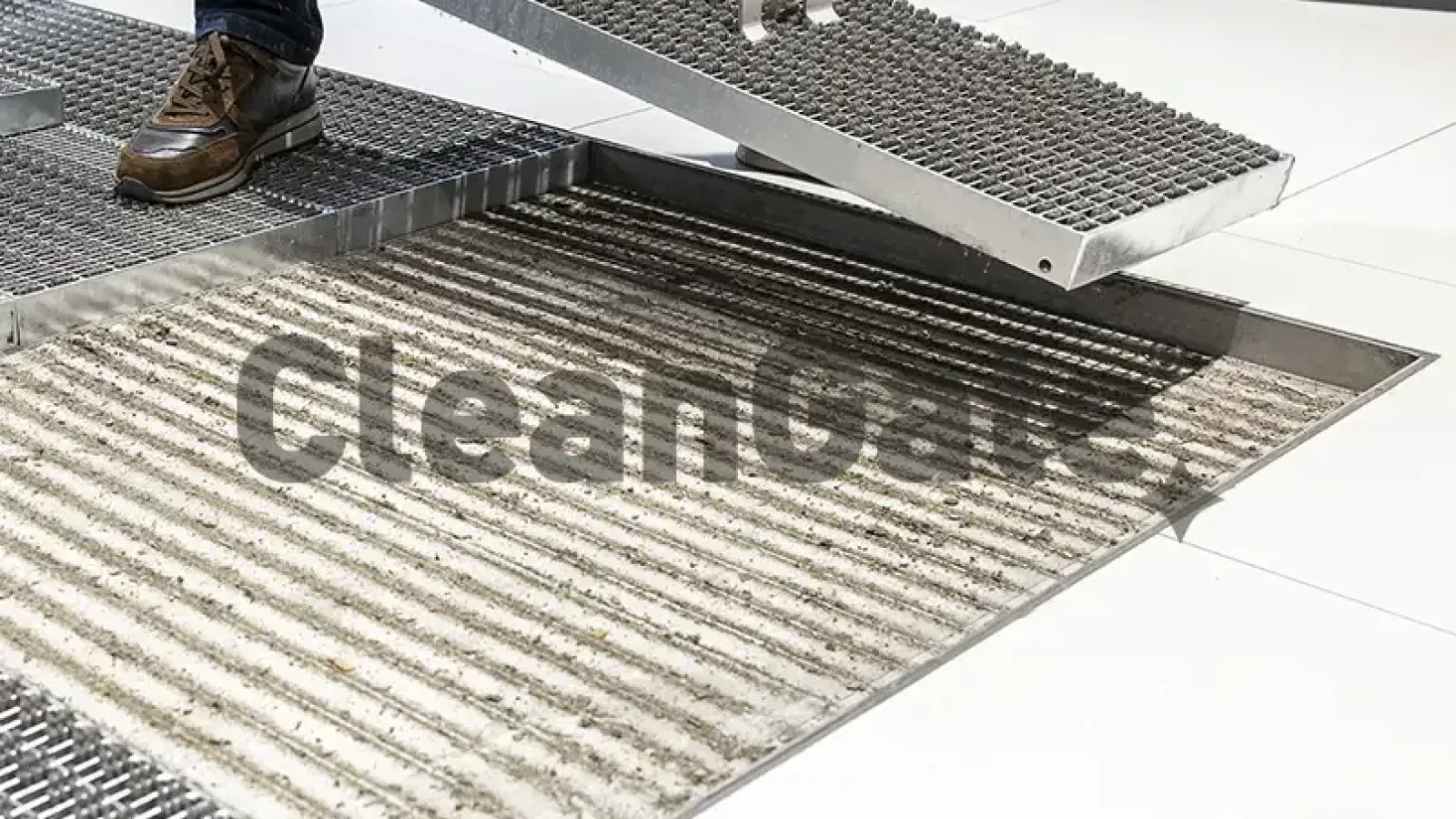
CleanGate collects dirt below the active surface, so cleaning access should be designed from the start. For facility teams, it matters who lifts the grates, when the system is cleaned and how the entrance is returned to use after busy periods.
A good entrance is not judged only on installation day. It is judged by how usable and clean it remains inside the normal building routine.
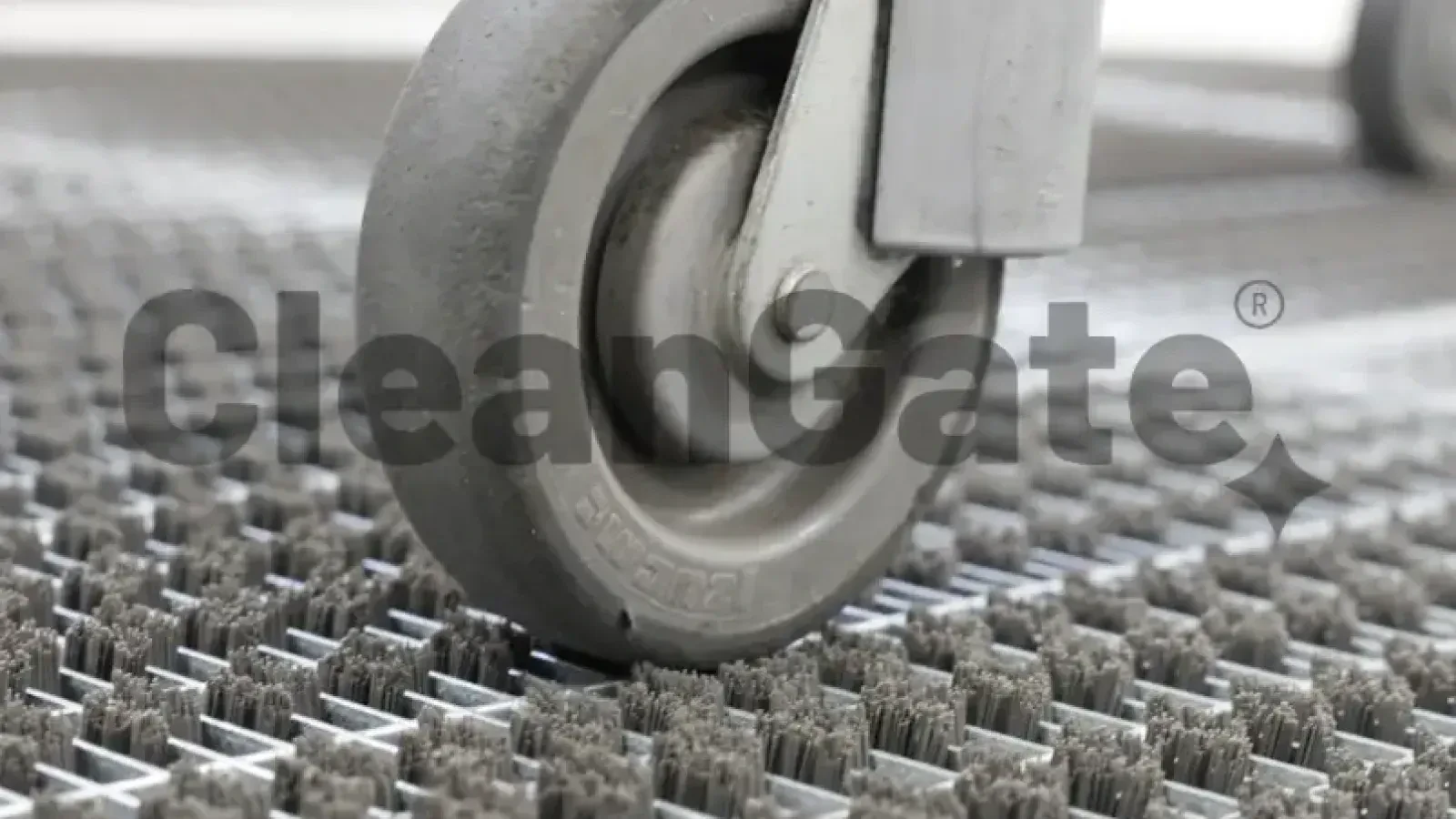
CleanGate does not automatically remove the need for textile or aluminium. In many entrances, the active system reduces dirt and moisture earlier, while textile or aluminium supports drying, finishing and appearance.
The comparison starts from what appears inside: water carried further, cart marks, fine dust, cleaning cost, slip risk or a high visual standard.
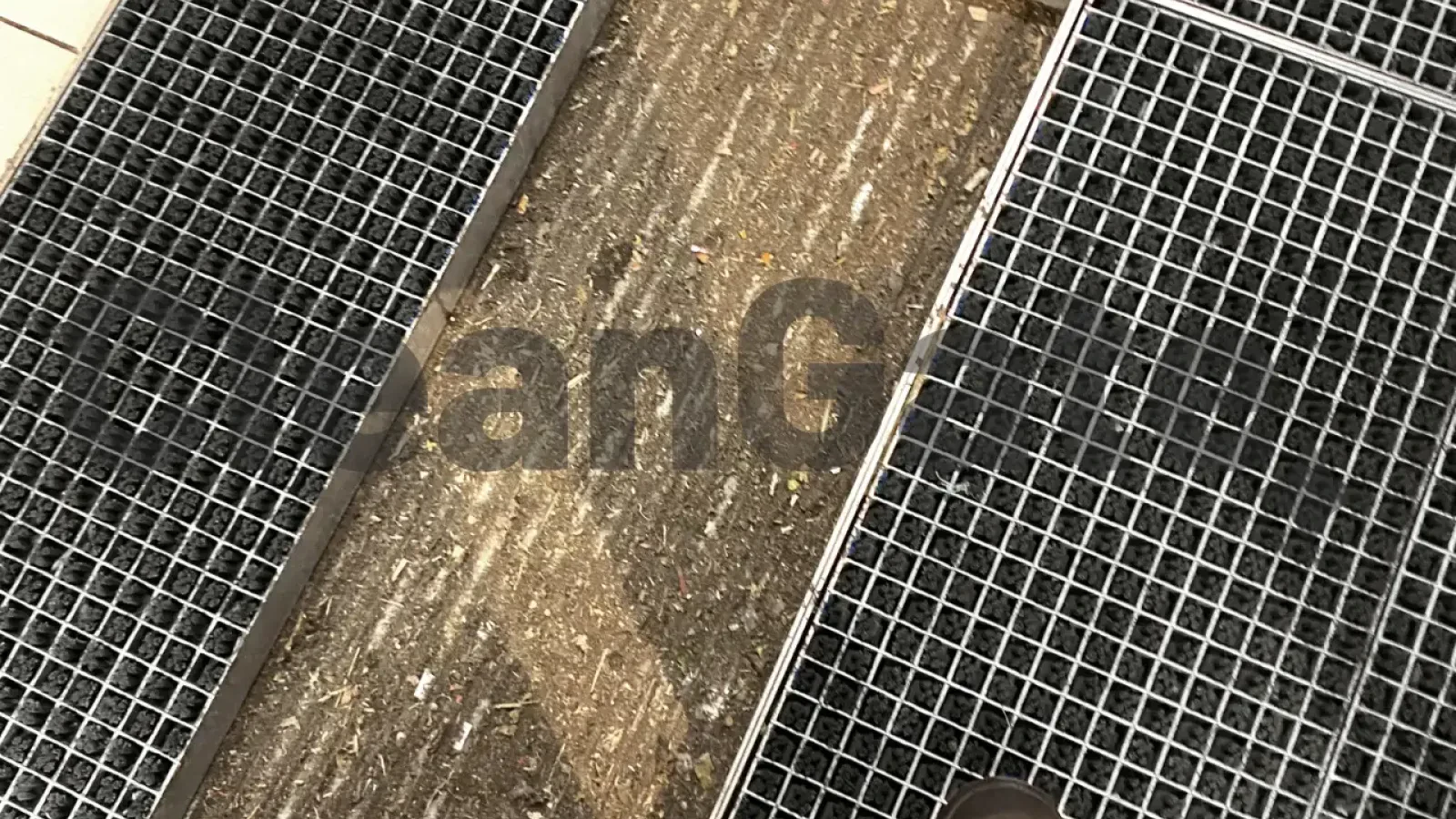
The images show different roles: supermarket route, sole and small-wheel contact, dirt collection and positioning in the access zone.
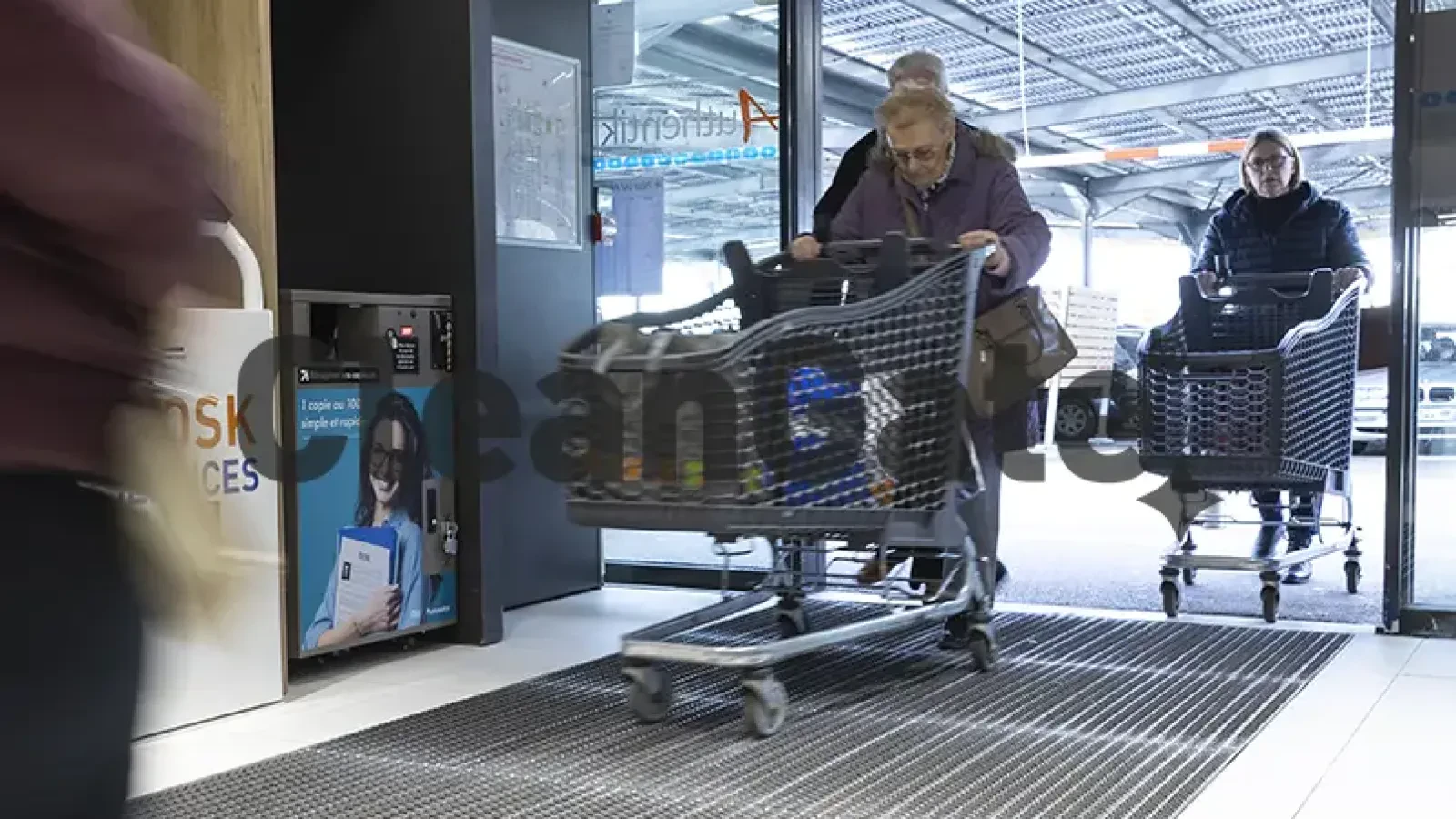
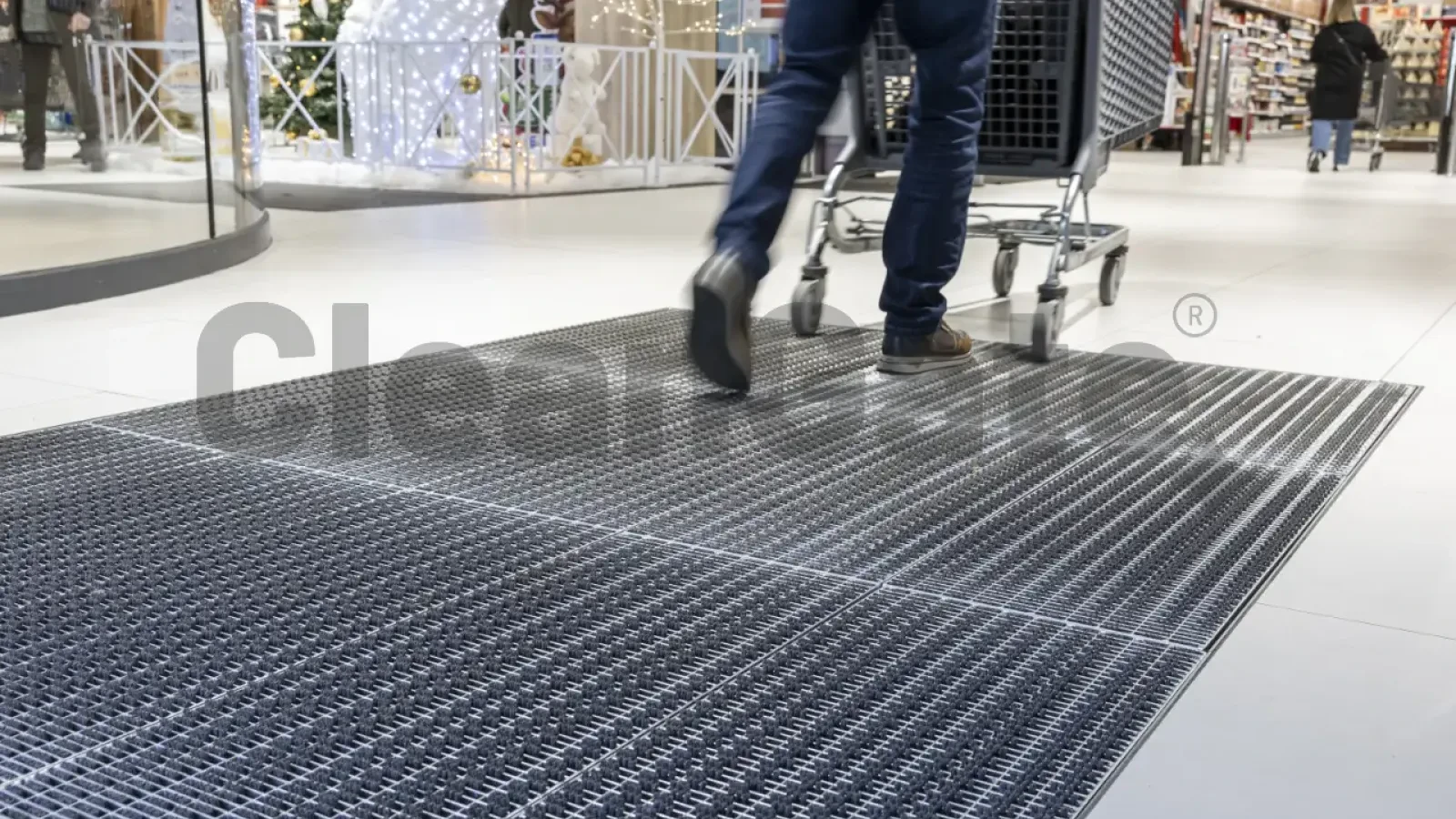
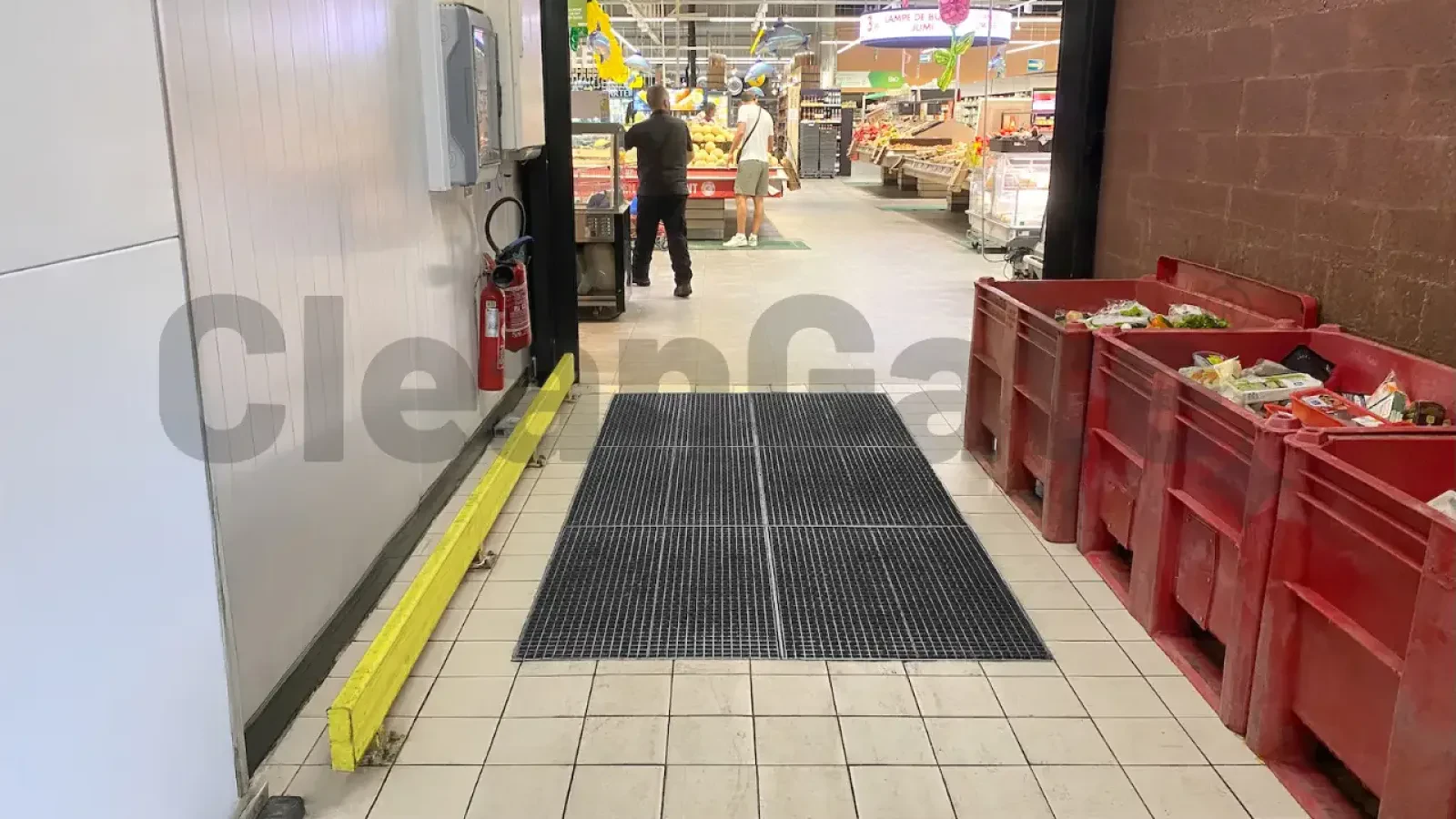






Do you have an entrance where water, mud or small wheels quickly show on the floor?

The strongest fit is where people and small wheels naturally cross the same zone: supermarkets, food retail, shopping centres, showrooms or public buildings with heavy traffic.
Useful signals include visible marks after peak periods, moisture near doors, dirt carried by carts and repeated cleaning without a stable result.
Textile supports absorption and drying, but it works differently from an active system. When the entrance includes carts, trolleys or small wheels, mechanical contact with the wheel matters, not only contact with the sole.
A good comparison checks:
Removed dirt collects below the active area, so grate access and cleaning routine are part of the choice. The team should be able to lift modules, remove collected dirt and return the entrance to use quickly.
Before installation, clarify ownership, frequency, cleaning tools and maintenance windows that do not disrupt traffic.
A first discussion needs practical data: outside and inside photos, available width and length, door type, cart flow, floor, where marks appear and the current cleaning routine.
If good-weather and bad-weather behaviour differ strongly, photos from different days help. They show what needs to be controlled: water, mud, fine dust, salt or small-wheel marks.