
Rack protection and rack damage prevention
Workplace Safety

Rack protection and rack damage prevention

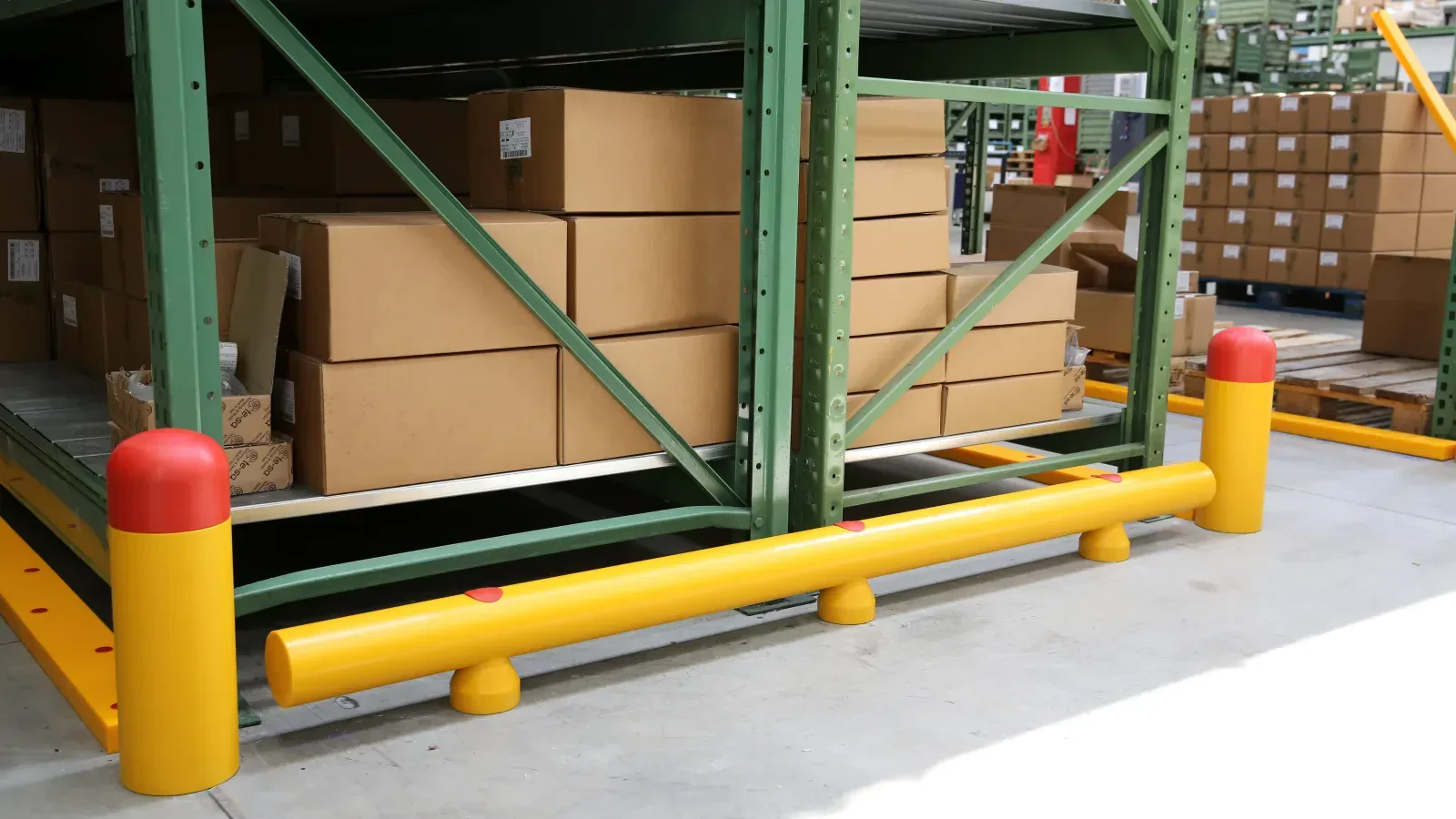
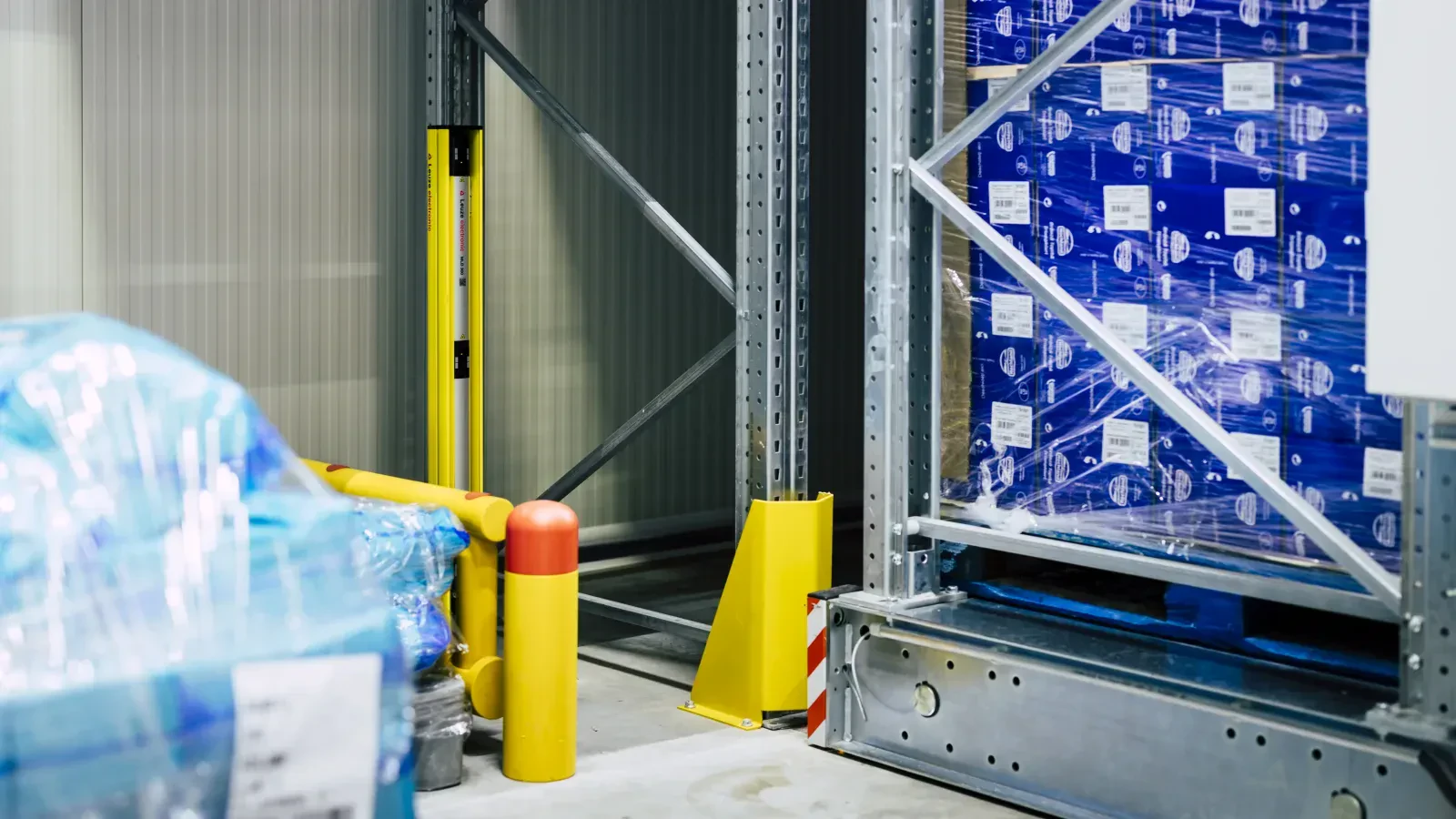
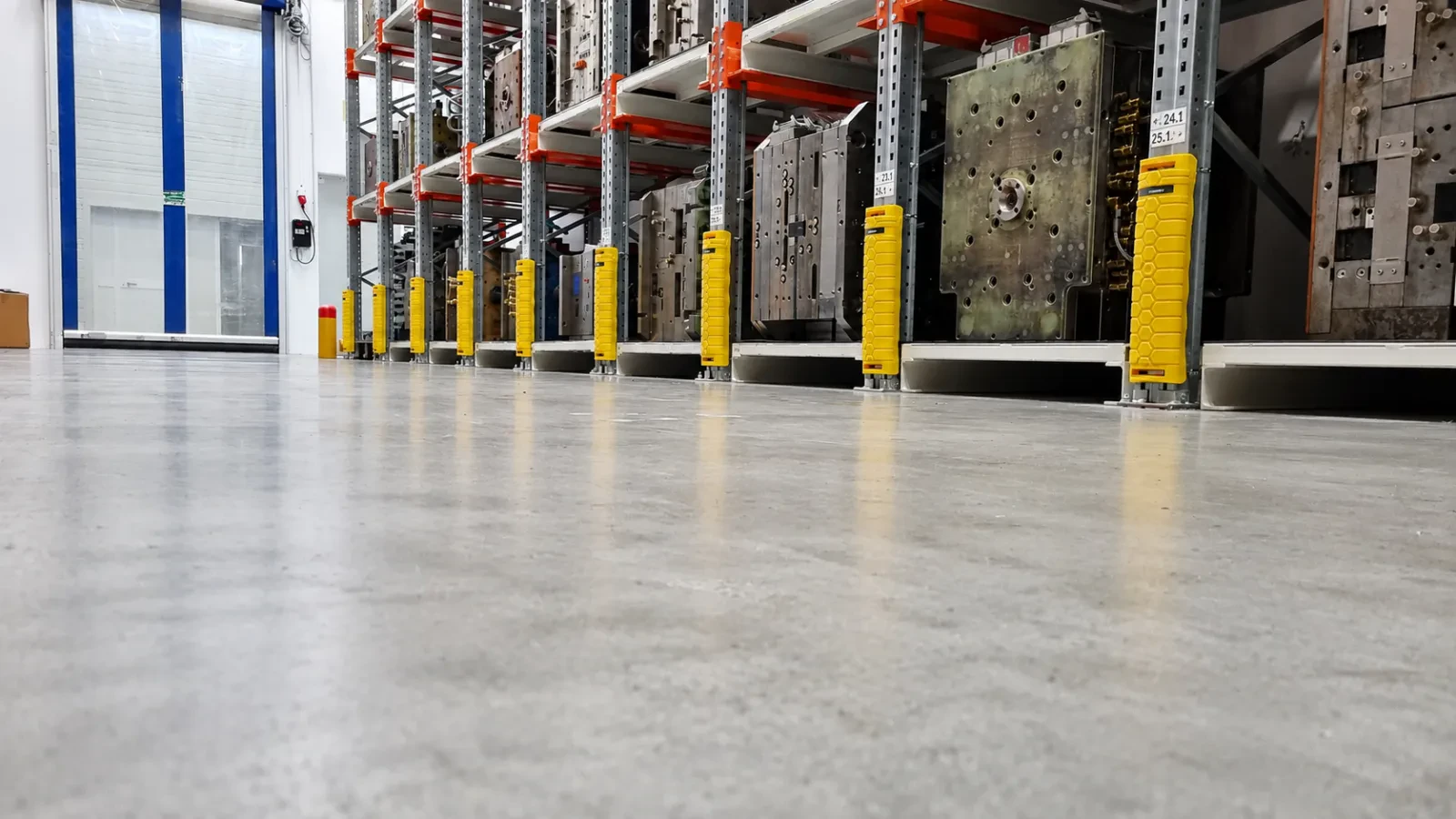
Impact marks at rack ends, uprights or manoeuvring aisles are not just marks on protection. They can show that the route is too tight, speed is hard to control, visibility is weak or the existing protection does not match the real impact scenario.

View rack-protection products

When rack impact becomes a safety issue

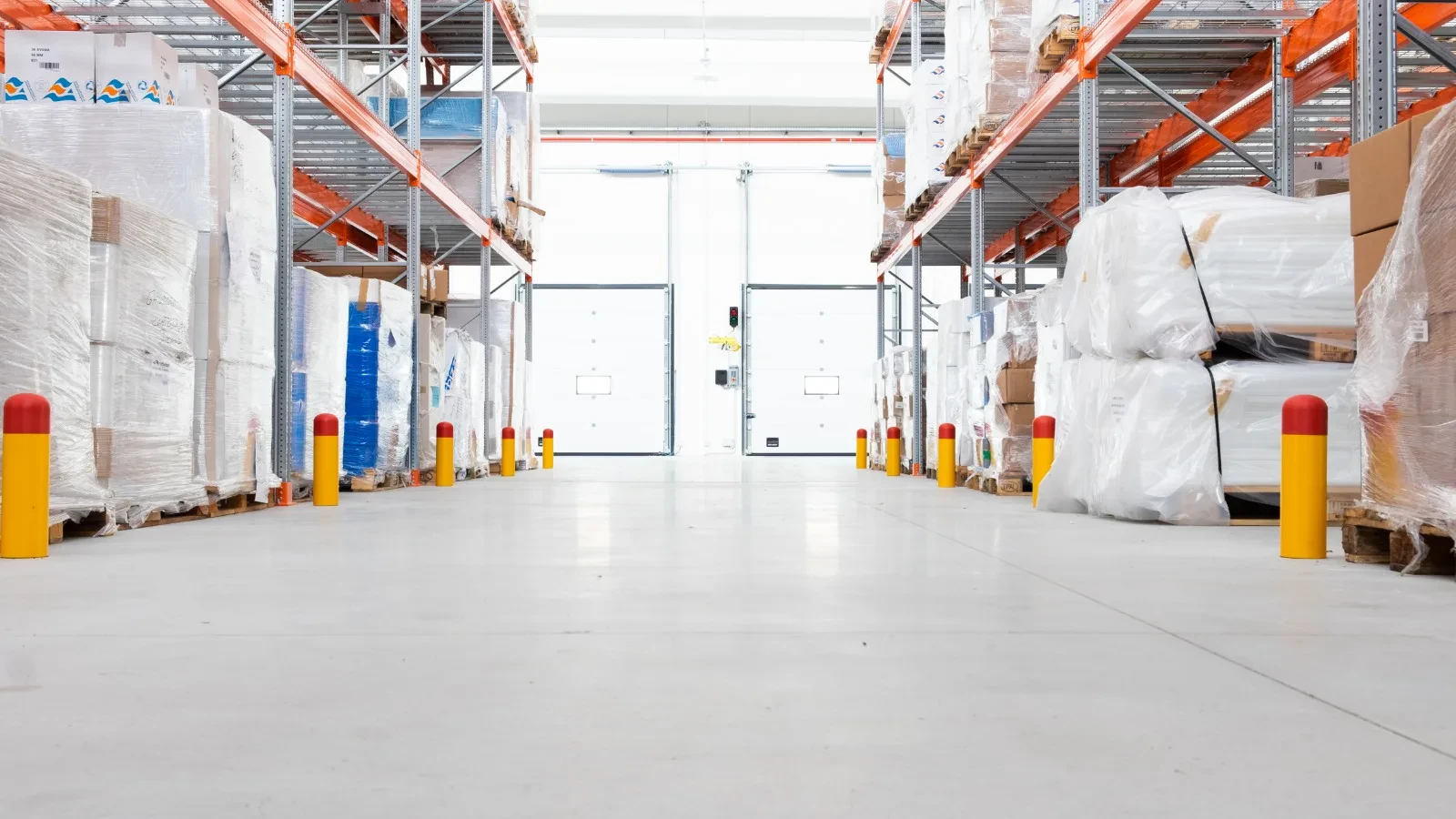
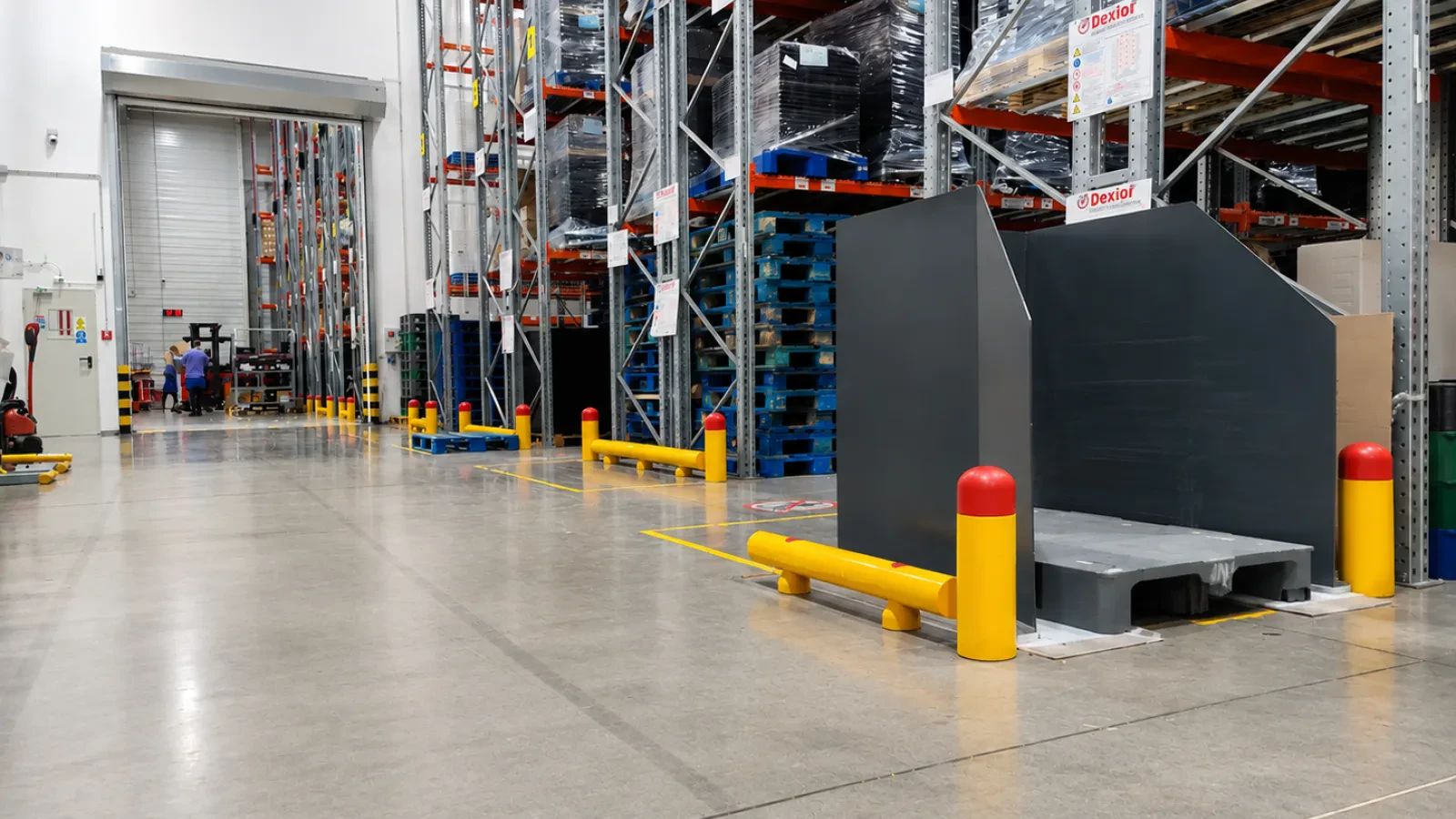
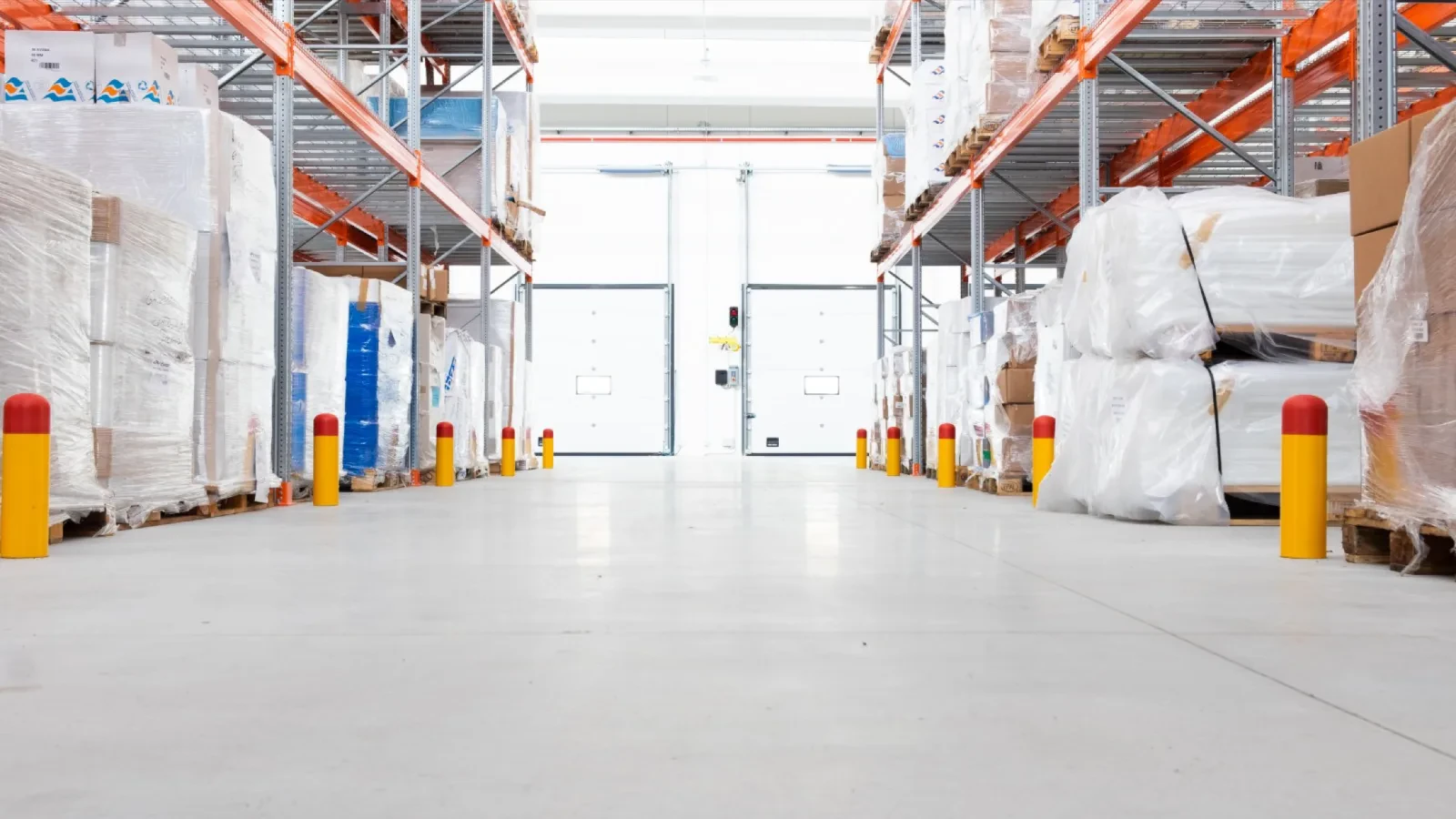
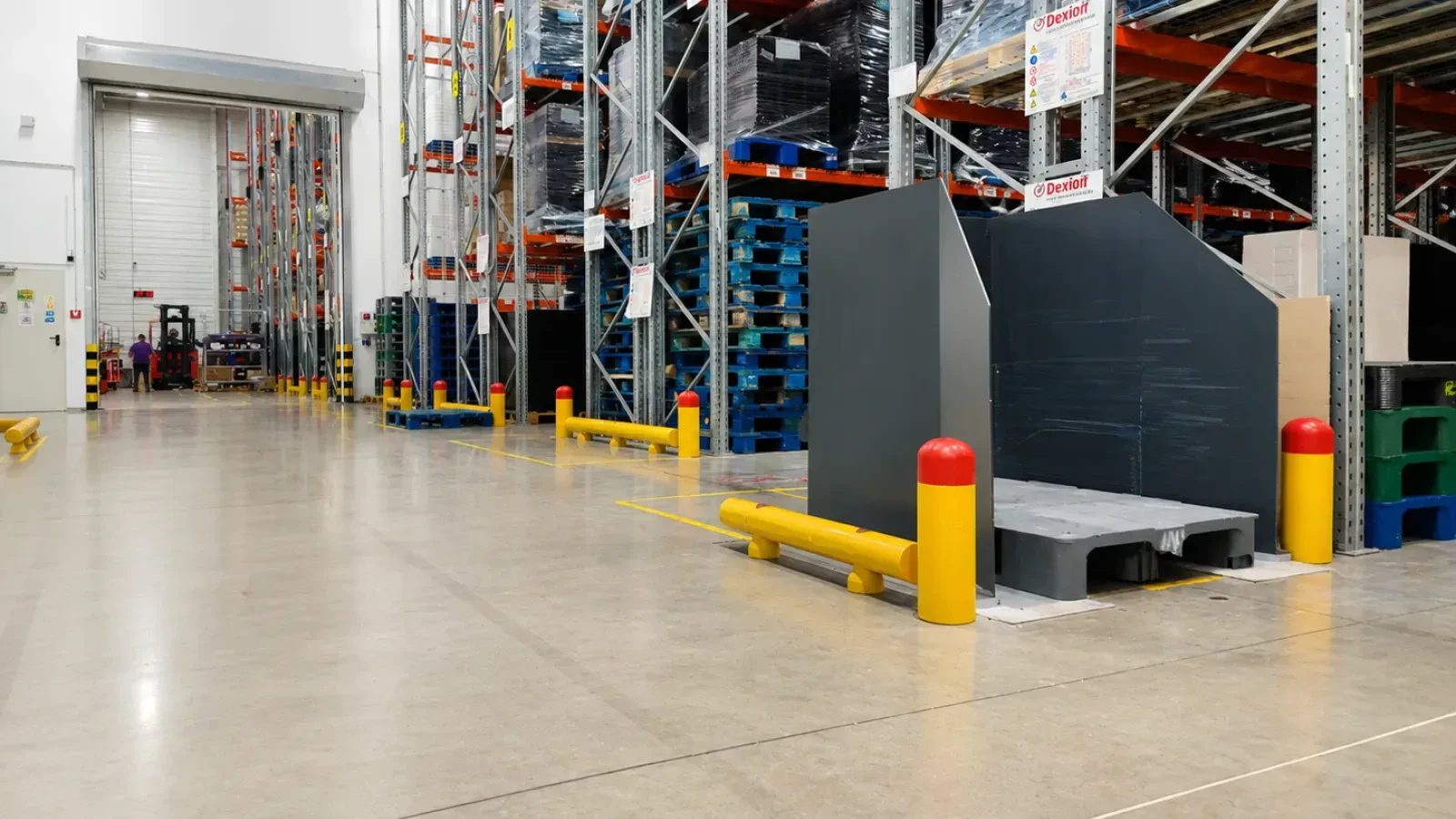
In warehouses and production areas, racking often sits close to manoeuvring aisles, picking zones, loading bays, doors or points where forklifts change direction. A single strike may look like a minor incident. When the same rack ends or uprights have an impact history, the area should be checked before damage reaches the structure, goods, equipment or people.

The right protection is not selected only by height or colour. What matters is where the impact happens, which vehicle enters the area, what load it carries, how it turns, how much manoeuvring space remains and what needs protection: the rack end, upright, corner, wall, door, equipment or nearby pedestrian route.

How to choose the right rack protection

Good protection should match the impact scenario without making the working aisle difficult to use.

Where the impact happens

Where the impact happens

Start with the exact location of the damage: rack end, upright, aisle corner, turning point or picking entrance. The same protection does not behave the same way when impact is frontal, lateral or angled.

When marks appear frequently in the same zone, the route should also be checked: the aisle may be too tight, the turn forced, visibility blocked or correction time too short.

  • rack ends and aisle corners;
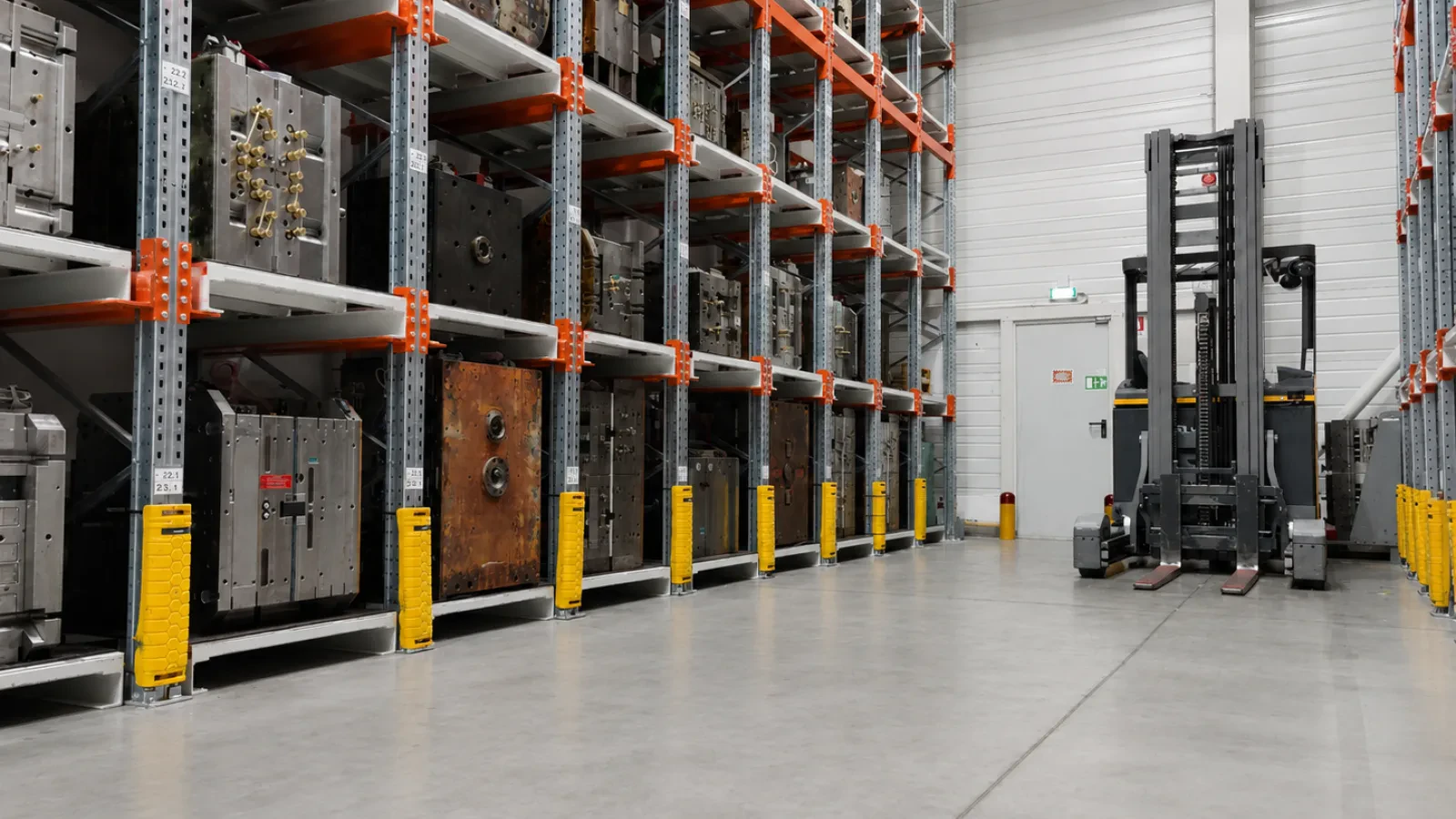
  • uprights exposed at row entries;
  • impact marks concentrated in one area;
Vehicle, load and manoeuvre

Vehicle, load and manoeuvre

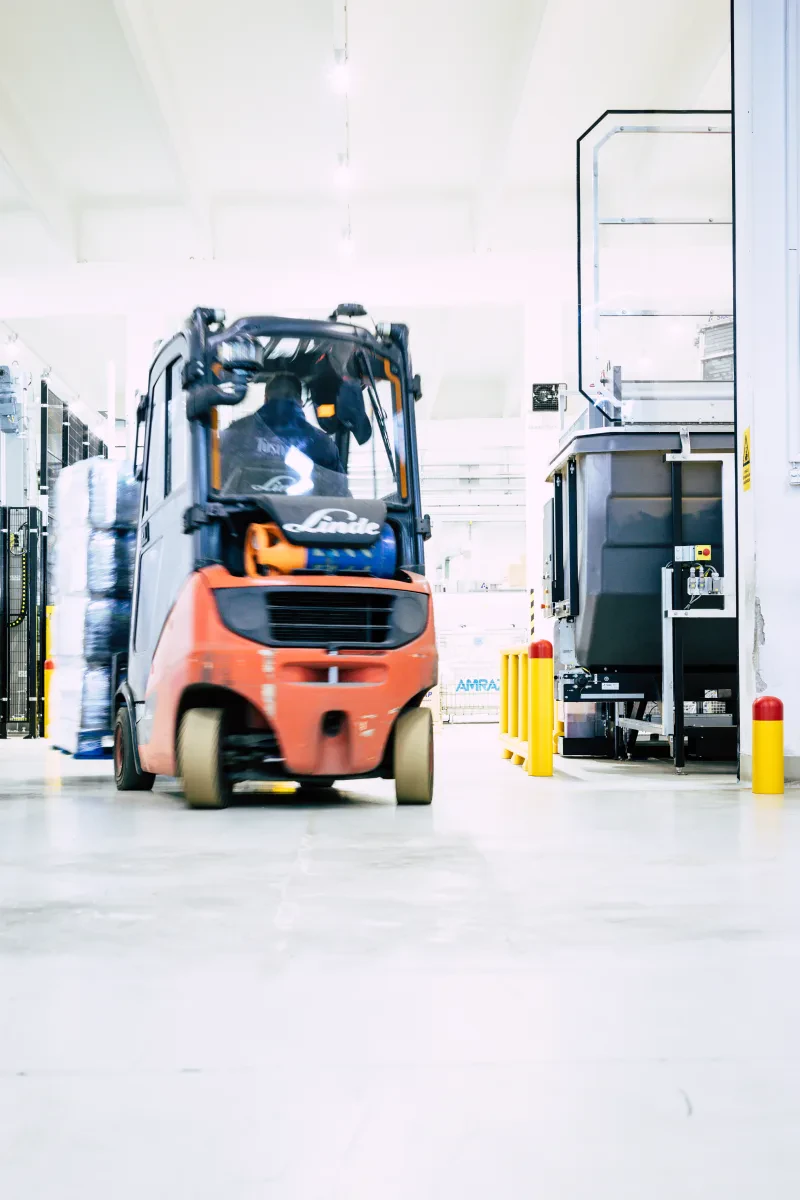
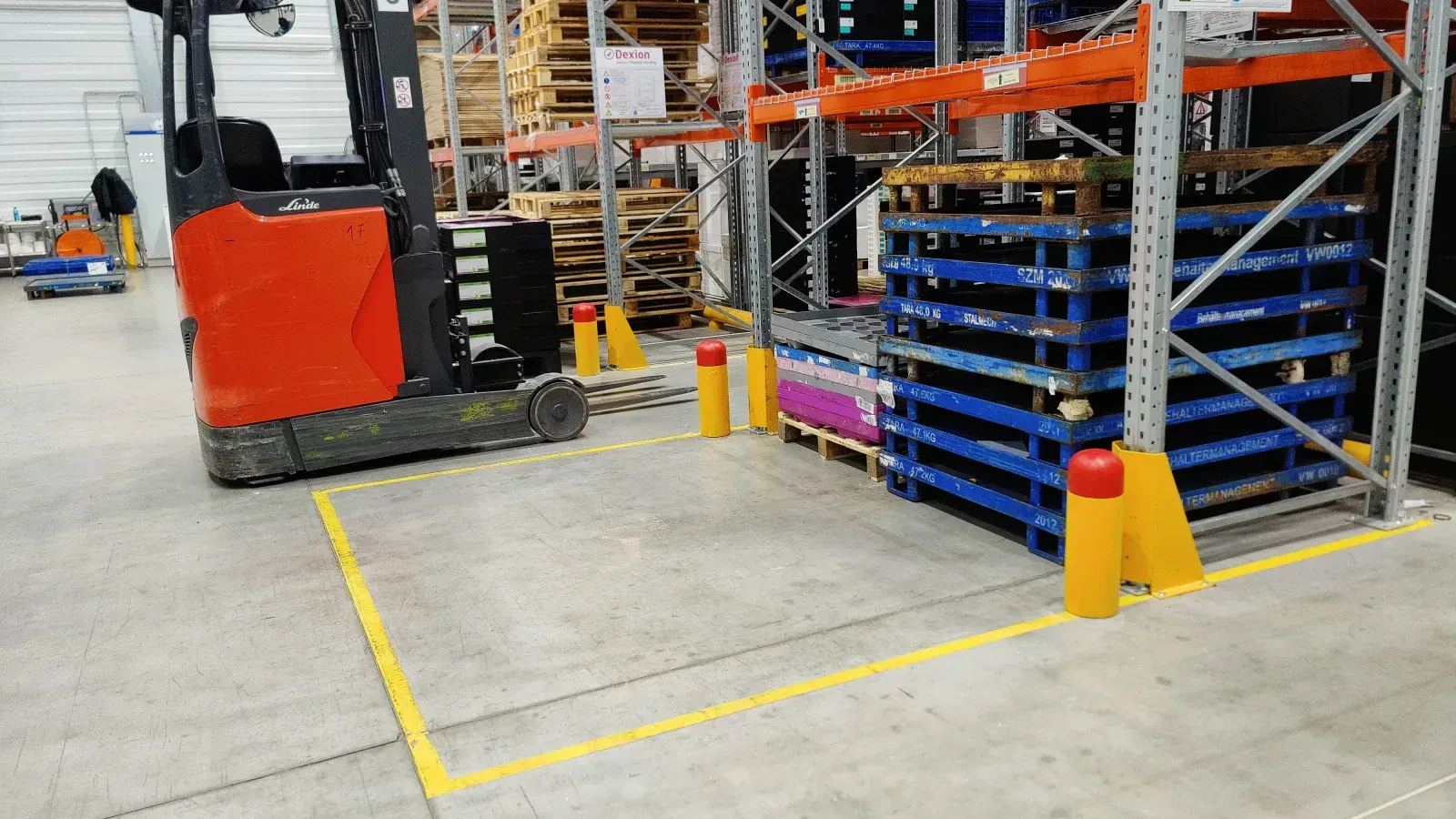
A pallet truck, counterbalance forklift, reach truck or automated vehicle does not strike in the same way. Vehicle mass, speed, carried load, approach angle and turning behaviour change the level of energy the protection needs to manage.

Before comparing products, clarify which vehicles use the aisle, whether they move loaded, turn next to the rack, reverse or carry loads that reduce visibility.

  • vehicle types and loads;
  • speed, turning and reversing;
  • remaining manoeuvring space;
Protecting the rack or the zone

Protecting the rack or the zone

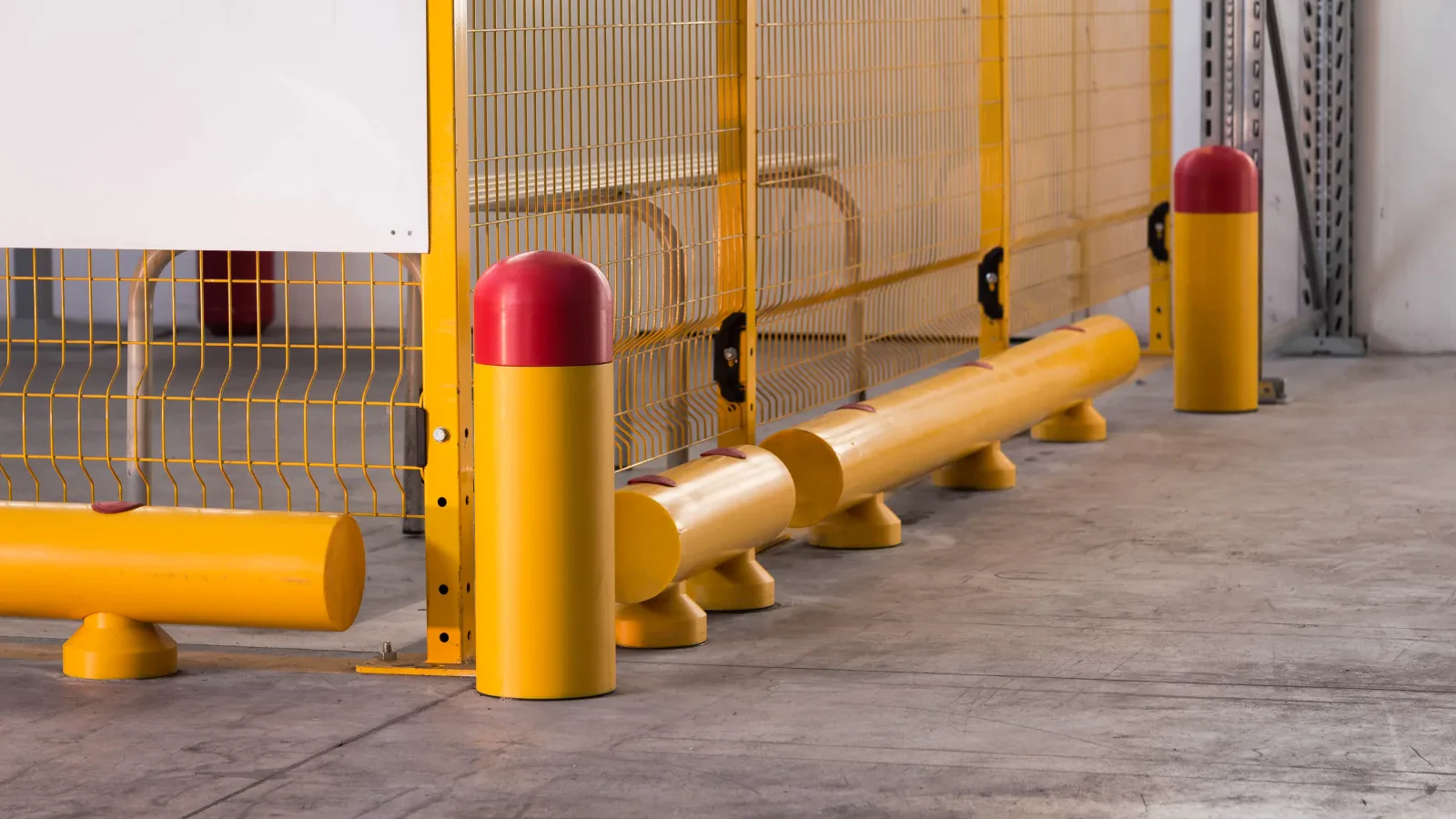
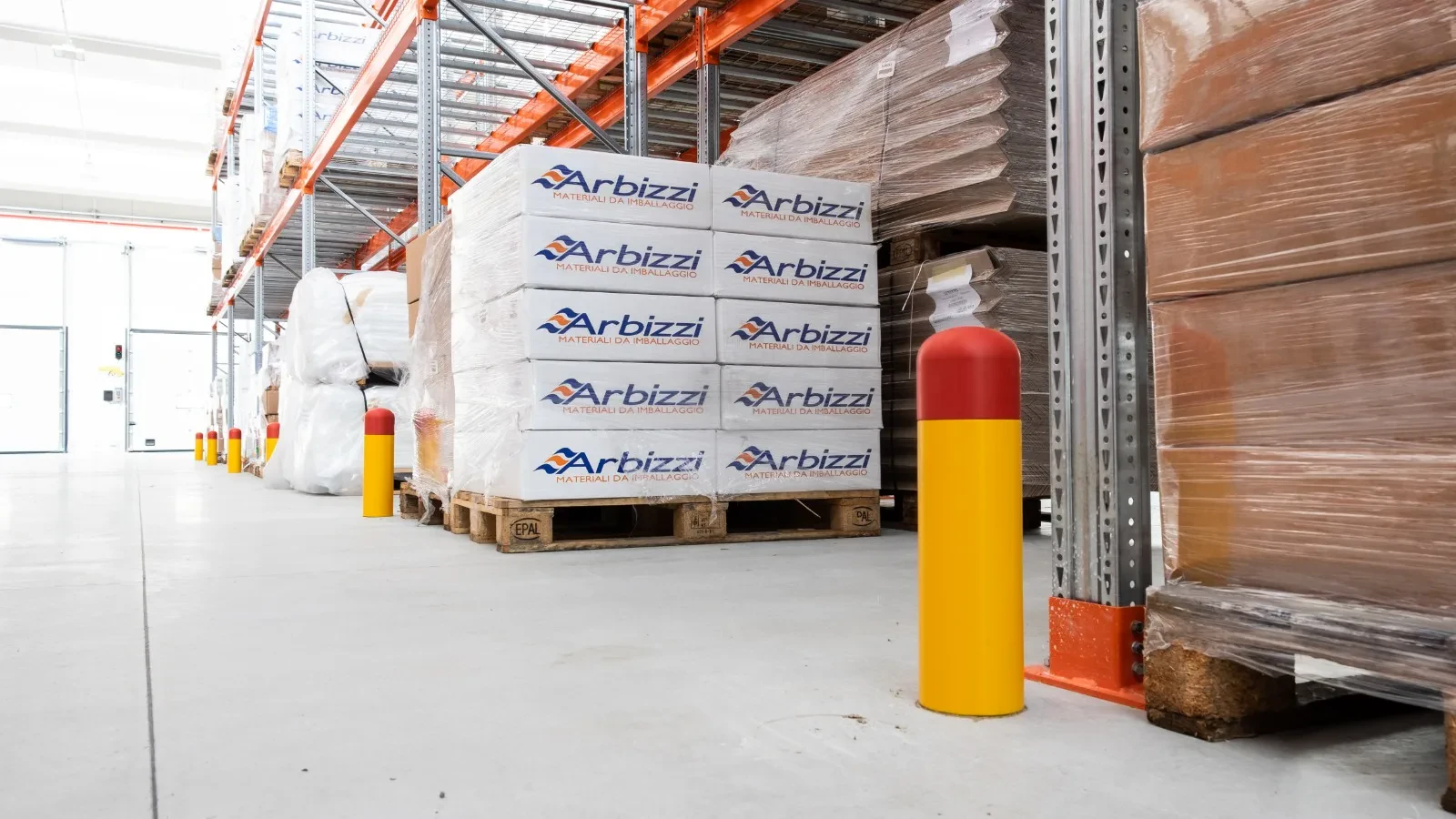
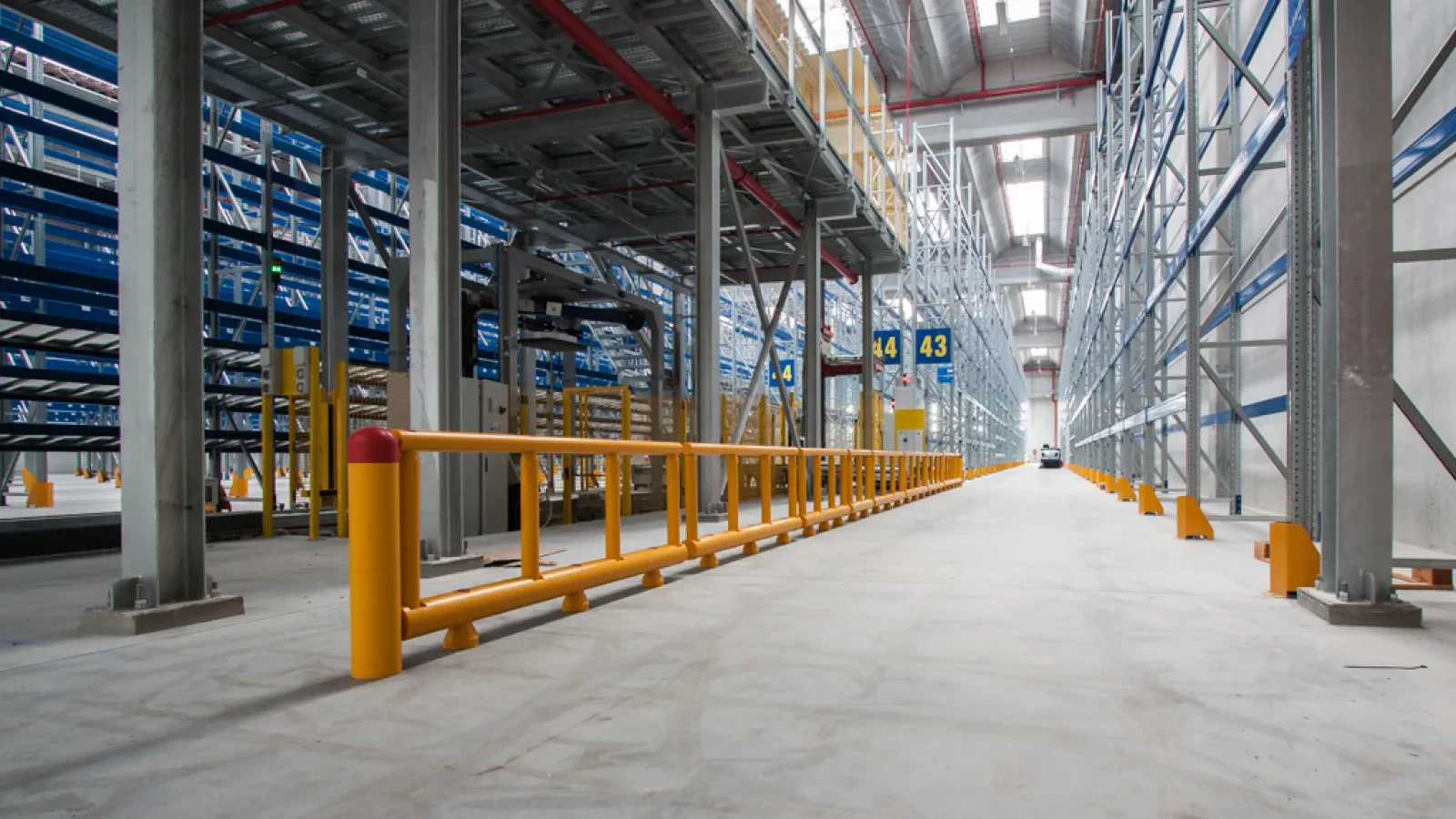
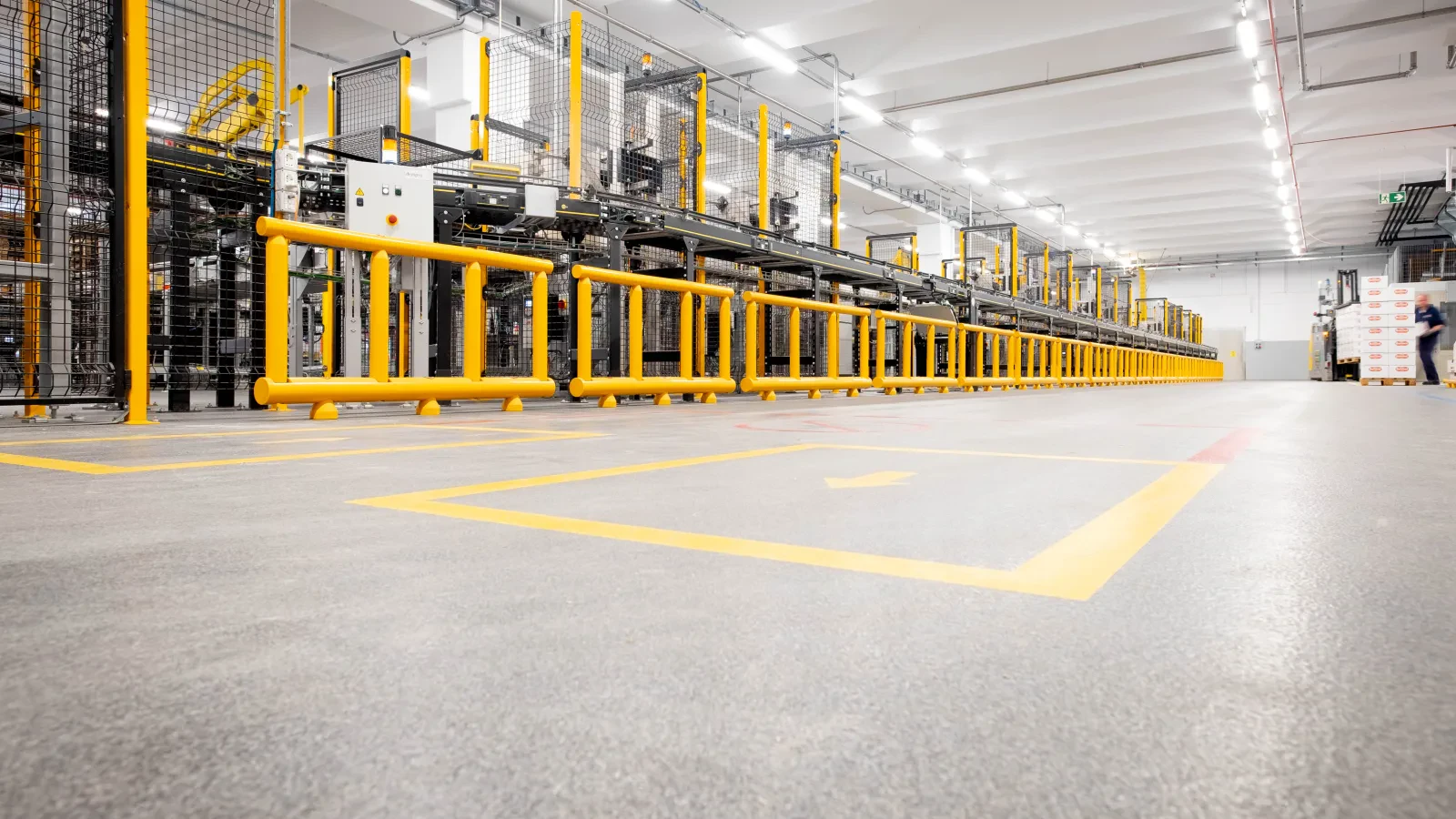
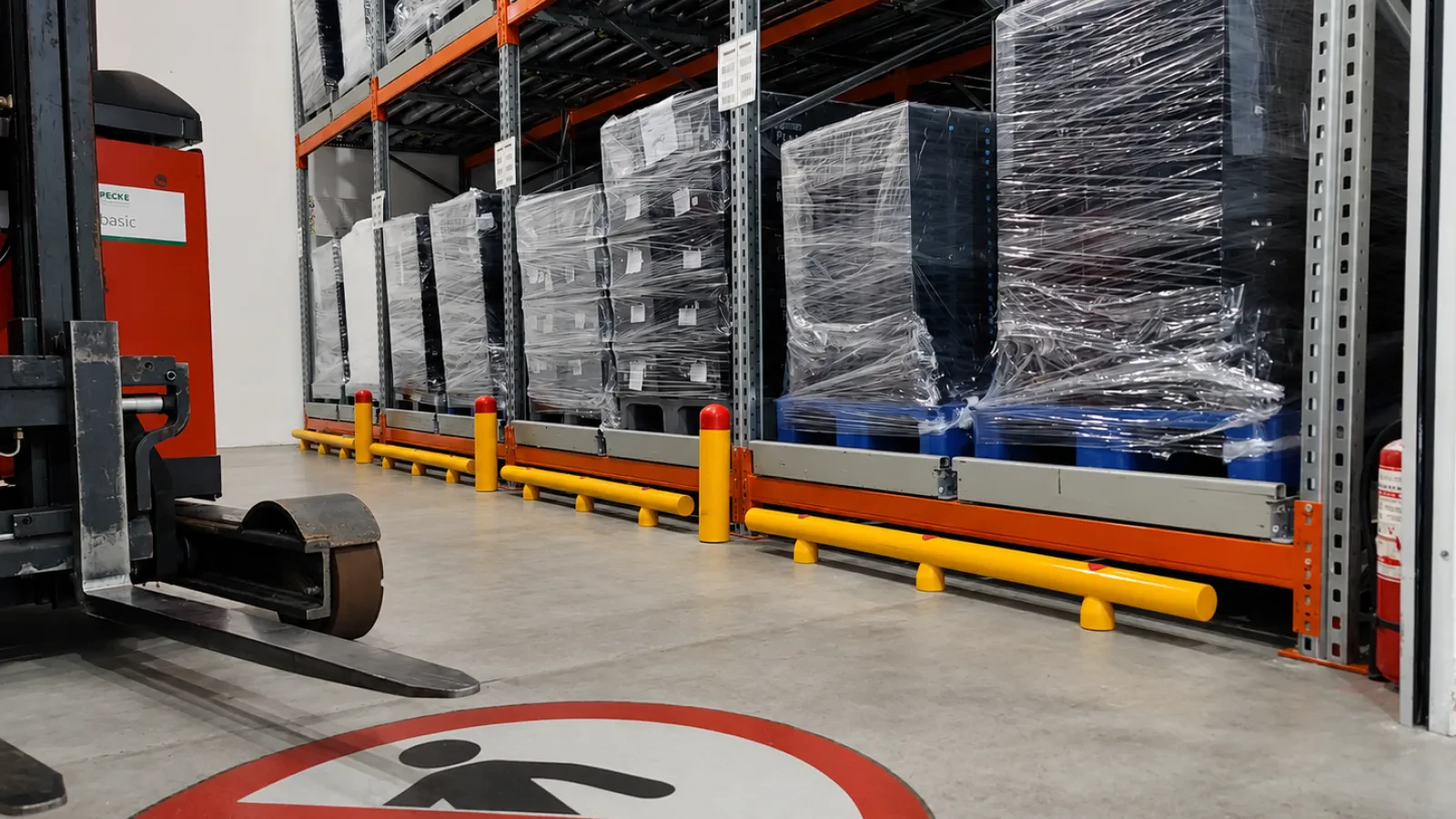
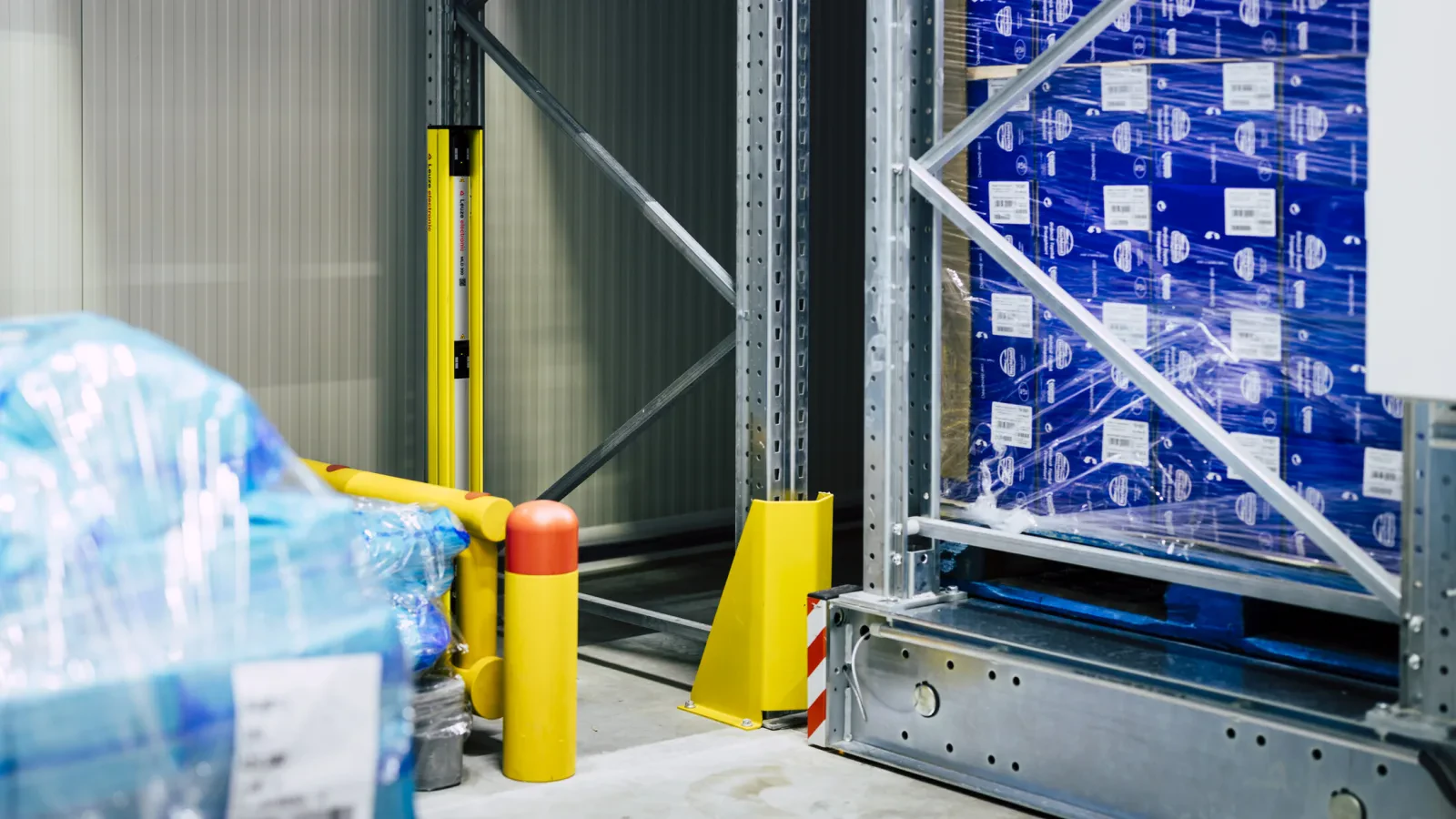
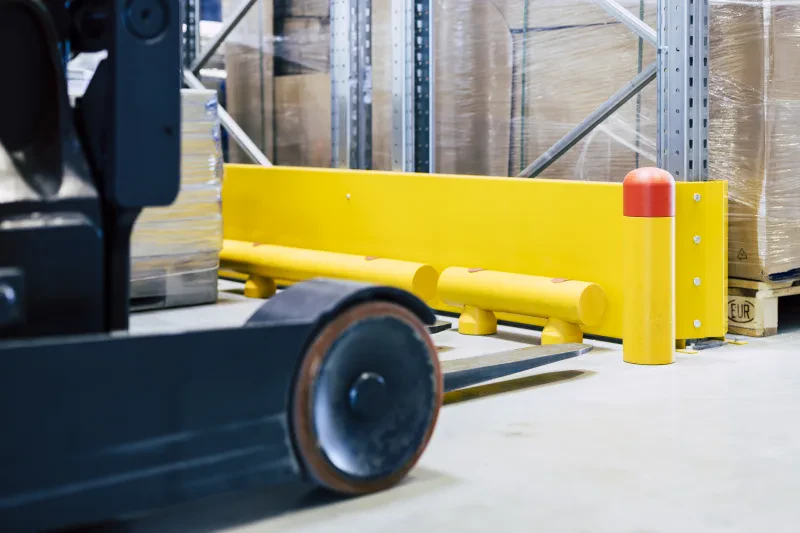
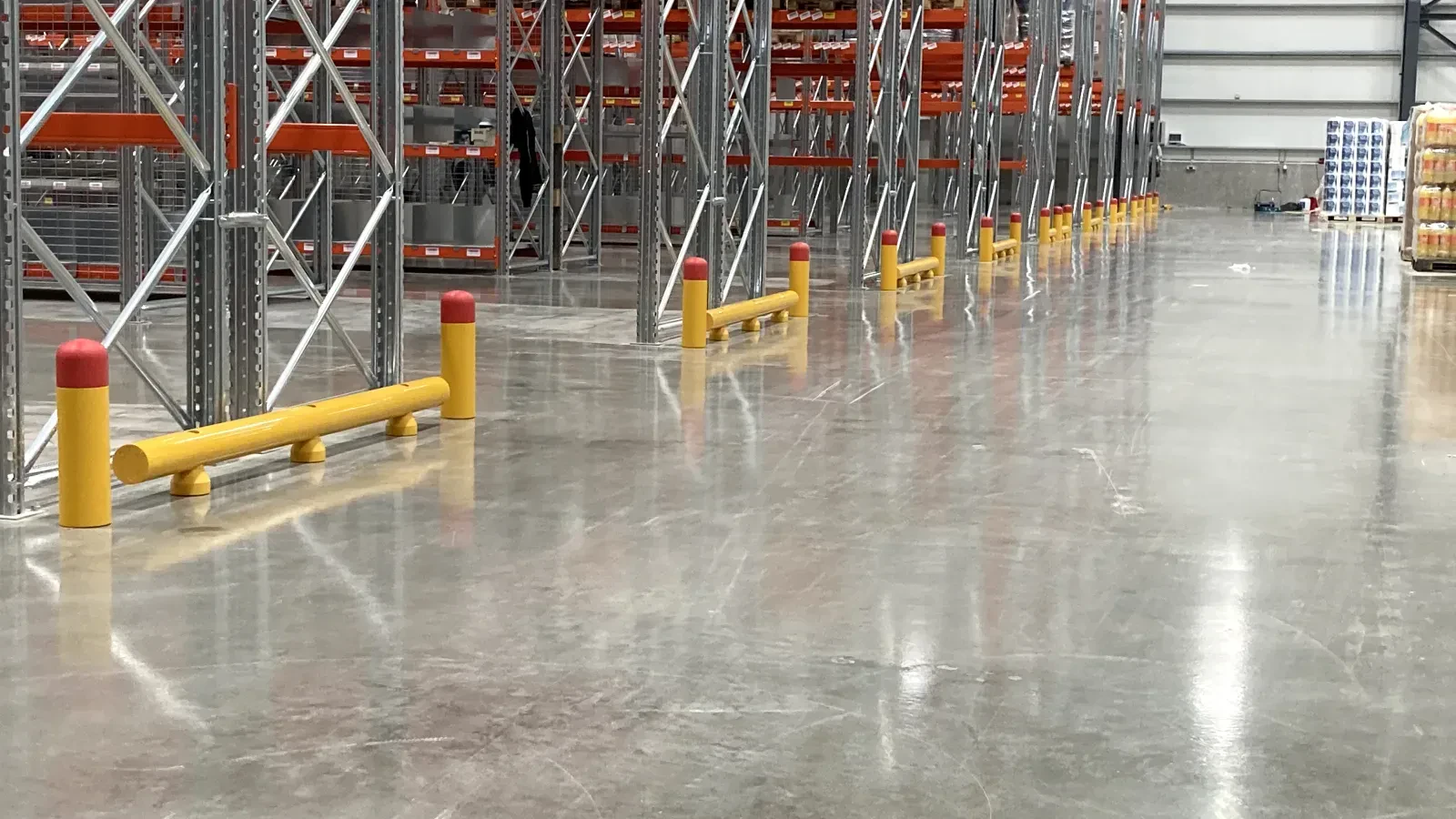
Sometimes the exposed point is the upright. Sometimes it is the rack end, the corner of a picking area, a nearby door or the interaction between racking and a pedestrian route. The choice may therefore include upright protection, rack-end protection, bollards, barriers or a combination.

Protection should be visible, easy to respect in daily work and robust enough for the selected scenario, while fitting the floor, anchoring, cleaning and maintenance needs of the area.

  • upright or rack-end protection;
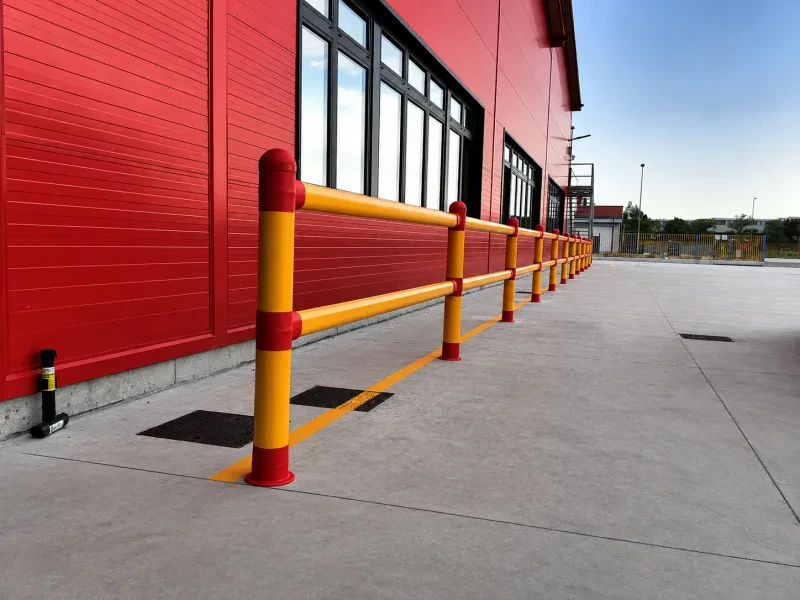
  • bollards and barriers for exposed aisles;
  • space for picking, cleaning and intervention;
Impact energy, standards and maintenance

Impact energy, standards and maintenance

For impact protection, the discussion must include impact energy: vehicle and load mass, speed at the impact point, impact angle and consequence. Guidance such as PAS 13 and UNI impact-protection documents supports this selection discipline, together with the technical data for the selected product.

After installation, protection should remain visible and inspectable. If it is frequently hit, displaced or damaged, that information should not be ignored: it may point to a route, speed, working-space or manoeuvring issue that also needs correction.

  • mass, speed, load and impact angle;
  • floor, anchoring and deflection space;
  • visual checks and impact marks;

Zones where racking is exposed

Rack ends

Points struck at aisle entries, turns or areas where vehicles change direction.

Rack uprights

Structures exposed by tight manoeuvres, bulky loads or frequent entry into rows.

Manoeuvring aisles

Areas where turning, reversing and short distances increase impact exposure.

Picking and dispatch

Fast-moving zones where operators, vehicles, pallets and goods move together.

Nearby doors and loading bays

Transition points where vehicles align, turn or enter areas with exposed infrastructure.

Pedestrian routes near racking

Zones where rack protection should be considered together with pedestrian guidance.

Useful resources for this category

Loading bays, industrial doors and cold rooms: where protection should be checked
Rack and column protection
Loading bays, industrial doors and cold rooms: where protection should be checked

A practical guide to protecting areas where vehicles approach doors, racks and loading-bay edges.

Learn more
Food production: impact protection for doors, racks and pallet-truck routes
Rack and column protection
Food production: impact protection for doors, racks and pallet-truck routes

A photo-documented STOMMPY application: barriers and bollards in food-production areas where pallet trucks and forklifts pass close to doors, racks and infrastructure.

Learn more
How to separate pedestrians and vehicles without blocking flow
Rack and column protection
How to separate pedestrians and vehicles without blocking flow

A practical guide for areas where people, forklifts, pallet trucks and access doors share the same route.

Learn more

Local and international references

  • Arbizzi
  • Barilla
  • Bencarni
  • Coca-Cola
  • Davines
  • Dolceria Alba
  • Dolcezze Savini
  • Dr. Oetker
  • Eurotranciatura
  • Fratelli Beretta
  • Grandi Salumifici Italiani
  • Hilcona Gourmet
  • INEOS
  • ISB Industries
  • Johnson & Johnson
  • Maxi Di
  • Nestlé
  • PENNY
  • Pirelli
  • SVAT Group

Products for racking and column protection

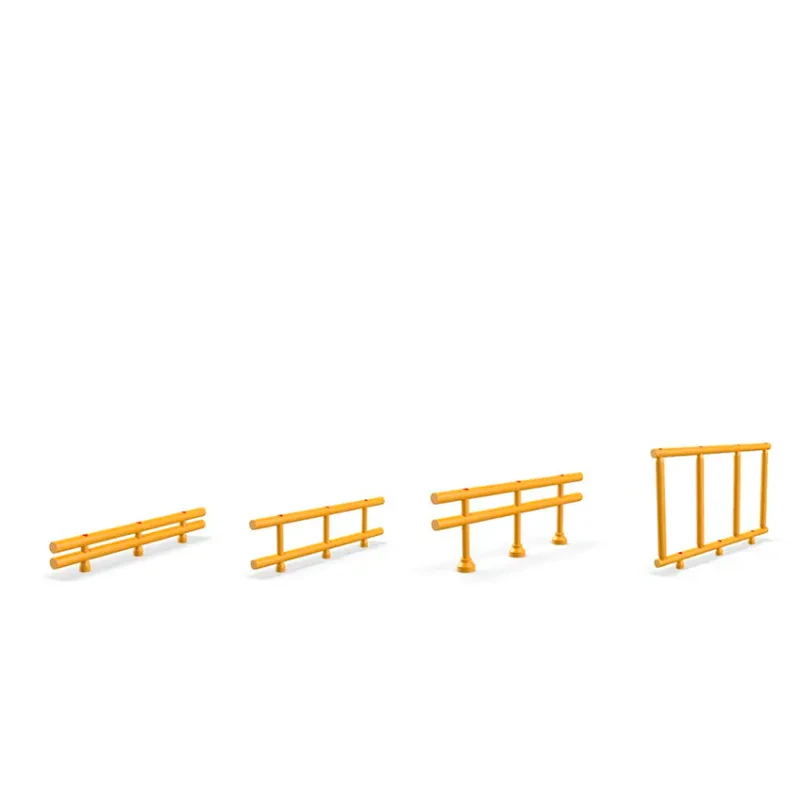
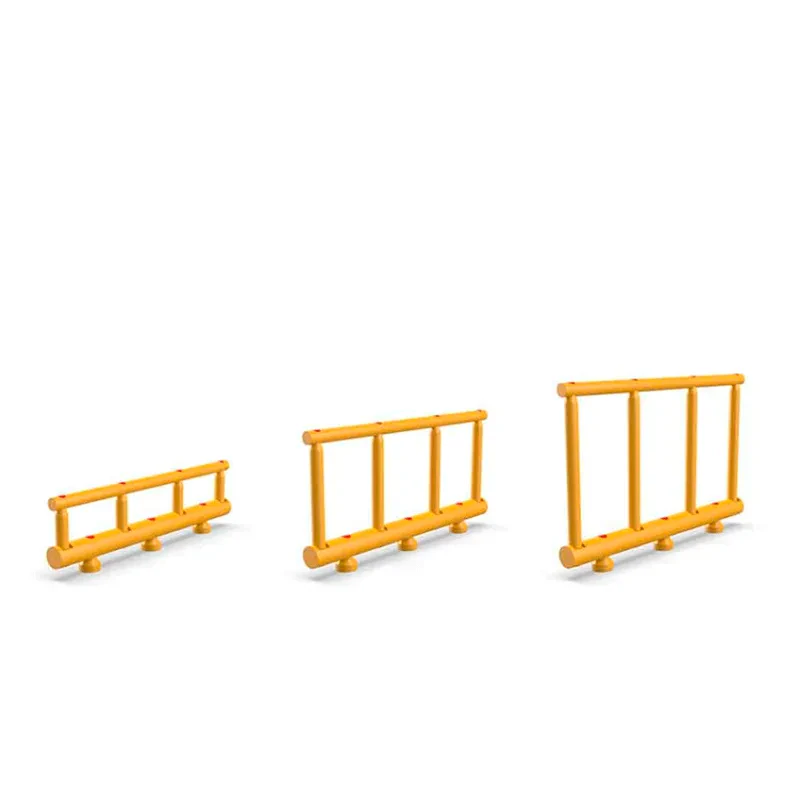
The products shown cover rack uprights, row ends and aisle edges beside racking. Selection depends on the vehicle, load, likely impact direction, manoeuvring space and floor condition.
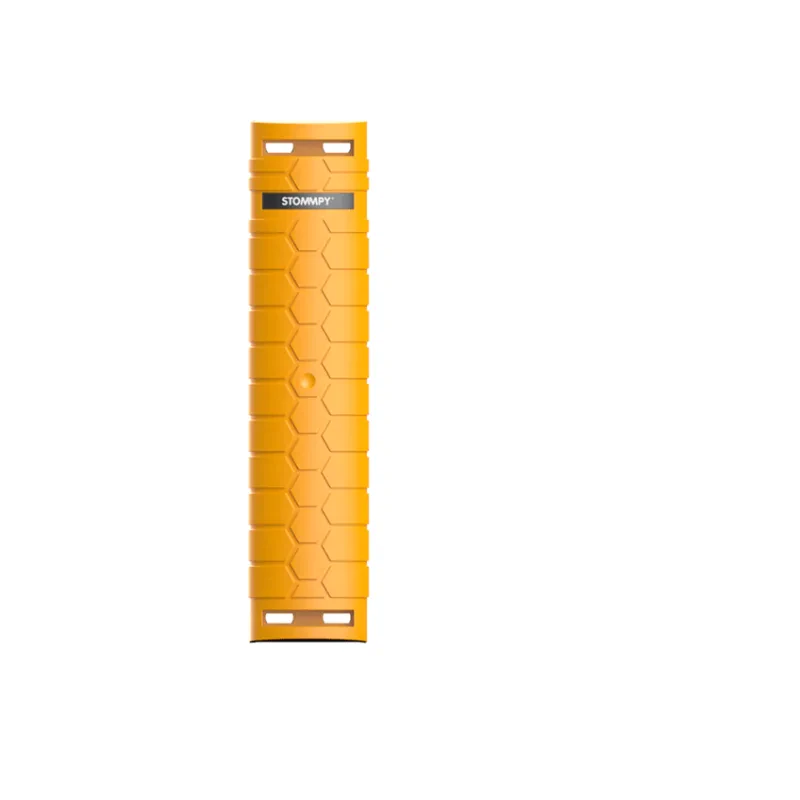
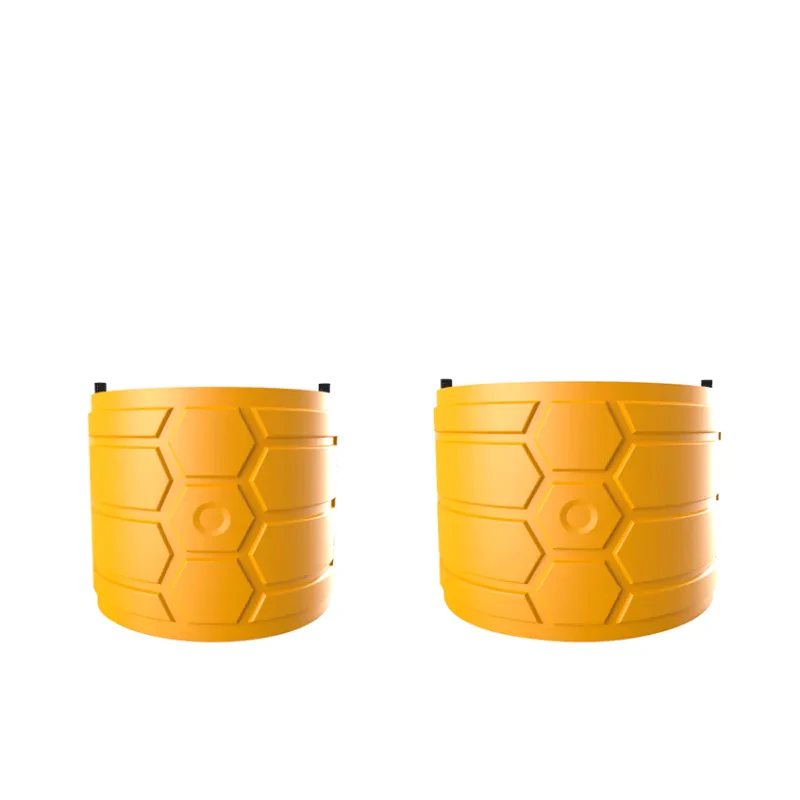
Rack protection
Rack protection
Material
Reinforced engineering polymer
Operating temperature
-20°C | +50°C
Height options
500 mm
Double rack protection
Material
Polimer
Mounting
Cable ties
Modularity
No
Height options
115 mm
Operating temperature
-20°C | +50°C
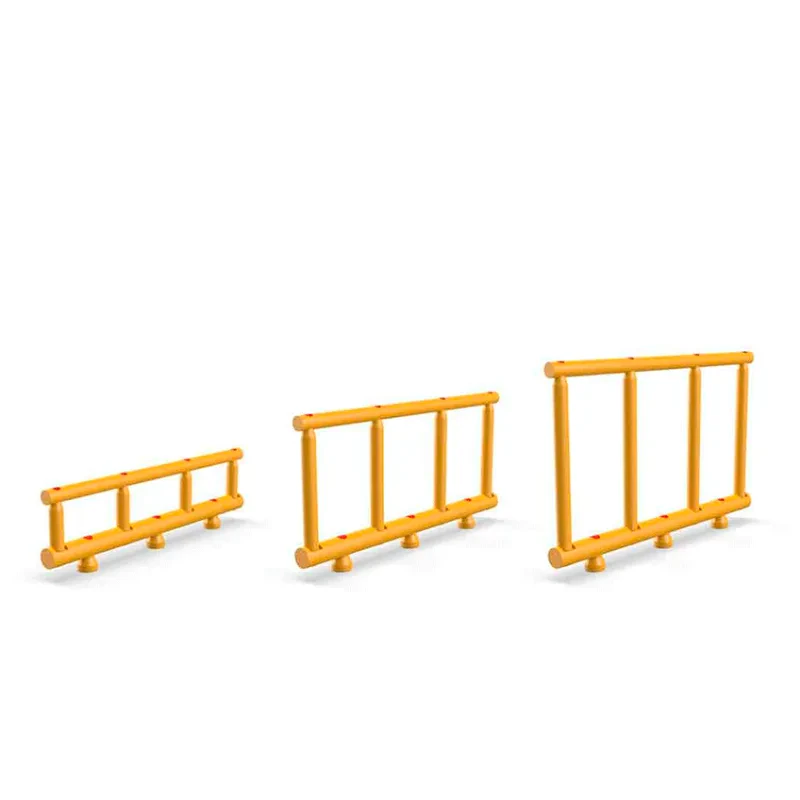
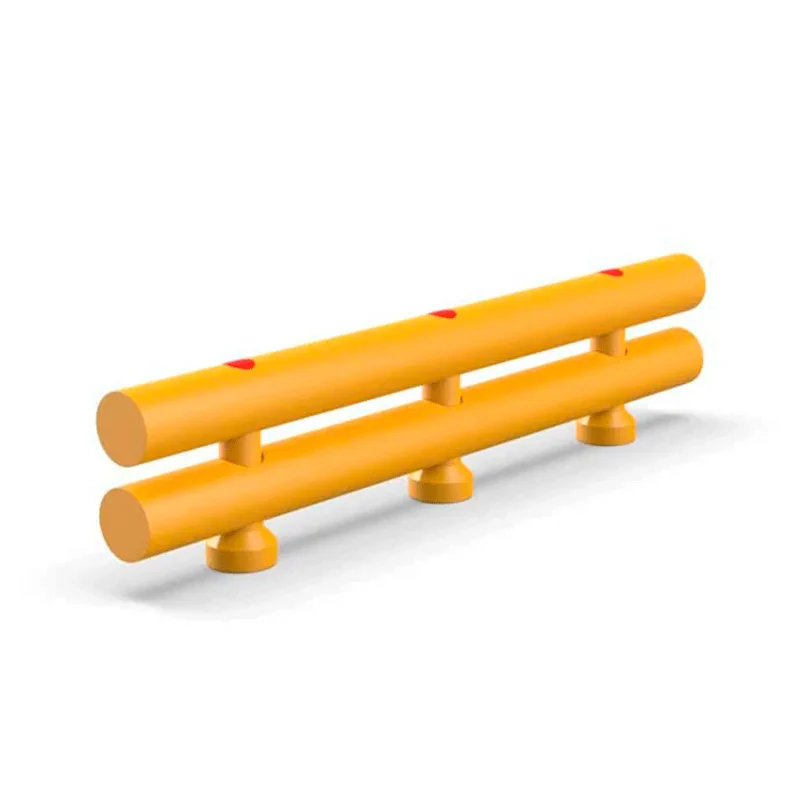
Double impact safety barrier Ø100/70
Height options
440 mm / 770 mm / 1 000 mm
Length options
1 000 mm / 1 500 mm / 2 000 mm
Diameter
100 mm / 70 mm
Mounting
FIXA Block System®
Material
Tecklene®
Double impact safety barrier Ø120/120
Tested impact energy
35,000 J
ASI
0.50
Height options
340 mm
Length options
500 mm / 1 000 mm / 1 500 mm / 2 000 mm
Diameter
120 mm
Double impact safety barrier Ø70/70
Height options
230 mm / 410 mm / 530 mm / 1 000 mm
Length options
500 mm / 1 000 mm / 1 500 mm / 2 000 mm
Diameter
70 mm
Mounting
FIXA Block System®
Material
Tecklene®
Double impact safety barrier Ø120/70
Height options
440 mm / 770 mm / 1 000 mm
Length options
1 000 mm / 1 500 mm / 2 000 mm
Diameter
120 mm / 70 mm
Mounting
FIXA Block System®
Material
Tecklene®
Impact safety bollard Ø140
Tested impact energy
21.000 Jouli
Height options
440 mm / 770 mm / 1 100 mm
Diameter
140 mm
Mounting
FIXA Block System®
Material
Tecklene®
Impact safety bollard Ø120
Tested impact energy
15.950 Jouli
Height options
440 mm / 770 mm / 1 100 mm
Diameter
120 mm
Mounting
FIXA Block System®
Material
Tecklene®

Do you have racks or columns being hit in traffic areas?

Request a rack-area review

Send a few details about the rack area, vehicle types, damaged points and manoeuvring space. We review the impact scenario and the protection direction that fits the application.

Request a rack-area review

Send a few details about the rack area, vehicle types, damaged points and manoeuvring space. We review the impact scenario and the protection direction that fits the application.

Frequently asked questions

Useful questions before choosing rack protection, aisle-end protection and controls for frequent impact points.

Impact marks at rack ends, uprights, aisle corners or picking zones show where the vehicle route exposes the storage structure. Even when the rack does not look immediately compromised, impact history can mean downtime, repairs, damaged goods, frequent replacement of protection and extra pressure on operations.

Protection should be viewed together with the route. If the same place is hit frequently, better protection may be needed, but the turn, speed, manoeuvring space or visibility may also need correction.

Upright protection can fit when the impact reaches the rack foot directly and space does not allow wider protection. But if the vehicle strikes the rack end, approaches at an angle or hits the zone before the upright, a point protector may not cover the real scenario.

In those situations, rack-end protection, bollards, barriers or combinations should be compared. The right choice starts from impact marks and real manoeuvres, not from assuming one protection type solves every case.

Rack-end protection is useful when the row is exposed at aisle entries or turns. Bollards can protect corners, doors, equipment or points where vehicles need to be kept away. Barriers can guide vehicles and protect longer infrastructure runs.

The decision depends on aisle width, vehicle type, carried load, likely impact angle, impact frequency and the space that must remain available for operation, cleaning and intervention.

The role of protection is to reduce the risk of impact energy reaching the rack structure directly. That means selecting protection around the real scenario: vehicle, load, speed, impact angle, floor, anchoring and available space for deflection or energy absorption.

Rack condition, structural design, loading, inspections, operator training and route discipline remain part of the control strategy. Any stated impact performance needs to match the selected product, available test data and installation conditions.

PAS 13 and UNI impact-protection documents are useful references for discussing traffic, impact scenario, energy, testing and maintenance. They help move the conversation beyond simply asking which barrier to install.

When a project has an exact requirement, the product, test, installation, floor condition and customer requirement should be checked together. Standards become decision references, not generic labels for every zone.

Often, yes. In an existing warehouse, the useful advantage is that the real impact history is already visible: where impacts happen, how vehicles turn, which aisles are under pressure and which zones should be protected first.

Before installation, floor condition, anchoring, remaining distances, rack access, cleaning, maintenance and installation timing should be checked so the work does not create unnecessary operational disruption.

Collect the details that describe the impact and available space:

  • damaged zones and the direction of impact marks;
  • vehicle types, carried loads and traffic frequency;
  • approximate speed, floor condition and manoeuvring space;
  • photos of the damage and a simple layout.

Then compare service life, maintenance, visibility, replacement of damaged elements, operational fit and the technical data supporting stated performance.

Sending…