Industrial doors and exposed frames
For entrances, fast doors or access points where pallet trucks turn close to the structure.

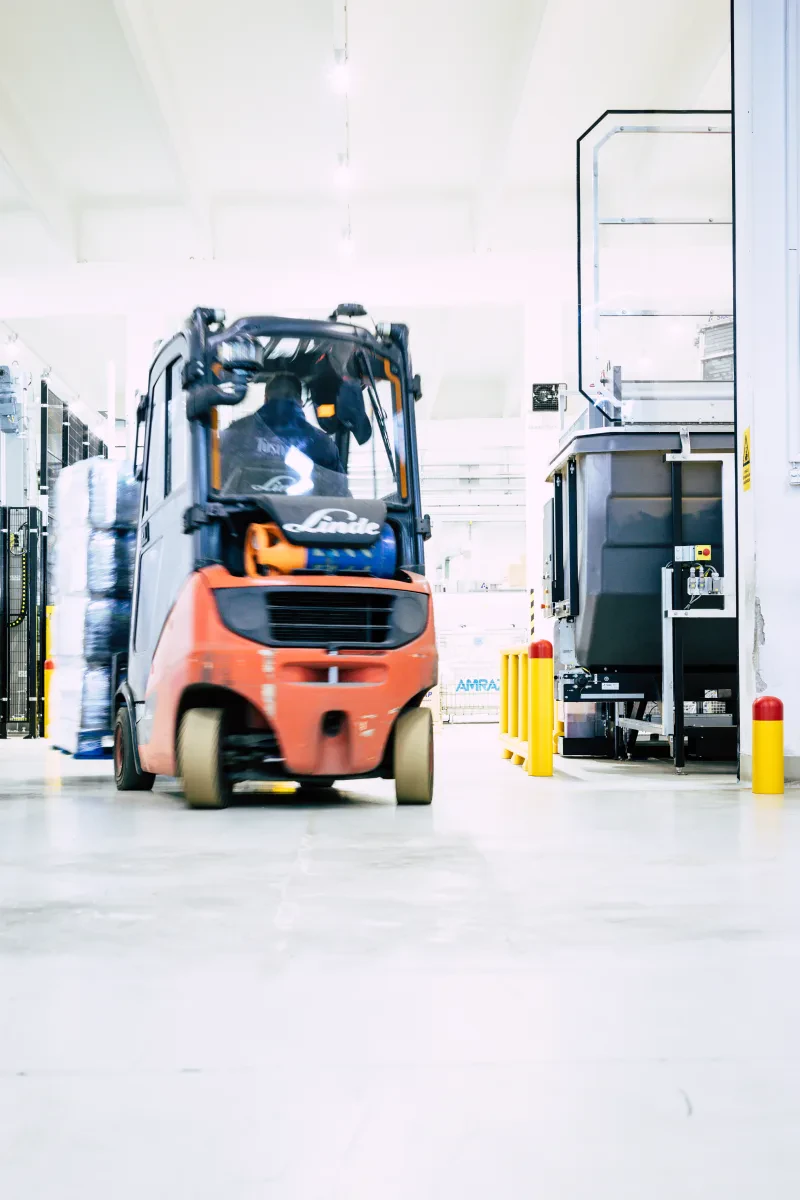
Doors, rack ends and pallet-truck routes need protection that does not obstruct cleaning, access or production flow.
Industry
Food production
Location
Local application documented with photos
Number of employees
Doors, racks, pallet-truck routes

In food production, vehicle traffic meets industrial doors, temporary storage, replenishment lines and places where operators need quick access. Good protection reduces exposure without narrowing the route unnecessarily.
STOMMPY becomes relevant when protection has to absorb impact, remain visible, be easy to read in a hygiene-sensitive environment and withstand a setting where cleaning and maintenance are part of daily work.
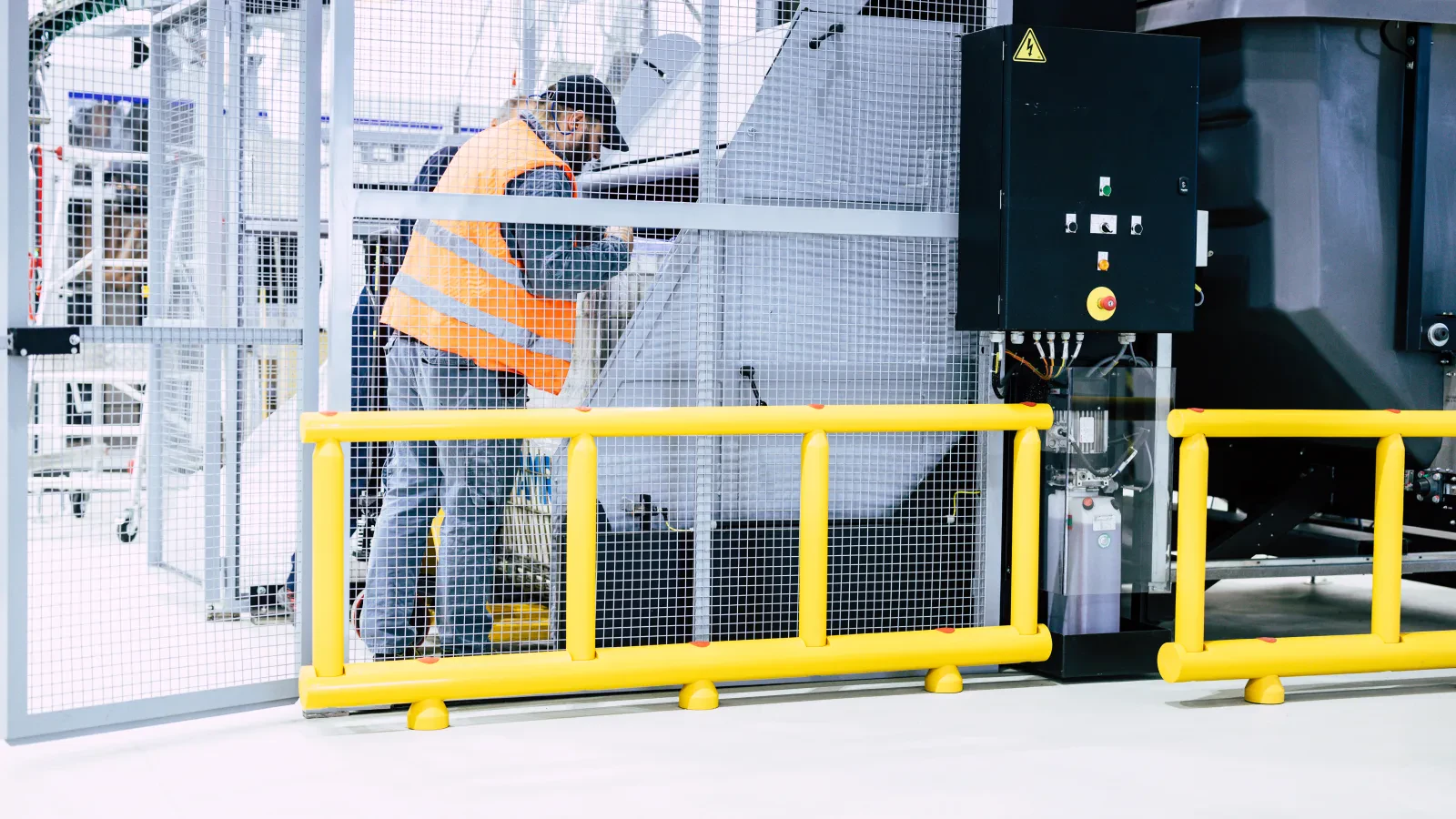
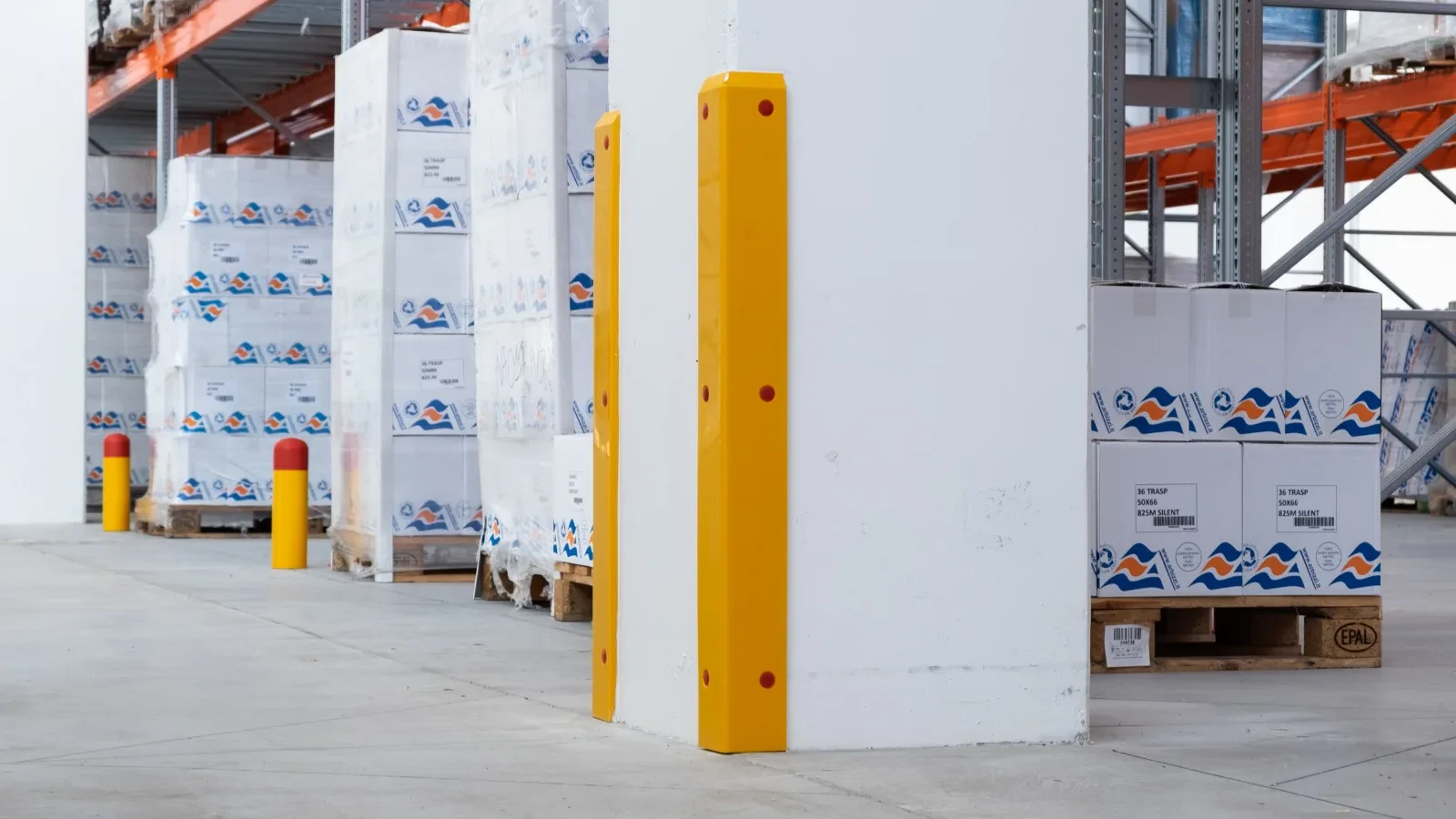
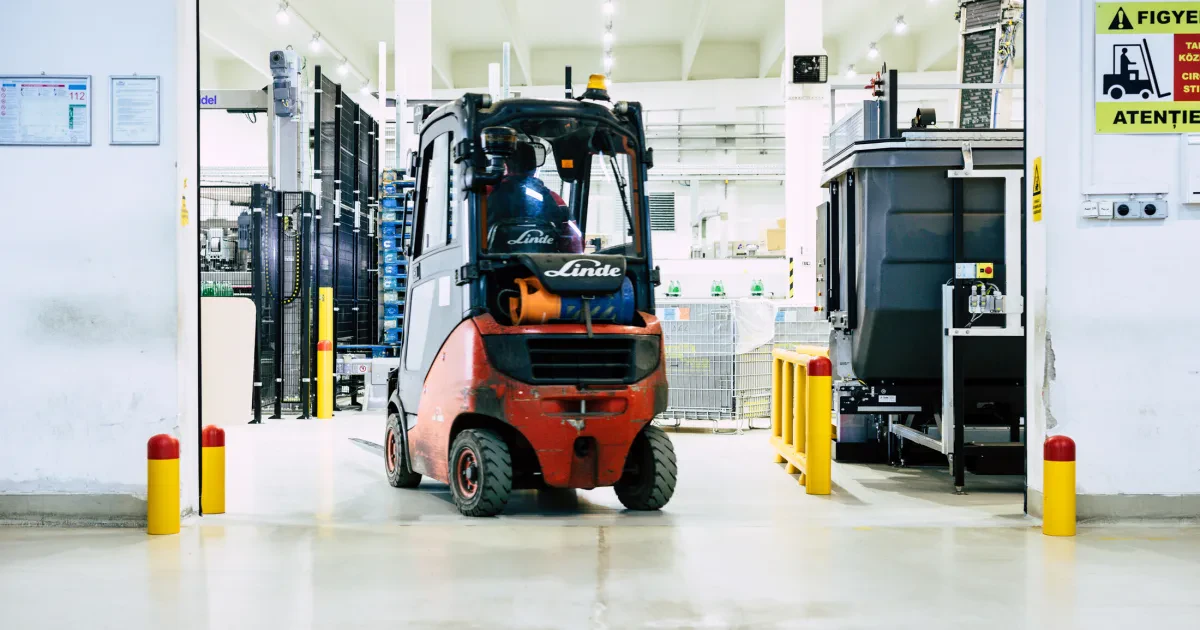
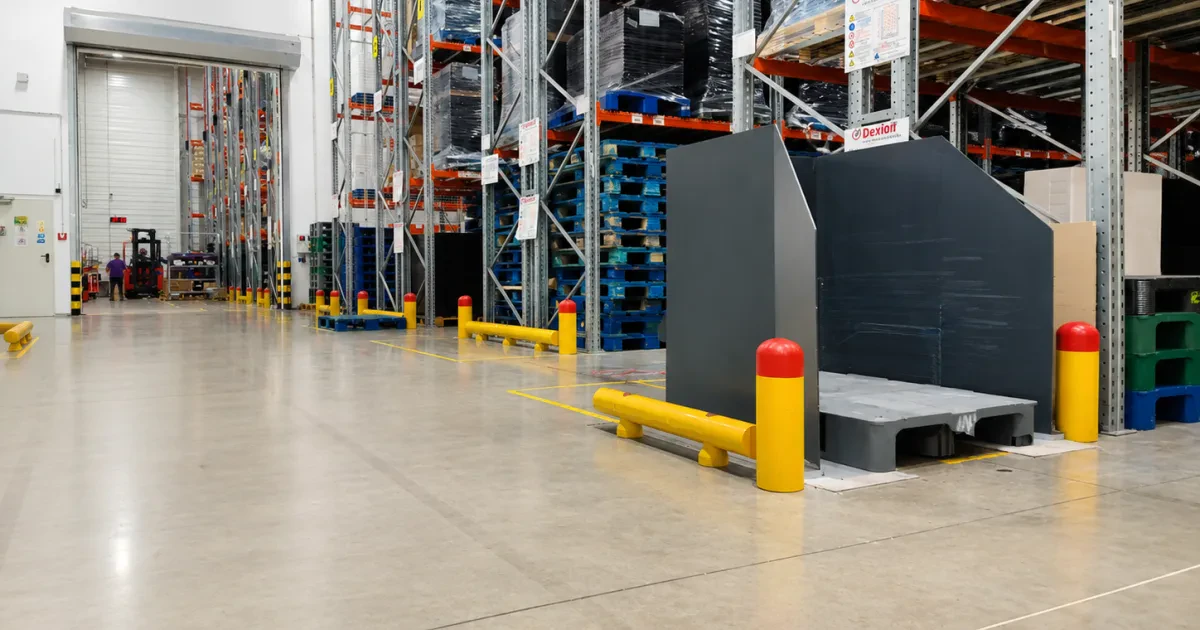
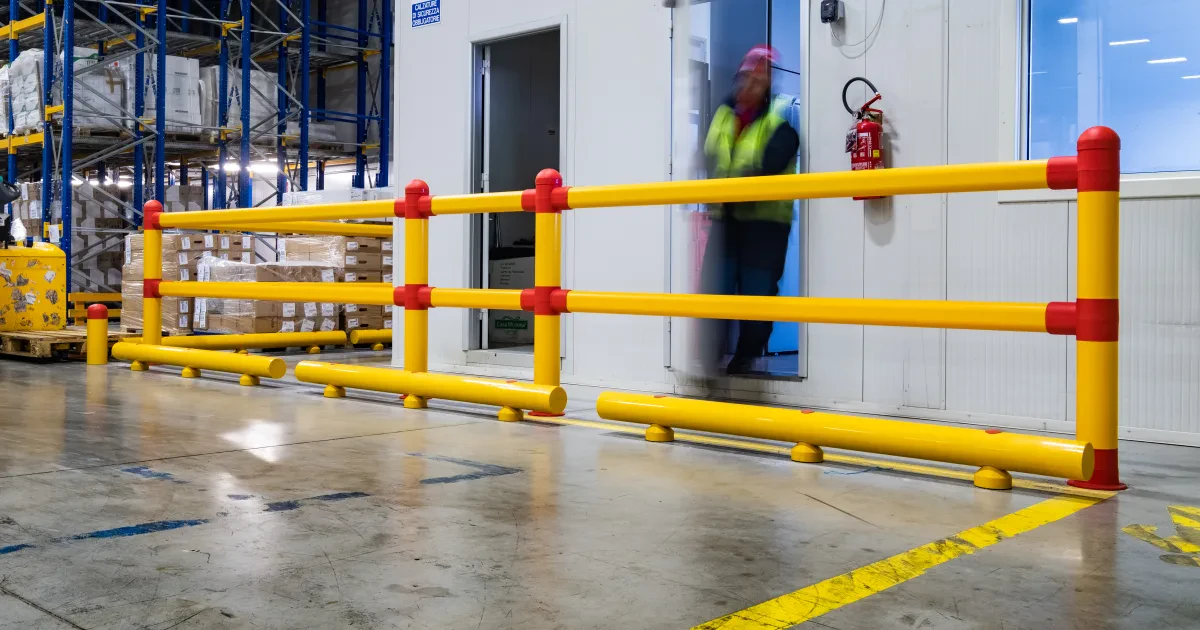
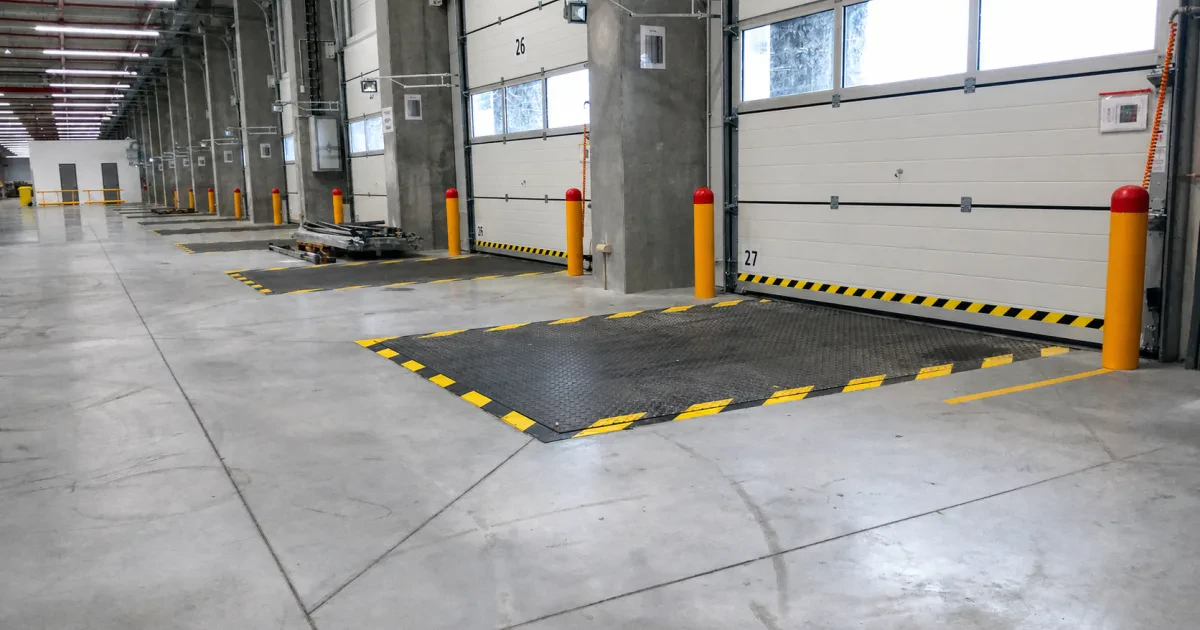
The photos are not decoration. They show where vehicles approach infrastructure, how much working space remains and what needs protection without blocking flow.
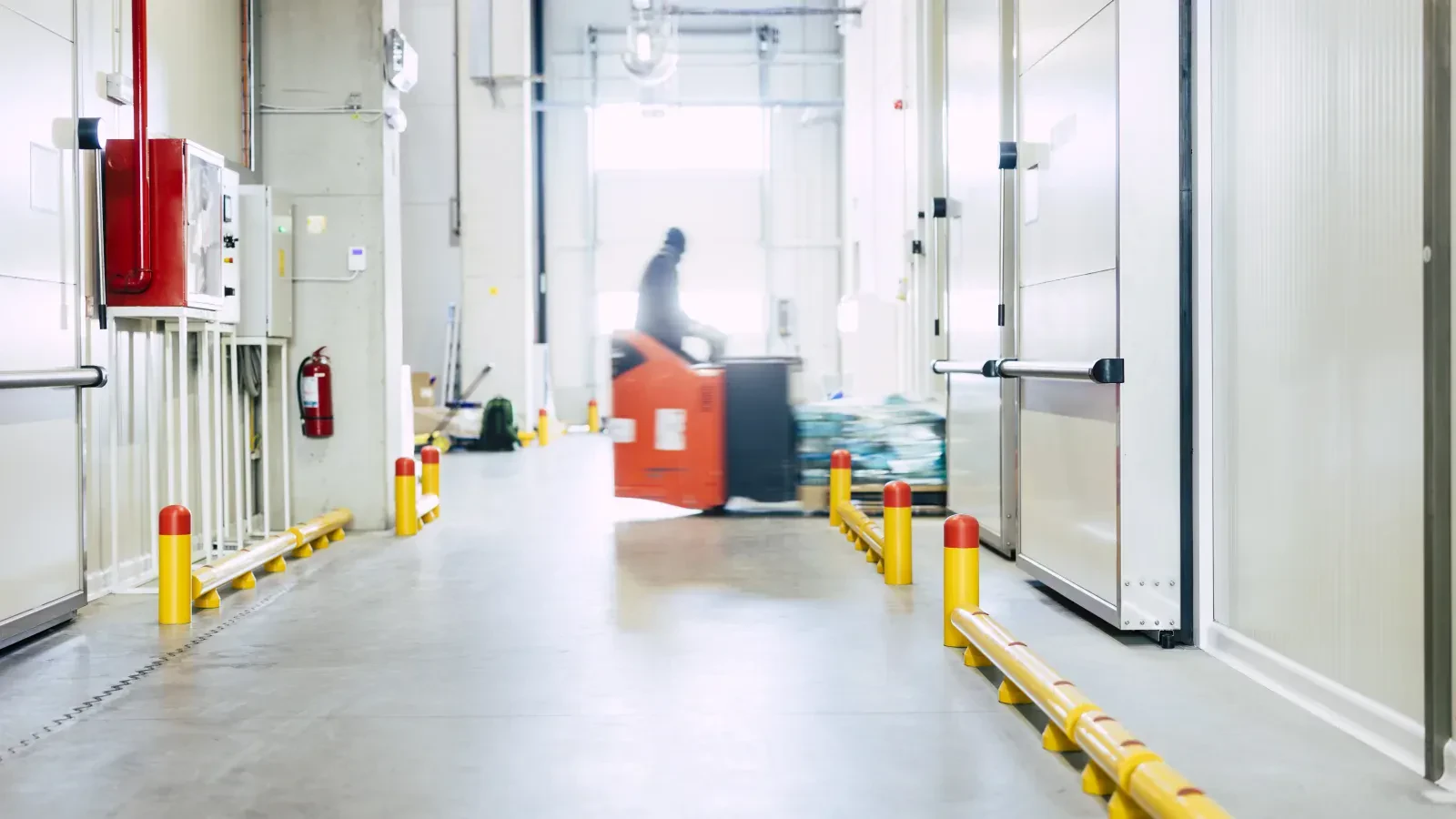
In food-production corridors, barriers must leave room for pallet trucks, carts and operators. Protection placed too close to the flow may be hit more often or push traffic into another exposed area.
A good application keeps access to doors and equipment while making it clear where the vehicle should not reach.
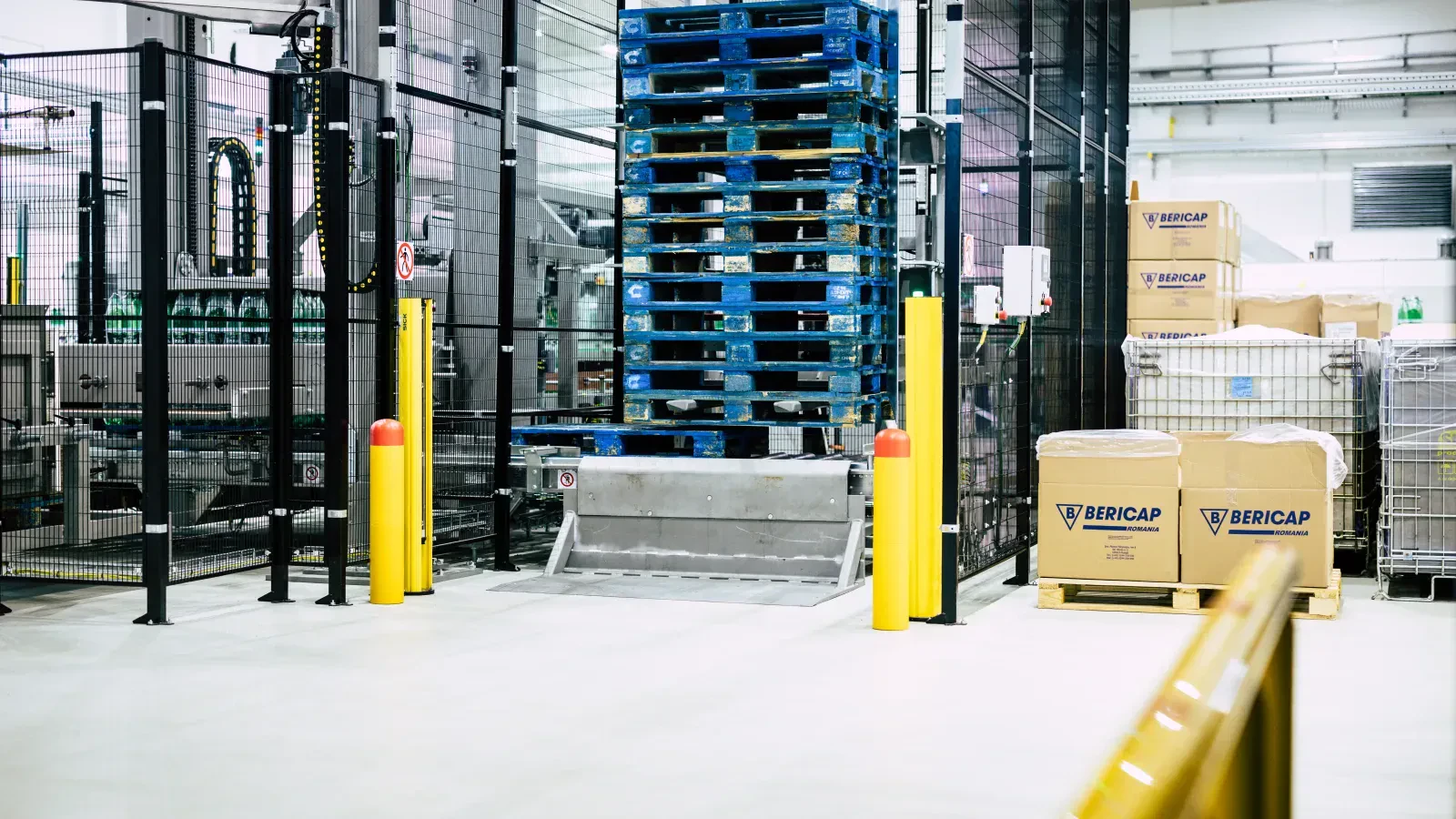
At rack ends, impact can affect the structure, pallets or the handling area. Protection should follow vehicle proximity and the consequence of a hit.
Bollards and guardrails can protect the exposed zone locally, but sizing follows vehicle, load, angle and floor conditions.
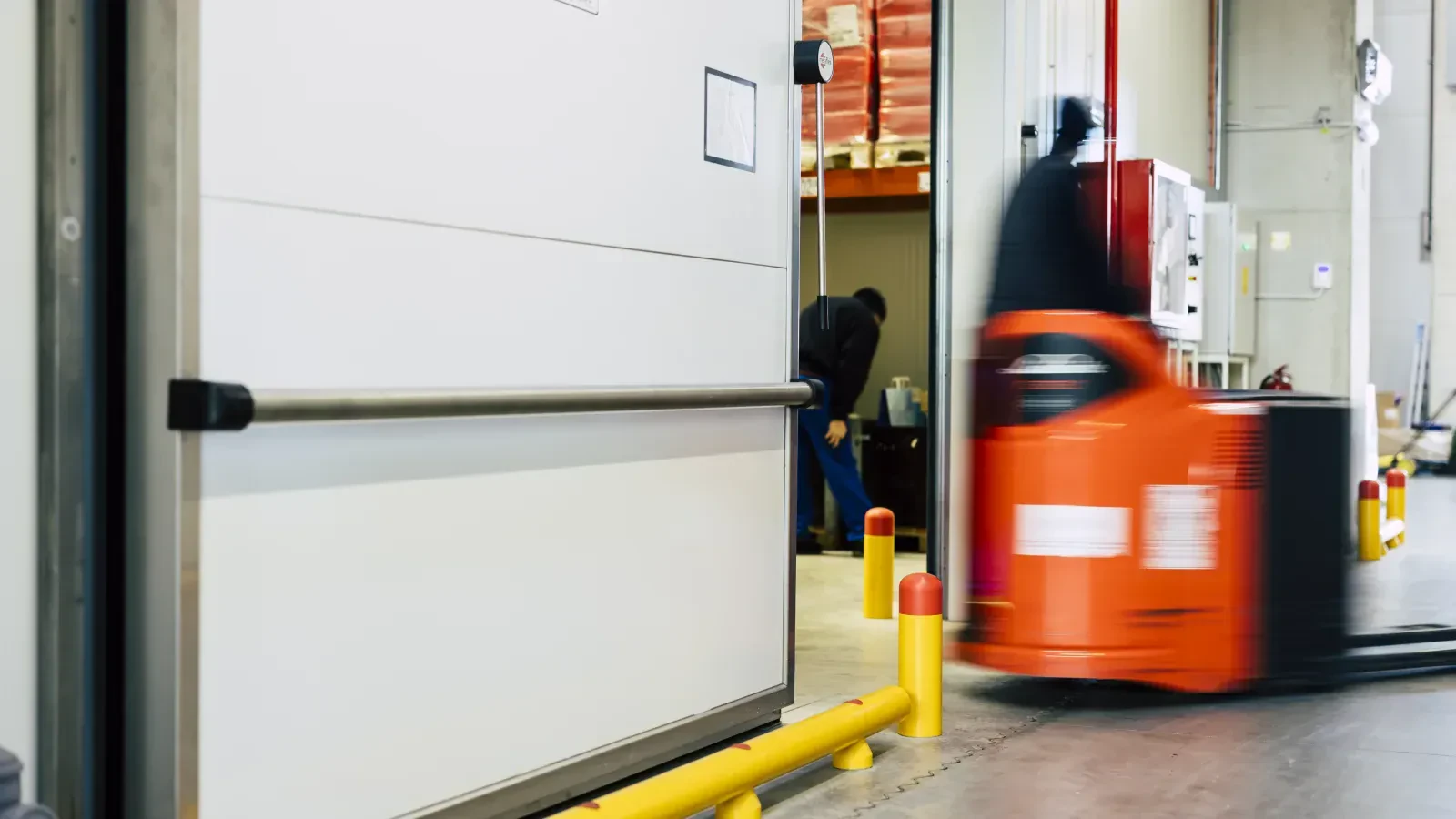
Industrial doors are expensive interruption points. When a door blocks, the flow changes, access becomes harder and maintenance enters an area that should stay clear.
Protection should defend the exposed frame or corner while preserving access for vehicles, cleaning and technical intervention.
The gallery shows different parts of the same logic: protection near doors, pallet-truck routes, rack ends and edges where vehicles pass close to infrastructure.
Start with the real movement: pallet truck, forklift, cart or another mobile unit. It matters whether the vehicle moves straight, turns, reverses or enters with a load.
For a first review, a wide photo, a close-up of existing impact marks and a short video of the manoeuvre are useful. They show more than a clean floor plan disconnected from daily flow.
Impact barriers work together with floor and anchoring. Concrete, joints, hidden utilities and deformation space influence the choice.
In food areas, cleaning around the protection also matters. Shape and position should allow hygiene routines, inspection and intervention, not only look solid on day one.
Do you have a door, rack or route hit by vehicles?

Start with places where impact would stop work or create repeated maintenance: industrial doors, rack ends, wall corners, exposed panels and route edges.
Useful signals are visible on site:
Strength matters, but it does not work alone. If the barrier sits too close to the asset, has no working width or the floor cannot support anchoring, the result may be weak even with a good product.
For STOMMPY, correct selection follows the impact scenario: vehicle, load, realistic speed, angle and available distance. That is the difference between applied protection and visual separation.
In a food area, protection should not make cleaning harder. Barrier position, fixing-foot shape, access around bollards and exposed material need to fit the operator routine.
The final choice should be checked with the teams responsible for cleaning, maintenance and safety. The aim is to protect the area without creating difficult-to-clean corners or unnecessary obstacles.
Bollards fit localised impact: corner, door frame, rack end or exposed technical element. Continuous guardrails fit when a line needs protection: route edge, storage area or long equipment.
The comparison becomes clearer when the vehicle approach direction is marked on a photo. If the vehicle can hit from several angles or catch the edge of the zone, a linear solution may be more stable than isolated points.
A quick discussion needs concrete data. A full technical file is not necessary, but the real movement should be visible.