880 visitors per day
Constant flow calls for a surface that works during normal traffic hours, not only in isolated moments.

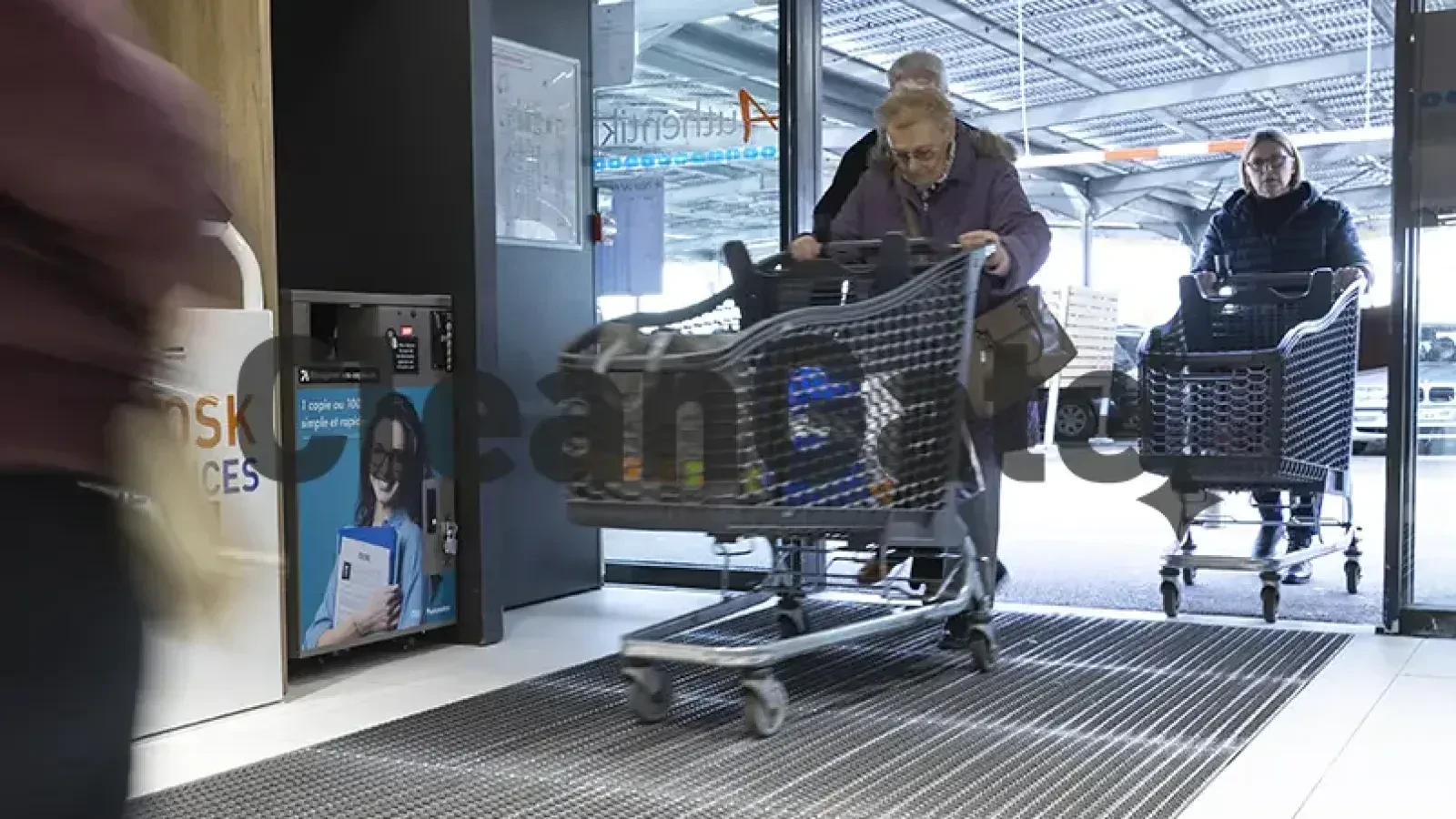
In retail, the entrance is where weather, footwear and small wheels become an operating cost. If the access zone does not retain enough, marks move quickly into the store: dirty floors, moisture, repeated cleaning and a first impression that is harder to control.
Industry
Food retail
Location
Le Neubourg, France
Number of employees
7,200 sqm store

In a supermarket, the entrance deals with several sources at once: water, dust, grit, salt, mud, footwear, carts, small wheels and peak hours. A passive mat can help, but it does not always create enough contact between traffic and the cleaning surface.
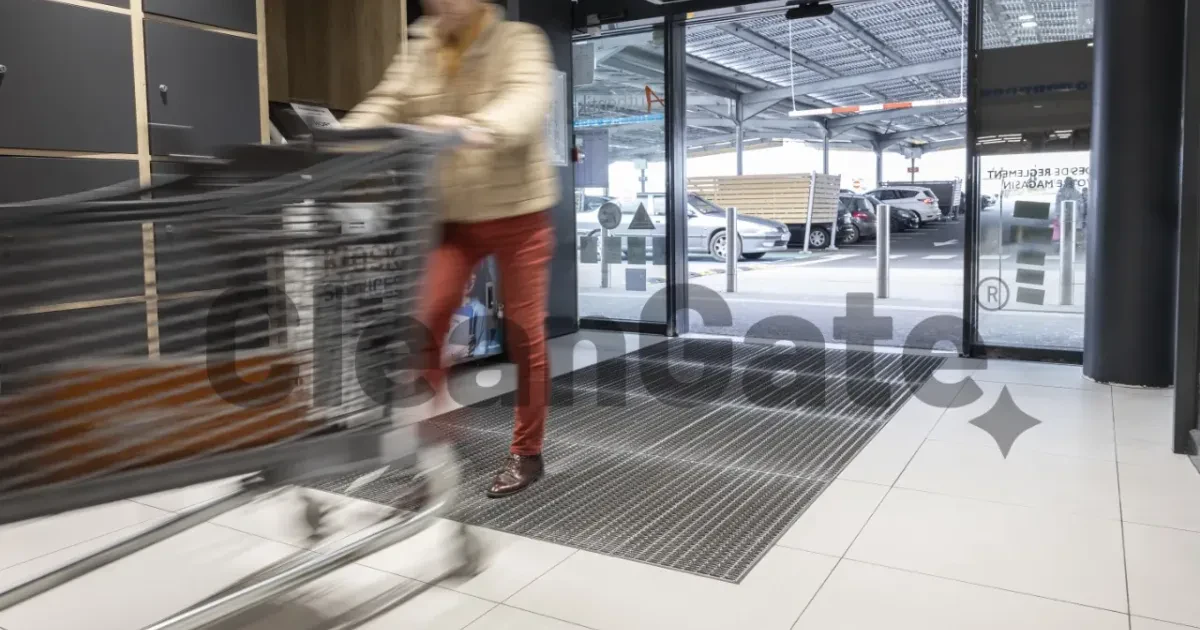
The E.Leclerc case is useful because it starts from a recognizable situation: an indoor entrance after sliding doors, traffic 6 days per week, customers with carts and a white floor where dirt becomes visible quickly.
The real route drives the choice: where people enter, how many wheels cross, how much space is available, how easy the system is to clean and what visual standard the public area needs to maintain.
At commercial entrances, the result depends on positioning, contact and maintenance. When all three are clear, the system becomes part of the store routine, not a separate object.
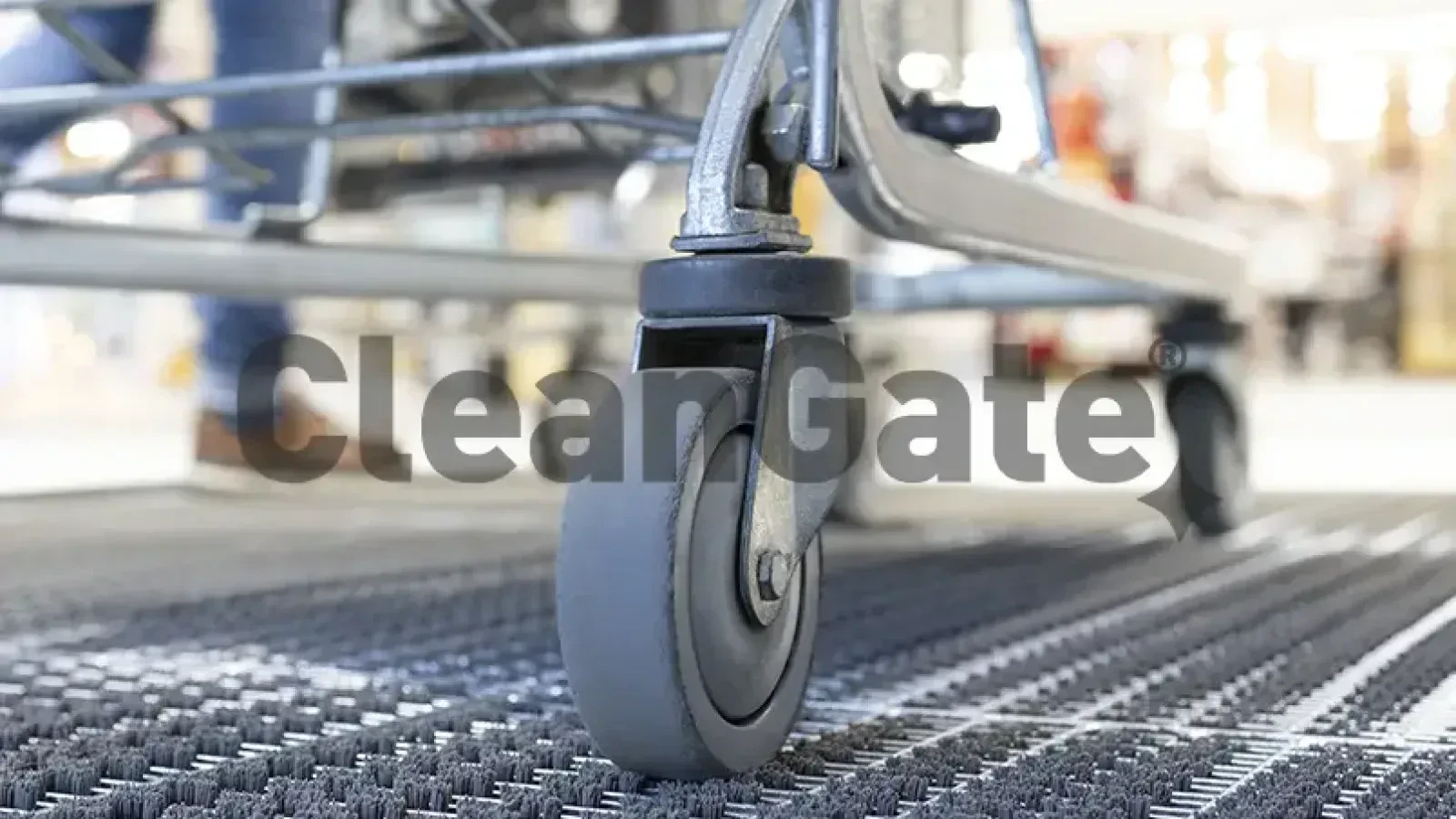
CleanGate works best when the surface is exactly on the route customers already use. In the E.Leclerc case, the system was integrated after the sliding doors, at a point naturally crossed by customers and carts.
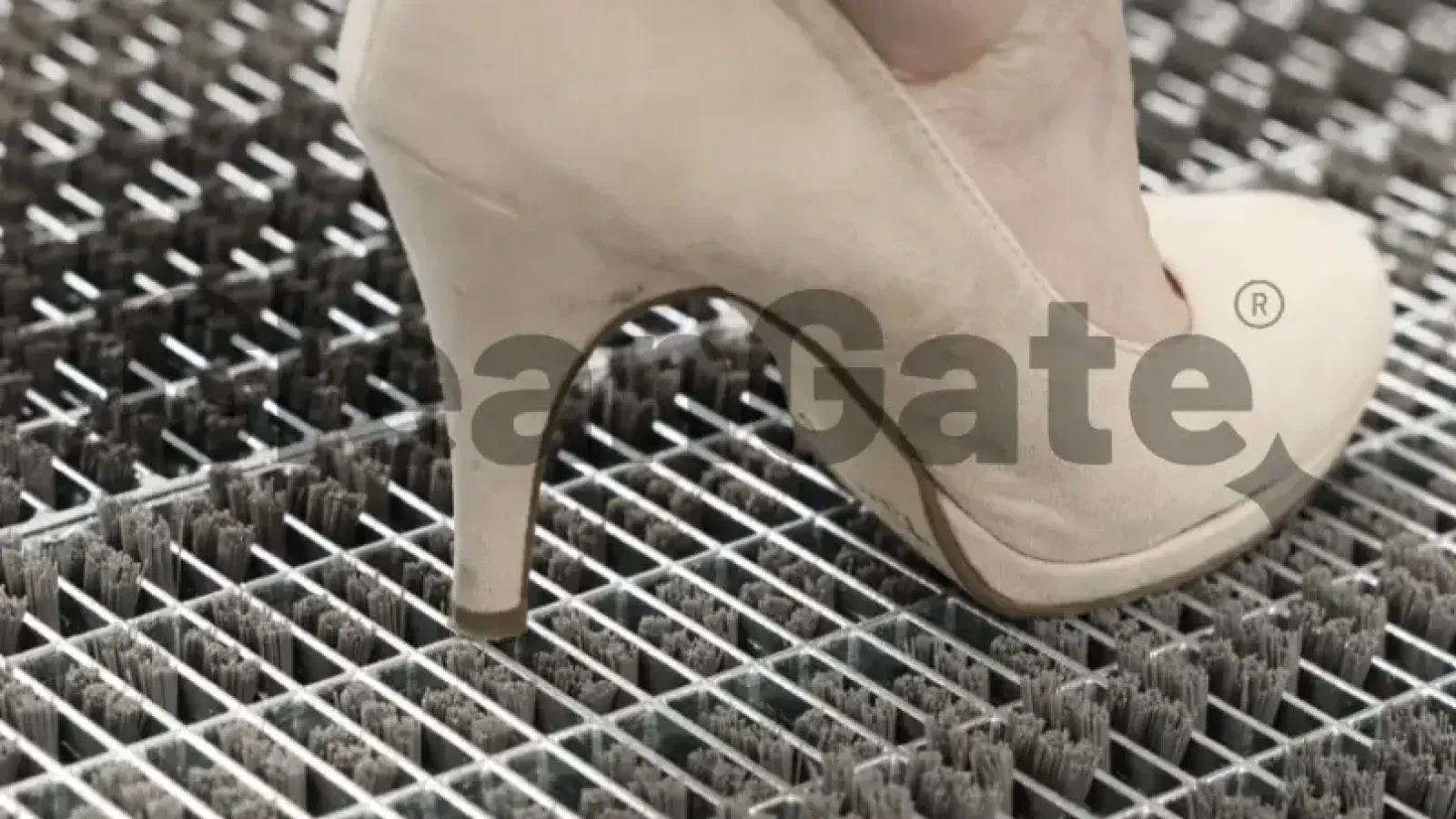
The difference from a passive surface is mechanical contact. CleanGate grates and brushes touch footwear and small wheels, while dirt is directed into the reservoir below.
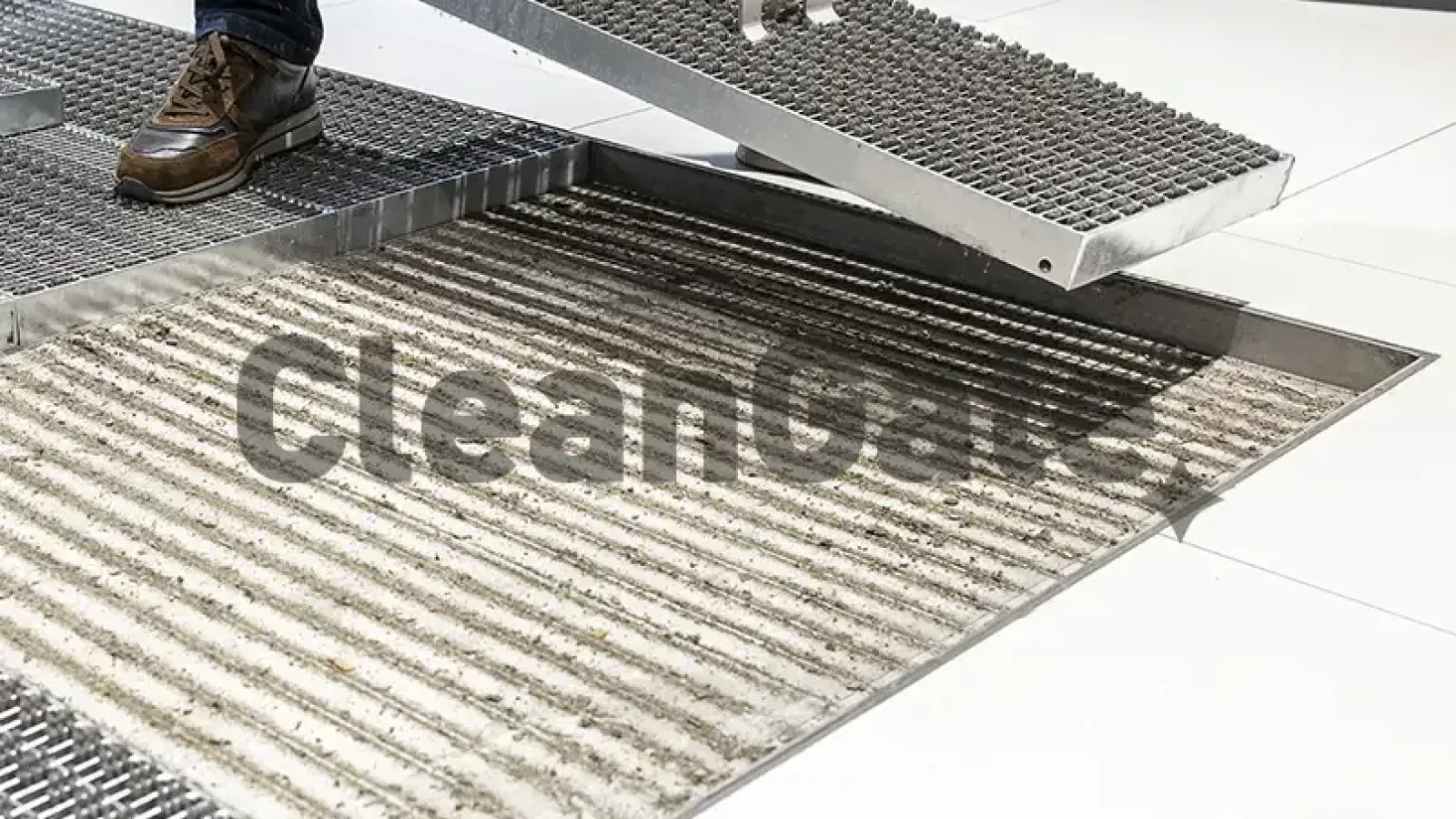
An active system does not remove maintenance. It makes it clearer: dirt collects below the modules, and the team can lift the grates for vacuuming or periodic cleaning.
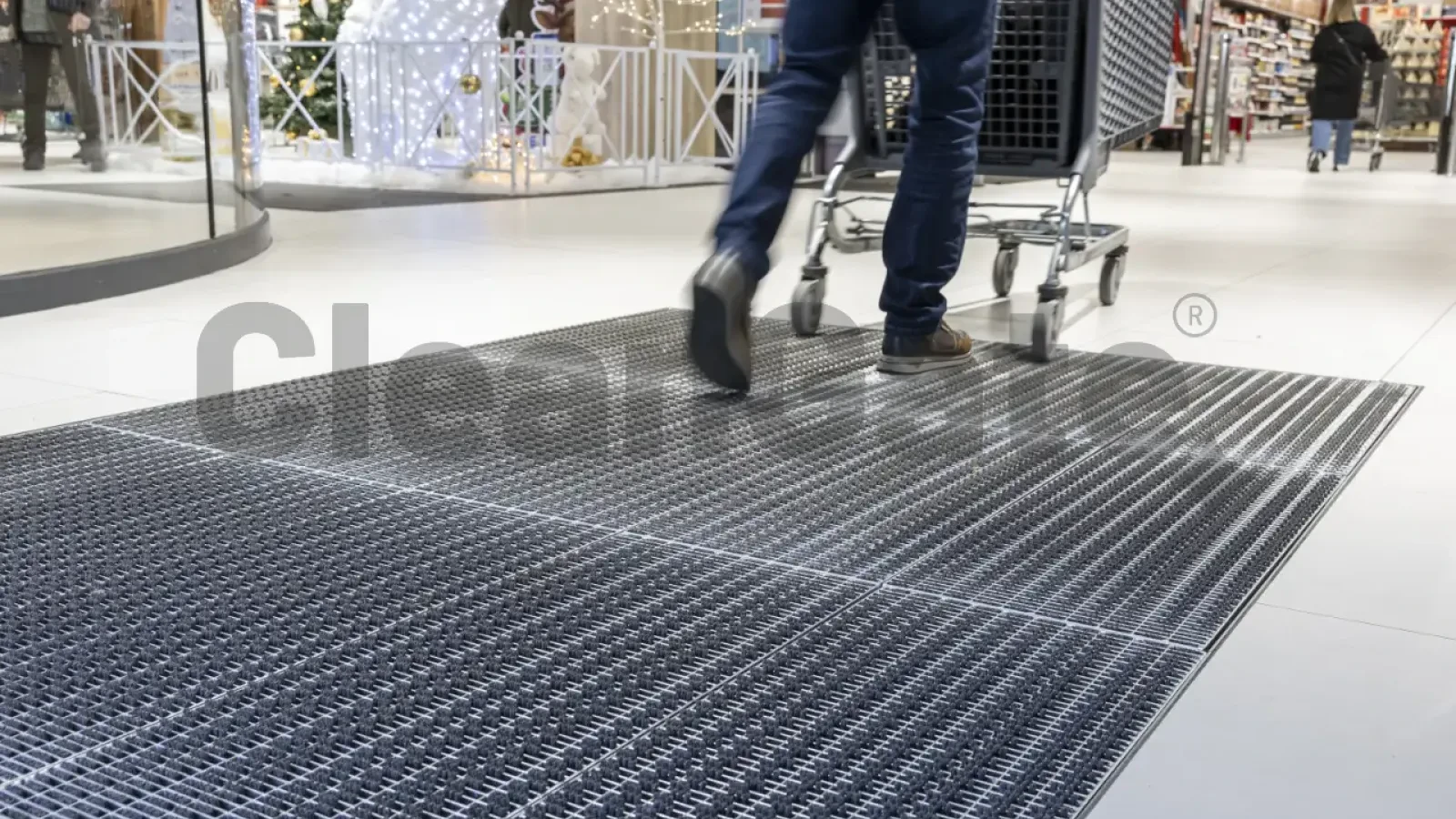
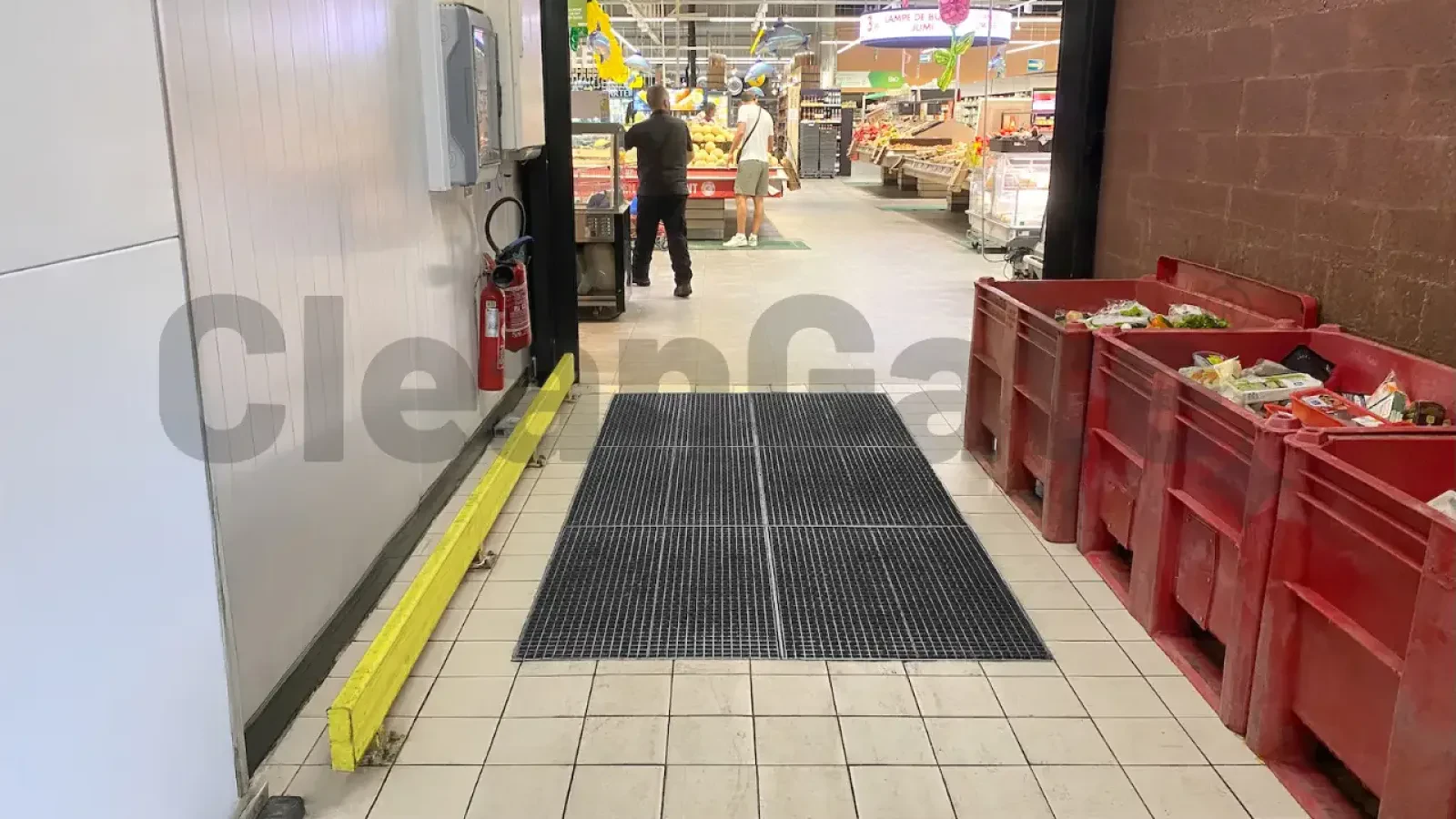
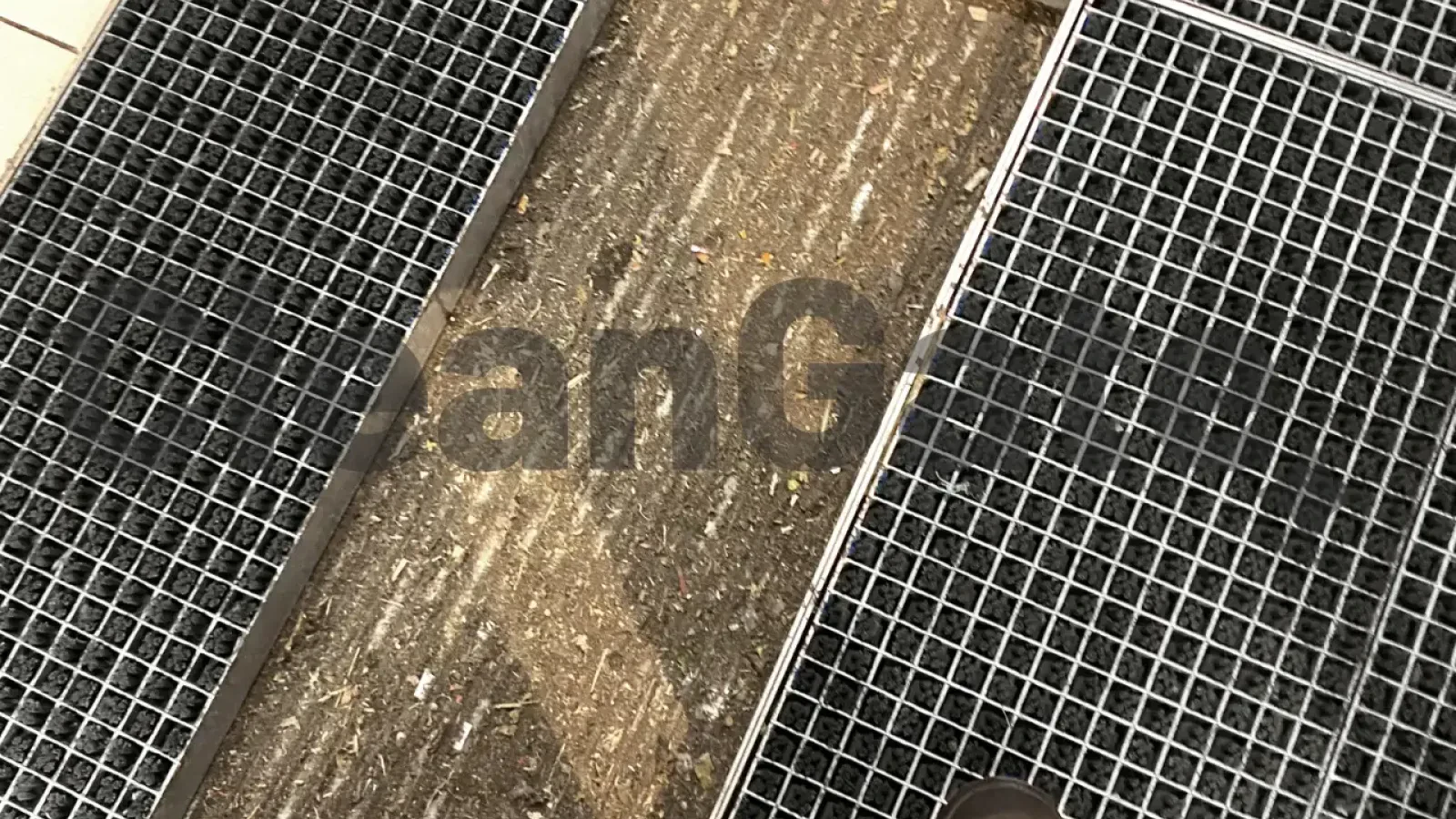
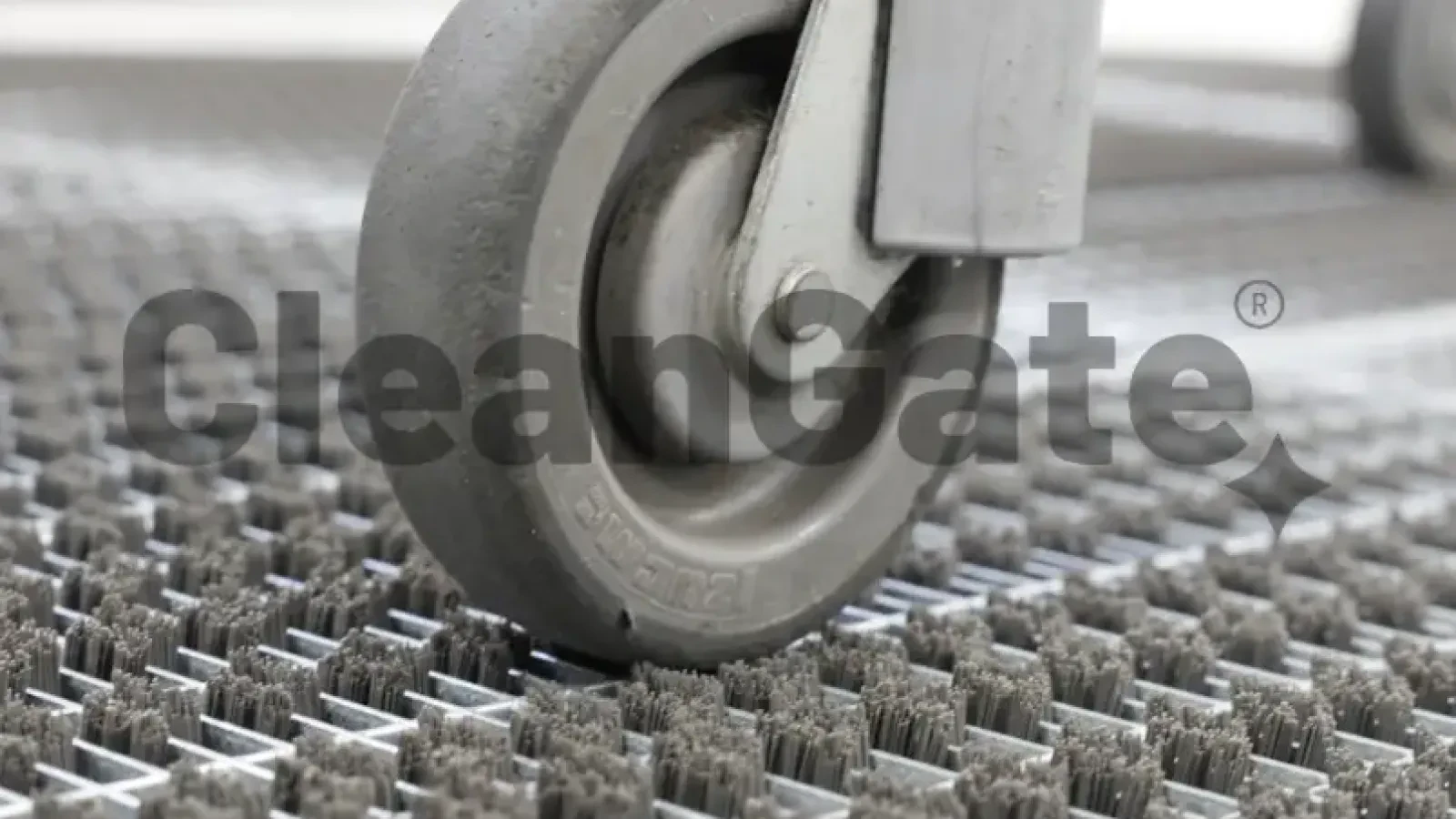
Photos from rainy or busy days usually show the entrance best: where people pass, where water stays, where marks appear and which areas are bypassed.
CleanGate makes sense for entrances where traffic can cross the active area naturally and the team can clean the modules within the usual facility routine.
First impressions count in the entrance area. CleanGate looks modern and keeps our white floor visibly cleaner.
Do you have an entrance where dirt travels too far?

Look at what happens after the entrance, not only on the mat. If water, grit, dust or salt move into the public area, if the team cleans the same zones several times per day or if the floor looks dirty straight after traffic peaks, the entrance should be reviewed as a system.
Other signals appear when carts bypass the mat, the contact area is too short or the surface saturates quickly on rainy days.
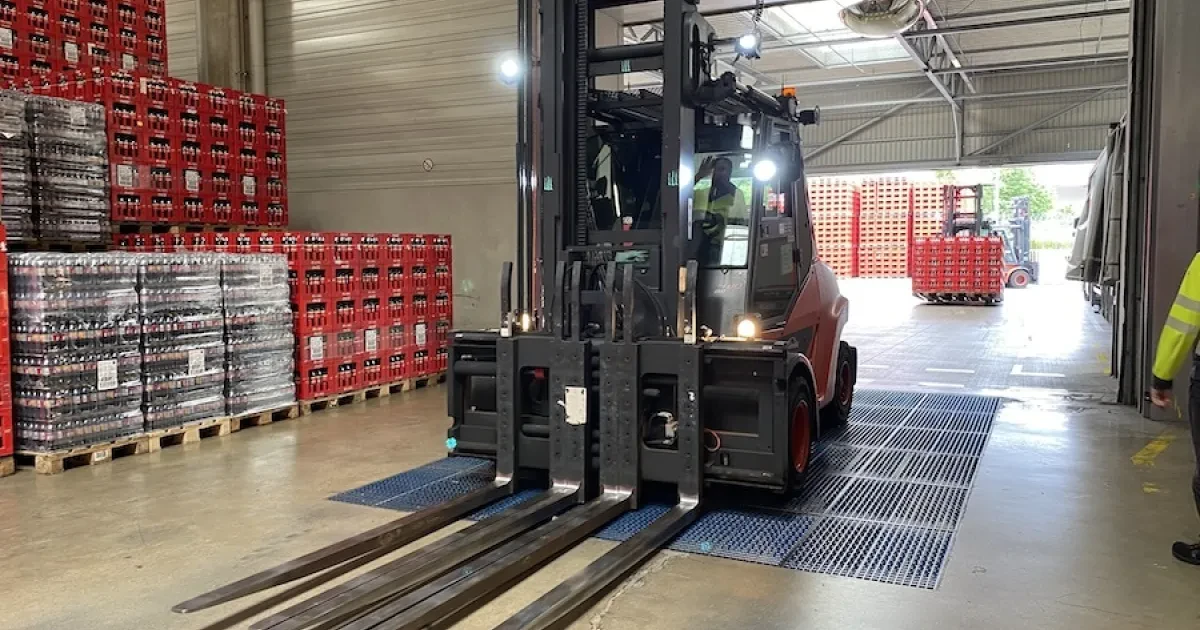
Small wheels on carts, trolleys or walkers carry dirt differently from footwear. They have narrow contact points, rotate quickly and can move particles further inside even when pedestrians cross a textile zone.
For selection, wheel diameter, cart volume, entrance behaviour and the possibility of guiding traffic without slowing the flow all matter.
They may be enough when the entrance is more protected, traffic is mostly pedestrian, the wiping zone has good length and the team can clean or replace surfaces on time.
In many buildings the stronger answer can be a combination: active cleaning for the first dirt and moisture load, then textile or aluminium for drying and final appearance.
In the E.Leclerc case, the 8.7 kg collected over 3 months makes part of the daily entrance load visible. For the store team, the figure shows what can be stopped before dirt reaches the public area.
The collected material also supports maintenance planning: when the system should be cleaned, how the load changes by season and what happens when cart traffic is more intense.
Before quoting, door position, available length, thresholds, drainage, cleaning access, emergency routes and behaviour on rainy or snowy days should be clear.
A short visual pack helps: photos from both directions, a simple sketch, cart types and a few observations from peak hours.
With photos, dimensions, traffic types and the current cleaning routine, the direction becomes clearer: CleanGate, a combination with textile or aluminium, a route change or a simpler measure.
The objective is to reduce dirt travelling into the customer-visible area and make the maintenance routine easier to control.