Heavy carts on the same route
When the same move happens every day between production and the buffer area, manual effort becomes process cost.

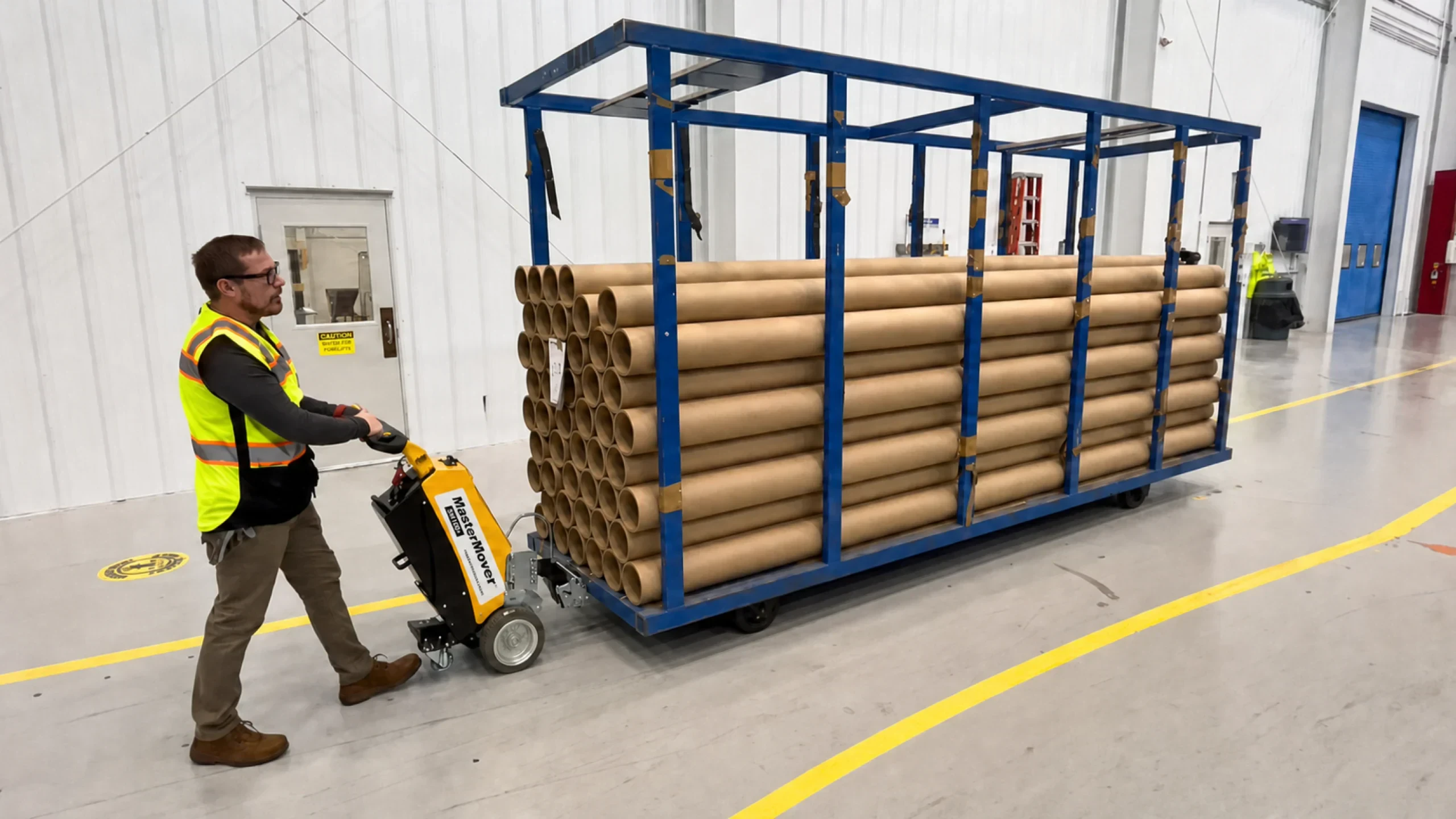
In a MasterMover application for a Fortune 500 plastic products and packaging manufacturer, heavy carts carried materials from manufacturing to a buffer area before storage or dispatch. Some reached 2,000 kg and were still being moved by hand.
In production, many wheeled loads do not need a forklift. They do not need lifting, stacking or truck loading. They need predictable movement from one area to another, several times a day.
That is where electric towing equipment can help: the operator no longer pushes the cart mass by hand, movement starts with more control, and the route can fit the team routine more cleanly.
The case is relevant for manufacturing, packaging, automotive, plastics and areas where heavy carts move frequently on known routes.
The application starts from a situation many factories recognize: process carts carrying materials from manufacturing to a buffer area before storage or dispatch, day after day.
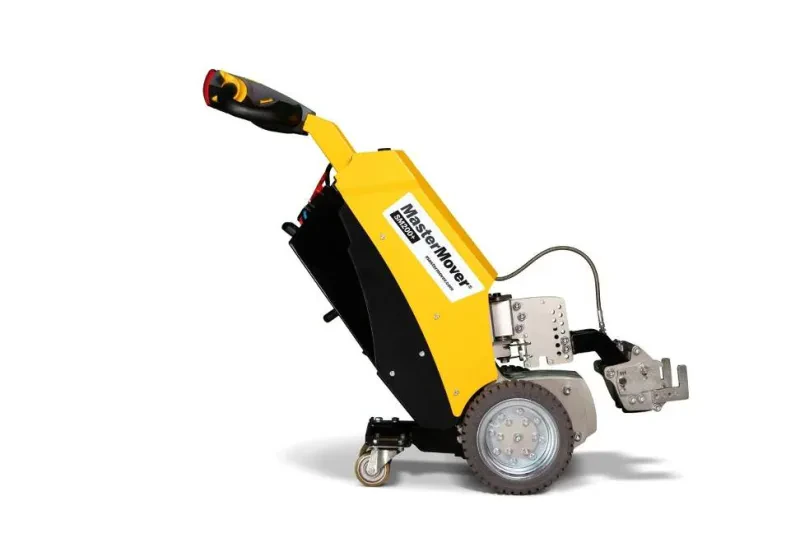
The SM200+ takes over the starting and towing effort. The operator directs the movement instead of pushing the cart mass. The difference is felt at every start, turn and stop.
The official video shows the real case context: a SmartMover SM200+ towing a heavy cart through the plastic manufacturer’s production flow.
In the internal assessment reported by MasterMover, the operation’s score rose from 4 to 9 after manual pushing was replaced with electric towing.
The distance from production to the buffer area, turns, thresholds and stopping zone decide how easily the equipment will fit daily work.
If the route passes through narrow aisles or pedestrian areas, low-speed control matters more than transport speed.
Weight tells only part of the story. Wheels, frame, centre of gravity and coupling point can make a load easy or difficult to control.
A short video of the current method quickly shows whether the discussion is about effort, grip, coupling or manoeuvring space.
A good movement should not depend on operator strength or an improvised manoeuvre. It should be easy to repeat and explain.
For MasterMover projects, an application demonstration matters because it checks load, wheels, route and operator together.
Do you have heavy carts pushed by hand between production and a buffer area?

Look for heavy carts moved by hand on the same route: from production to a buffer area, from packaging to warehouse, between lines or toward an internal transfer zone.
The application becomes clearer when the load stays on the floor, has wheels, repeats frequently and operators use their body to start, steer or brake.
The score is the site’s internal assessment of the operation before and after mechanising the movement. In the article, the figure works as a signal of change in that application, not as a standard scale for every factory.
For this type of project, read the figure together with the practical change: operators no longer push heavy carts by hand, starting and stopping become more controlled, and forklifts can stay available for work that actually needs lifting.
The model is checked against the application. Total weight, wheel diameter, wheel material, floor, slope and coupling point all matter.
If wheels are worn, too small or hard to steer, the project may also require cart changes. Sometimes the right equipment is not the first model discussed, but the one that fits the real load.
The forklift remains right when you need lifting, stacking, truck loading or frequent changes between load levels.
If the load stays on wheels and the route is relatively stable, compact electric towing should be compared. The goal is not to remove forklifts from the factory, but to use them where lifting really matters.
A good demonstration needs the real load or a correct equivalent. Otherwise, the conclusion can be too optimistic or too weak.
Prepare:
The case comes from plastic products and packaging, but the same logic appears in automotive, industrial production, packaging, internal logistics and maintenance.
Wherever heavy carts move frequently, the question is the same: do operators really need to push, or can the load be towed with more control by compact electric equipment?