Sheets change often
The real cost is not only the mat, but change time, consumables, waste and replacement discipline.

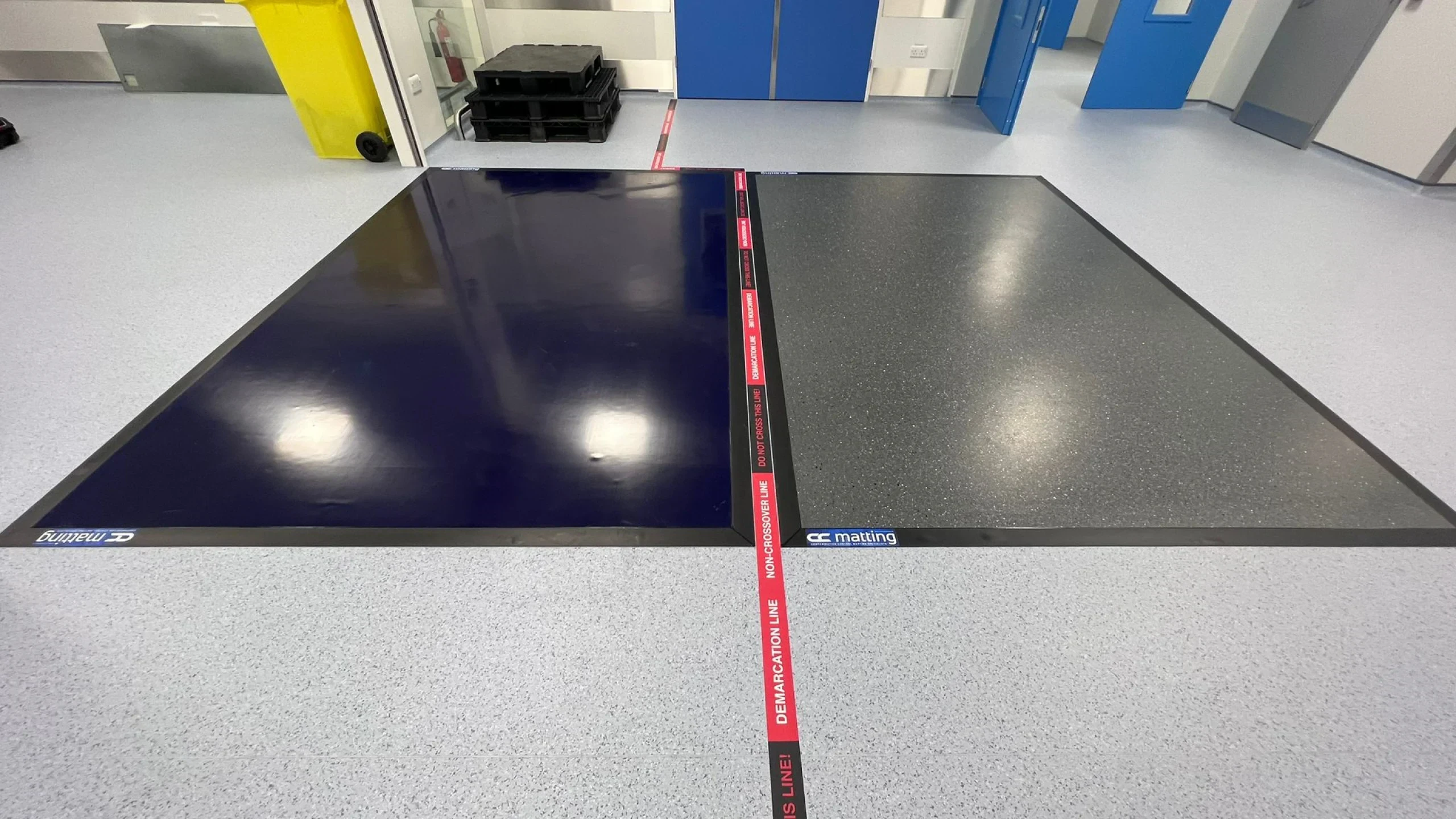
Peel-off mats are easy to introduce, but in many clean areas they become a consumable that is hard to defend: frequent sheet changes, waste, short contact length and results that depend heavily on discipline.
In cleanrooms, laboratories, pharma, electronics or clean packaging, dust and particles do not only come from the process. They can enter on soles, light wheels, carts, trolleys or mobile containers moving between areas with different expectations.
If sheet changes become frequent, if the point is bypassed, if marks remain after traffic or if quality needs clearer documentation, the decision should move from “add another adhesive mat” to “how do we control this transfer point”.
CC Matting is a washable polymer contamination-control mat with ISO Class 5 material documentation and an available technical file. Antibacterial properties are checked for hygiene applications and antistatic data for ESD areas, according to the documented variant. Room class remains tied to the operator procedure, monitoring and validation.
Polymer mats fit best where traffic can cross the surface in a controlled way and mat cleaning is part of the area routine.
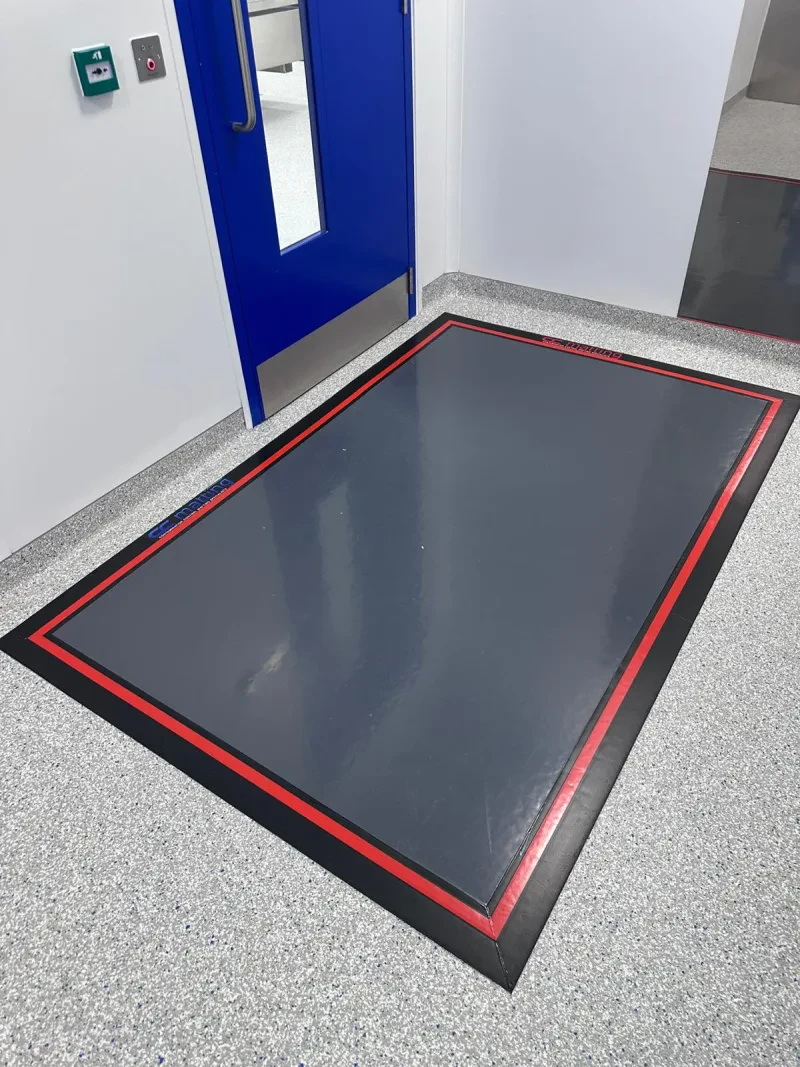
An adhesive mat can be enough for low traffic, temporary zones or simple entrances. When the point is permanent and sheets are changed often, the comparison should include consumables, waste, real contact and cleaning routine.
CC Matting changes the logic: the surface stays in place, is cleaned and returns to service. That needs a clear owner, but reduces dependency on continuous sheet changes.
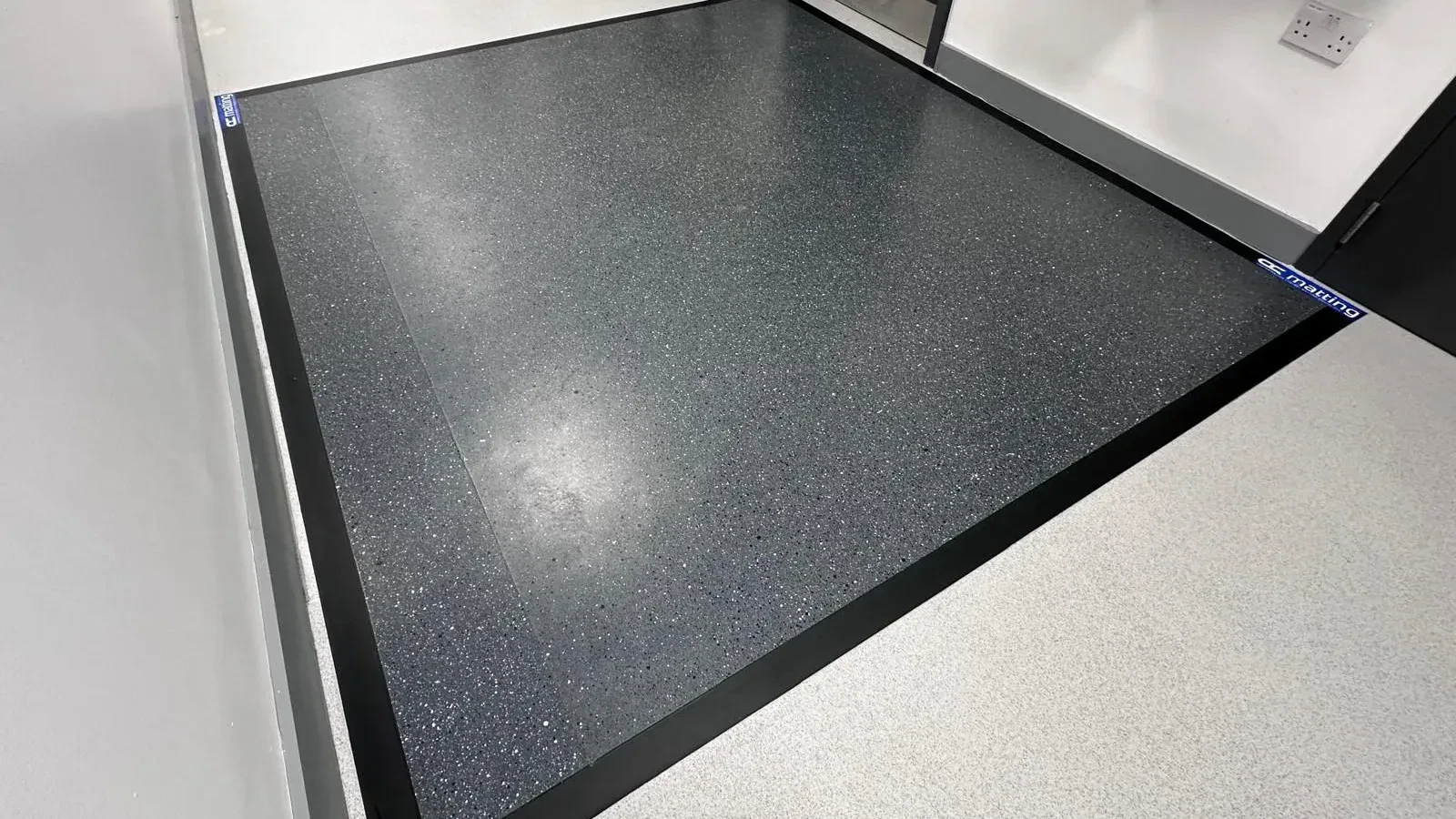
Around cleanrooms there may be airlocks, air showers, gowning, pass-throughs, UV or HEPA filtration. Polymer matting complements that logic at floor level, on the route of soles and light wheels.
Selection should stay tied to the real area: where traffic enters, which particles can be carried, how the surface is cleaned and what documentation quality, validation or the internal procedure needs.
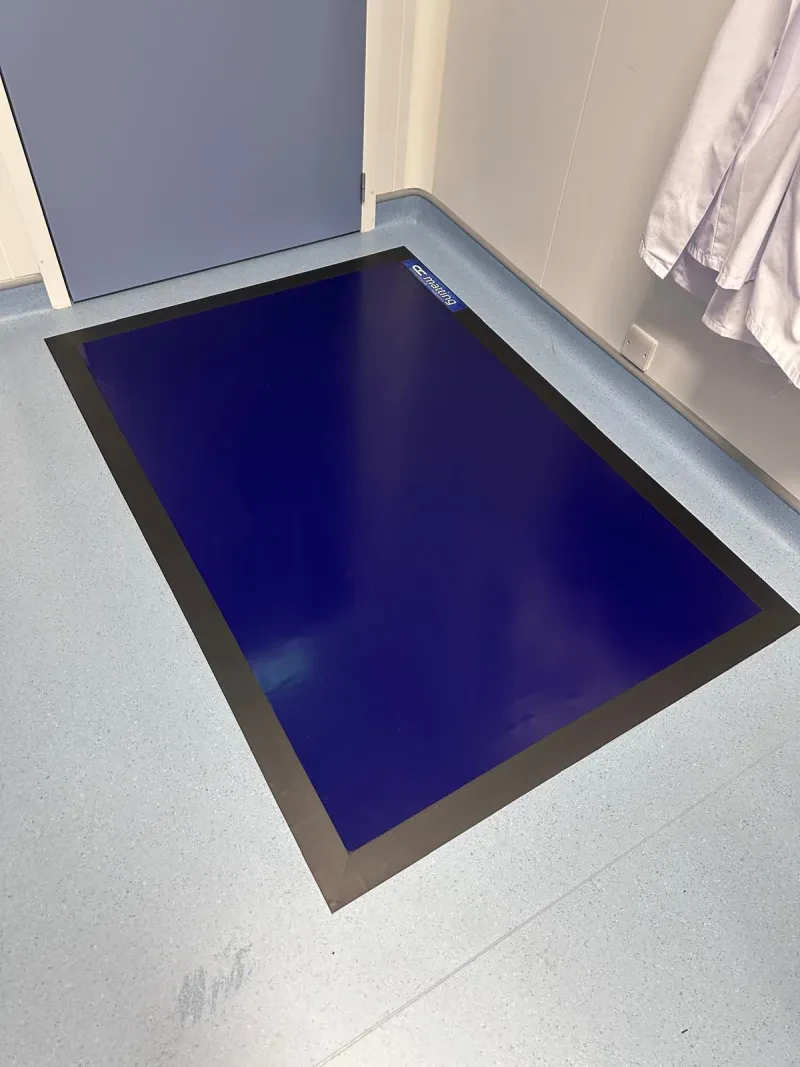
Light wheels and trolleys can be strong applications when they cross straight over the surface with enough contact. Wheel diameter, material, load, crossing direction and turning change the choice.
For forklifts, powered pallet trucks or aggressive traffic, compare with active route cleaning and test the application. A polymer mat should not be sold as the universal answer for every wheel.
The surface should sit where steps and wheels naturally cross it. If bypass is easy, performance drops regardless of material quality.
Length and width follow number of steps, wheel rotations, traffic direction, doors, edges and available space.
A reusable polymer mat only has an advantage when cleaned correctly. It should be clear who cleans it, how often, how residue is removed and when the surface returns to service.
In pharma, medical or cleanroom contexts, cleaning should align with the internal procedure, not remain a maintenance detail.
For CC Matting, available technical documents matter: ISO Class 5 material, CE/DoP, RoHS/SVHC, material data, cleaning instructions and, for electrostatic-control applications, the documented variant’s antistatic information.
Product documentation supports selection and internal audit. Room class and process compliance are established through the operator procedure, monitoring and validation.
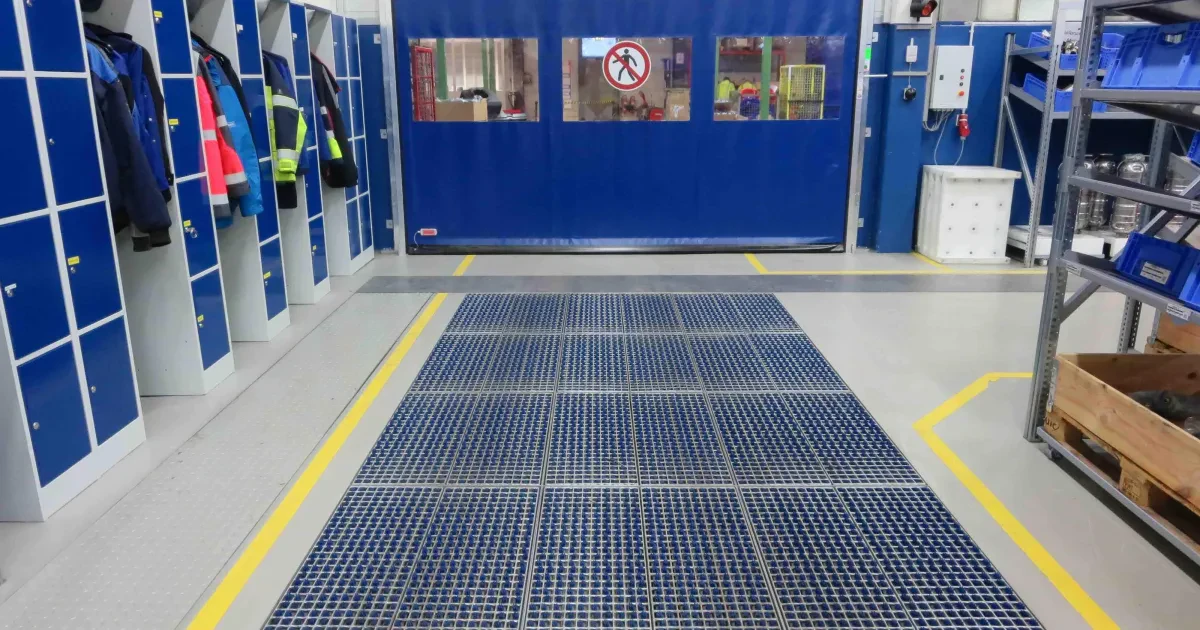
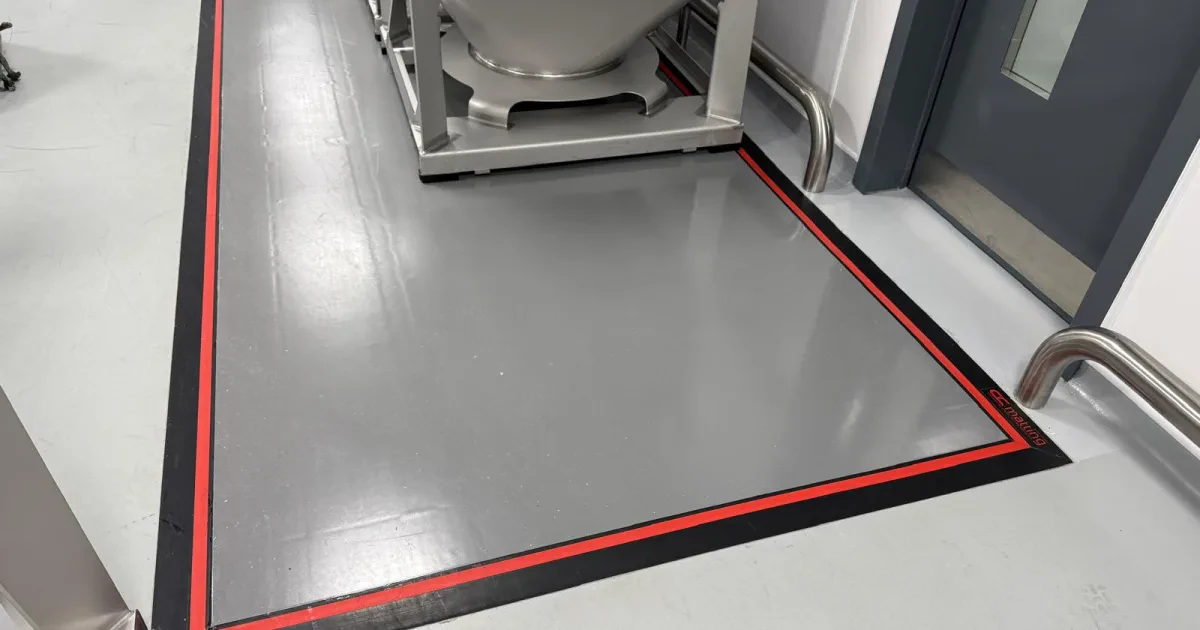
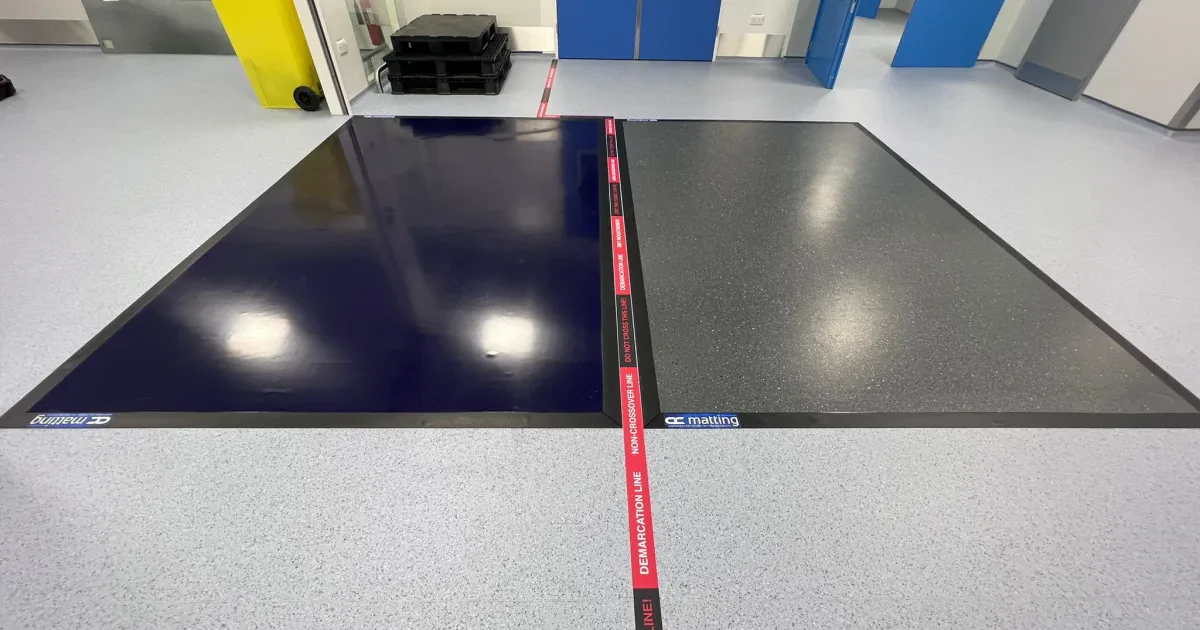
Do you have a point where peel-off is no longer enough?

A peel-off mat is a consumable sheet system. CC Matting is a washable polymer contamination-control mat that stays in the transfer point and returns to service through cleaning.
For low traffic or temporary points, peel-off may still be enough. For permanent points with high sheet use, CC Matting should be compared.
The CC Matting polymer contamination-control mat fits controlled points with footwear, light wheels, trolleys and straight crossings. ProfilGate is stronger when the route needs active mechanical brushing, heavier industrial traffic or coarse wheel contamination.
Trolleys and light wheels are natural applications when they cross straight over the mat with enough contact. Heavier traffic needs closer review because vertical load, wheel type, turning, braking and shear change the result.
When forklifts or powered pallet trucks are involved, CCM Heavy Duty should not be treated as universal approval. We review the application and use a test where needed.
In CC Matting documentation, ISO Class 5 is connected to the material and test context for CCM Heavy Duty. For a project, this helps material selection, the quality discussion and validation of the transfer point.
The surface should be cleaned, residue removed and the area returned to traffic only when the mat is ready. Without an owner and frequency, the advantage over peel-off fades quickly.
A complete technical file is not needed to start. It helps to see the real point and its constraints.
With this, we can say whether the direction is quotation, application test or comparison with ProfilGate.