Wheels with visible dirt
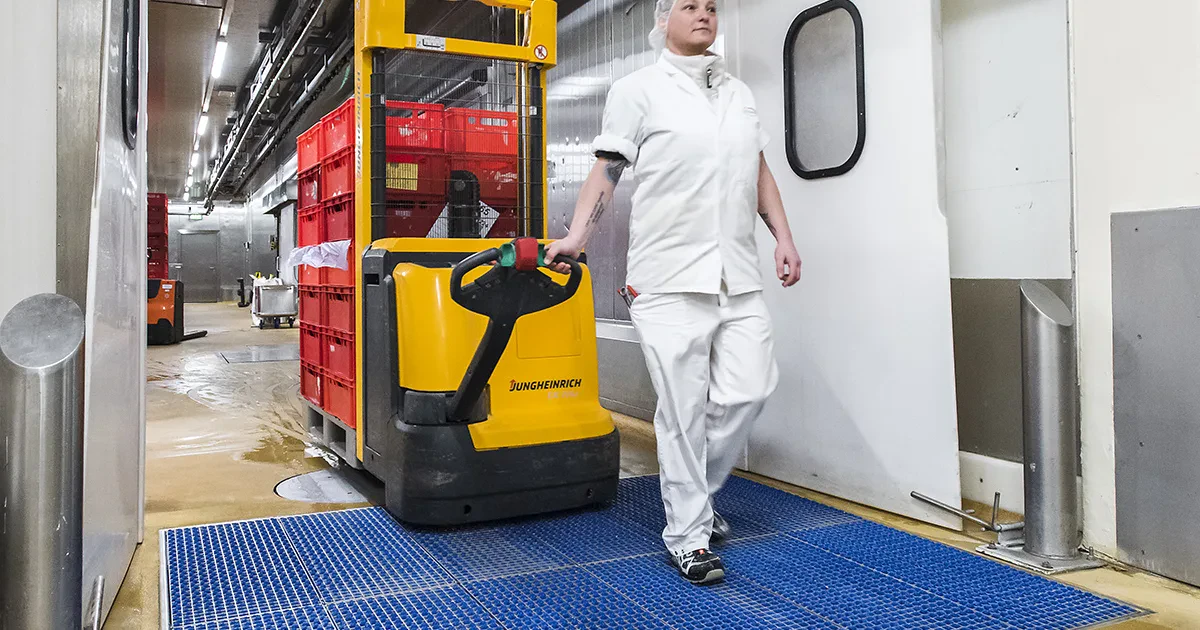
When particles sit in the wheel profile and traffic includes forklifts, pallet trucks or loaded wheels, active cleaning becomes the primary direction.

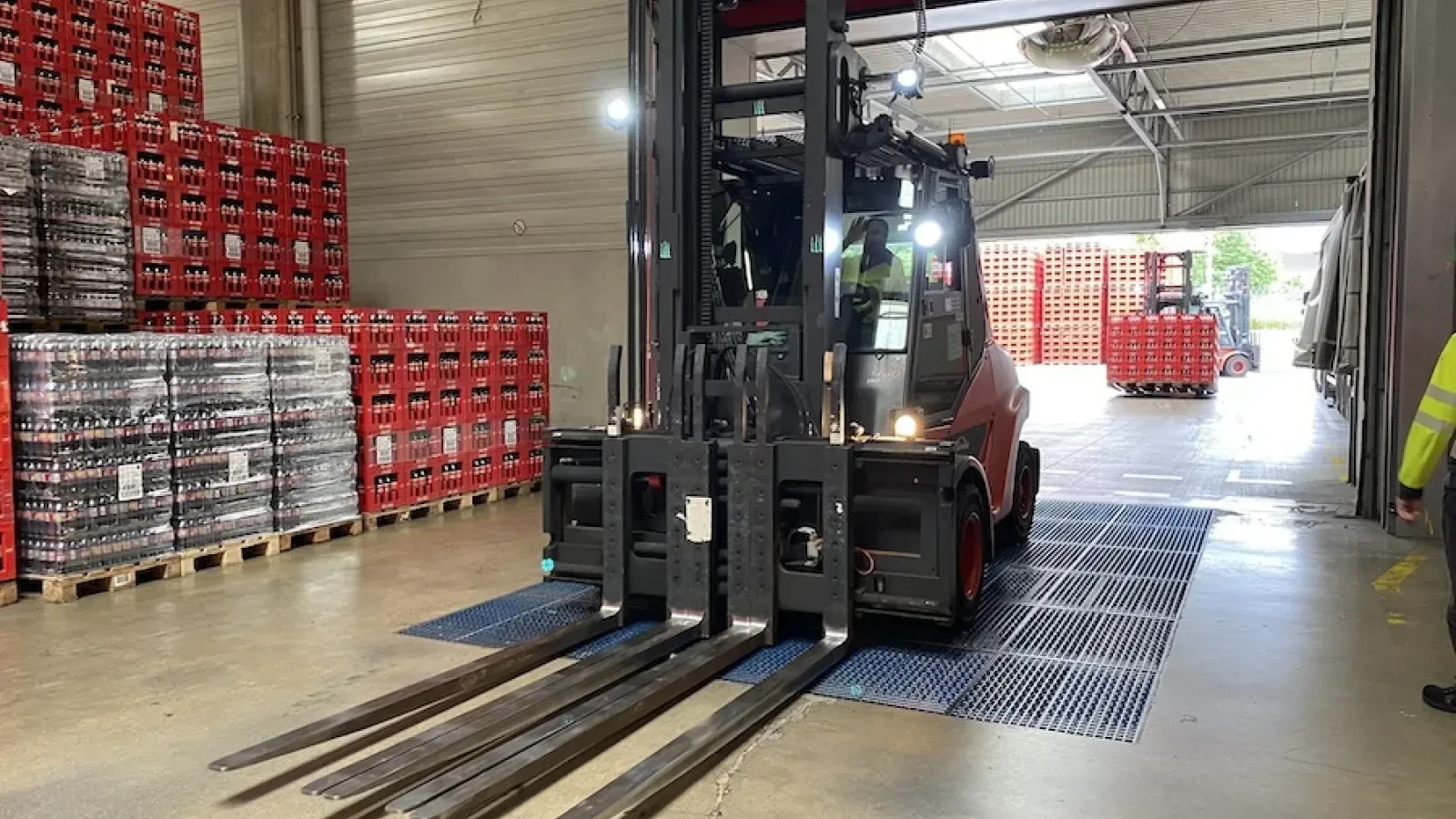
Contamination carried on a route does not need the same measure in every area. Sometimes particles sit inside wheel profiles and active mechanical brushing is needed. In other cases the traffic is footwear, light wheels or trolleys, and a washable polymer contamination-control mat may be the better direction.
In production, logistics, cleanrooms, pharma, electronics or packaging, the same signal can come from different mechanisms: forklift wheels with coarse dirt, footwear carrying fine particles, carts with small wheels, textiles leaving fibres or an entrance where people bypass the cleaning surface.
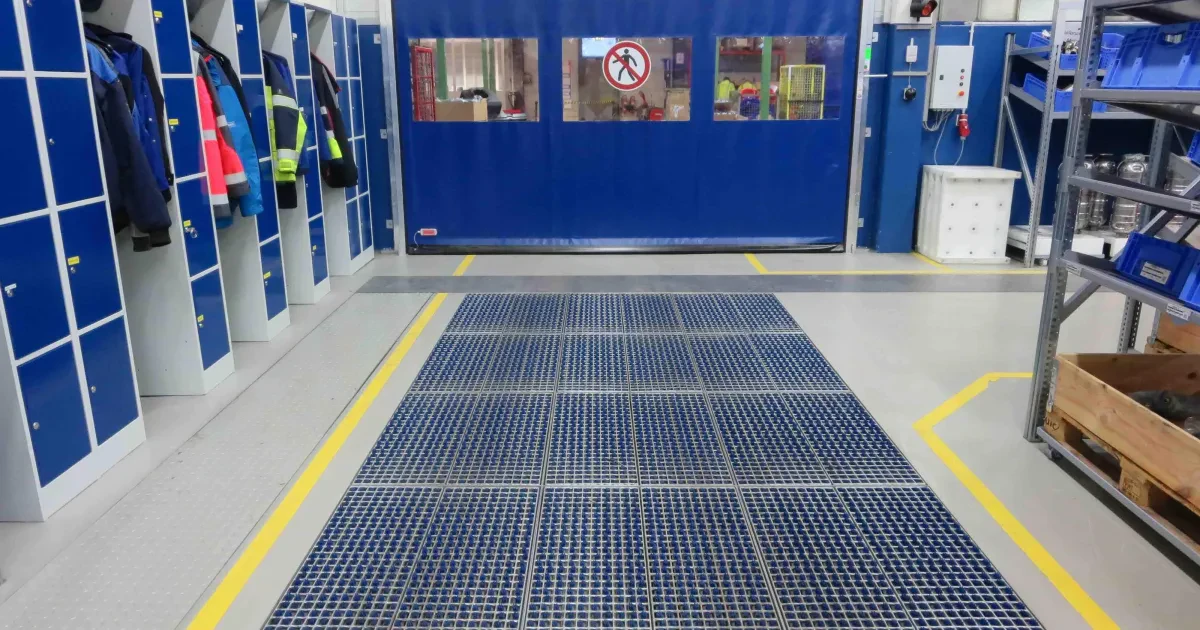
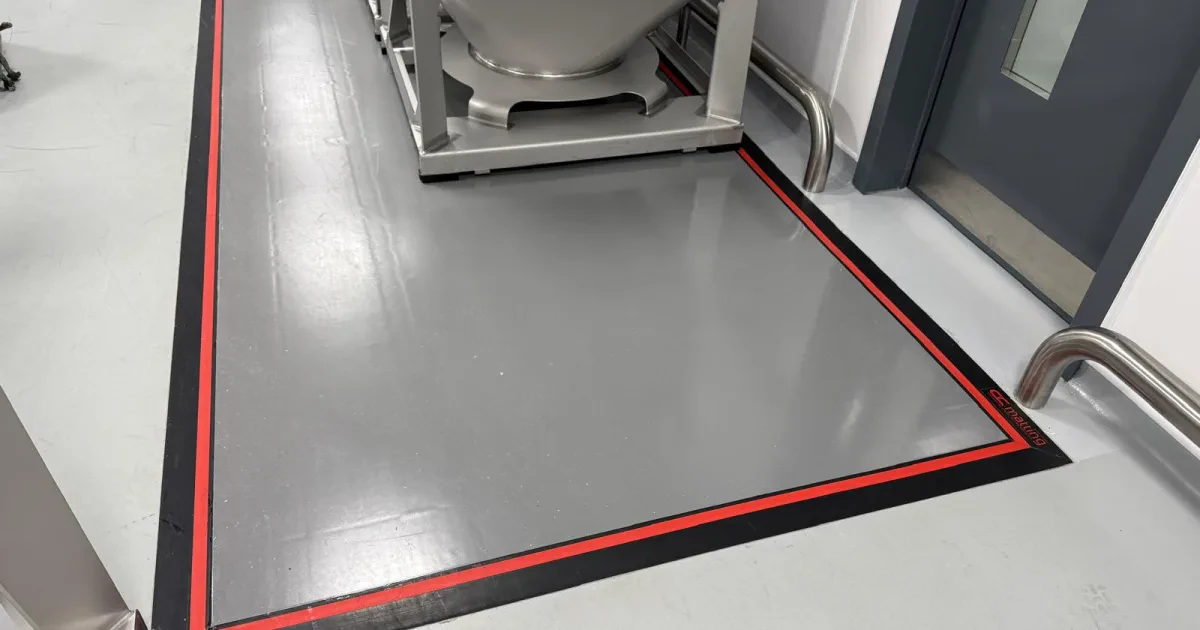
ProfilGate active cleaning works through mechanical contact with wheels, rollers and soles. CC Matting is a reusable polymer contamination-control mat for transfer points where traffic naturally crosses the mat and cleaning is part of the area routine.
In many applications, both directions can appear in the same project. The key is whether the point is outside-to-inside, warehouse-to-production, cleanroom entry, personnel entrance, trolley route or an area where material documentation matters.
The right point follows the mechanism: what carries contamination, how contact happens and which routine can be maintained after installation.
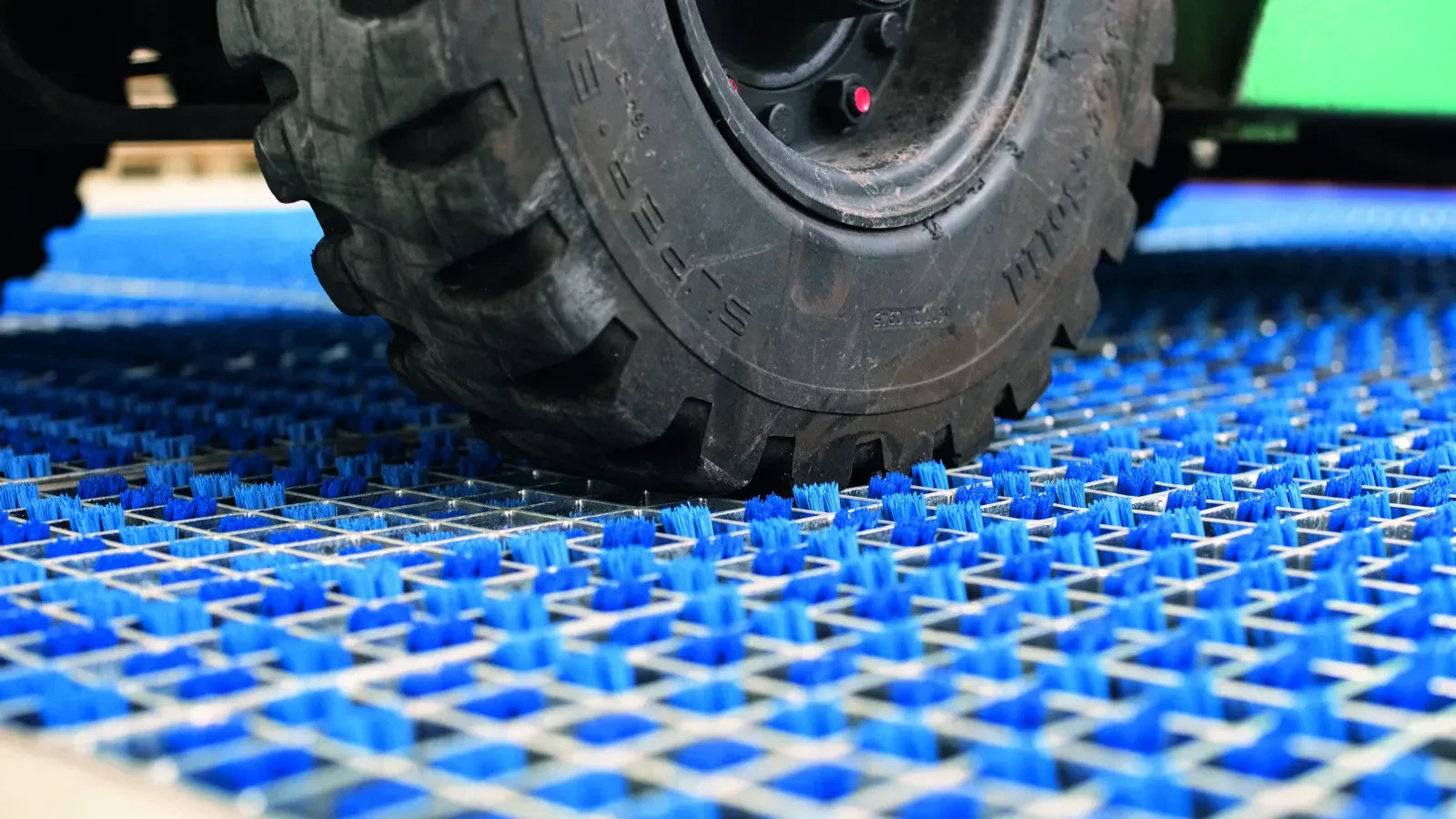
ProfilGate fits routes that need mechanical action: brushes, grating, useful length and repeated contact with the wheel or sole. This matters especially where particles are coarse, stick to wheel profiles or arrive from outside, warehouse or industrial traffic.
Direction is checked through traffic, wheel type, real contamination, crossing speed, bypass risk and system-cleaning routine.
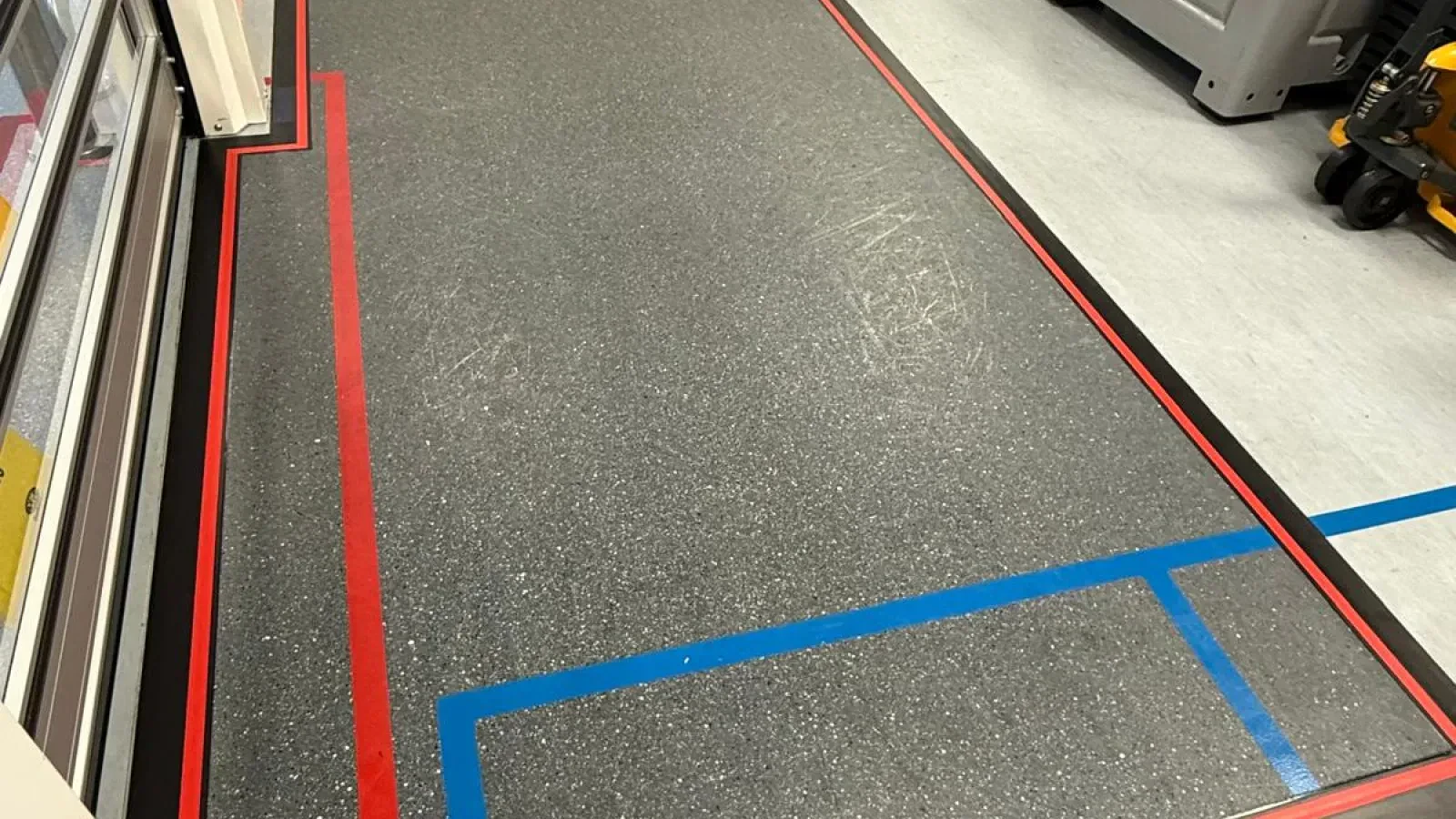
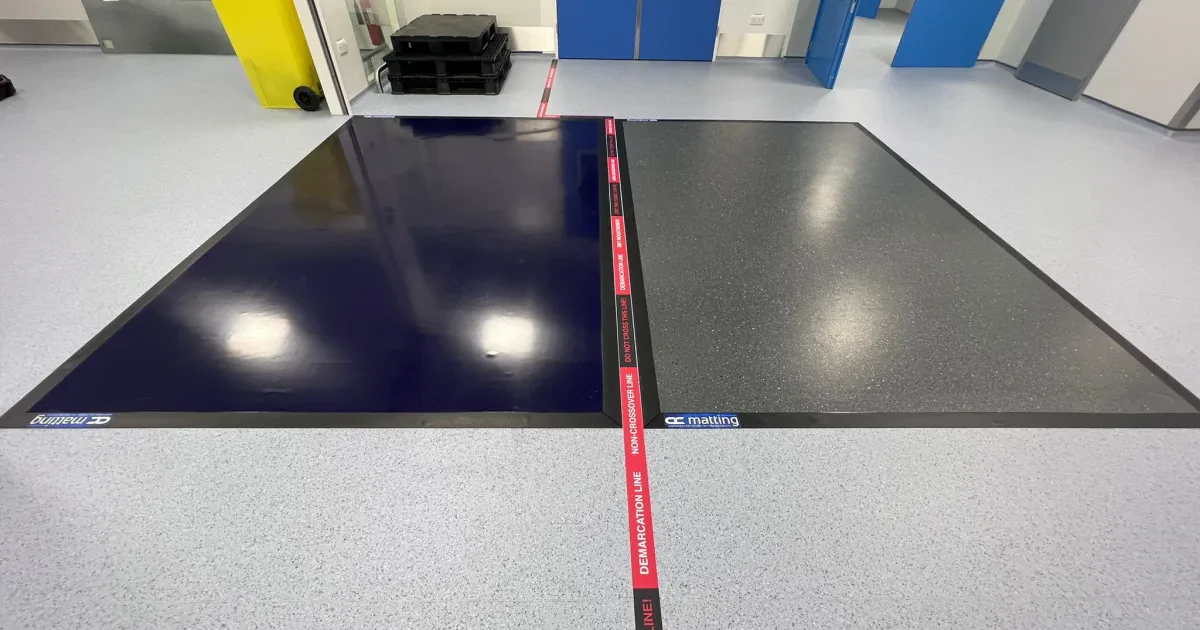
CC Matting fits where contamination is mainly carried by footwear, light wheels and trolleys, and the point allows enough contact on an installed surface. The difference from peel-off is the routine: the surface is cleaned and returns to service.
Selection is linked to length, width, bypass, cleaning frequency, area owner and the documentation needed for the material and procedure.
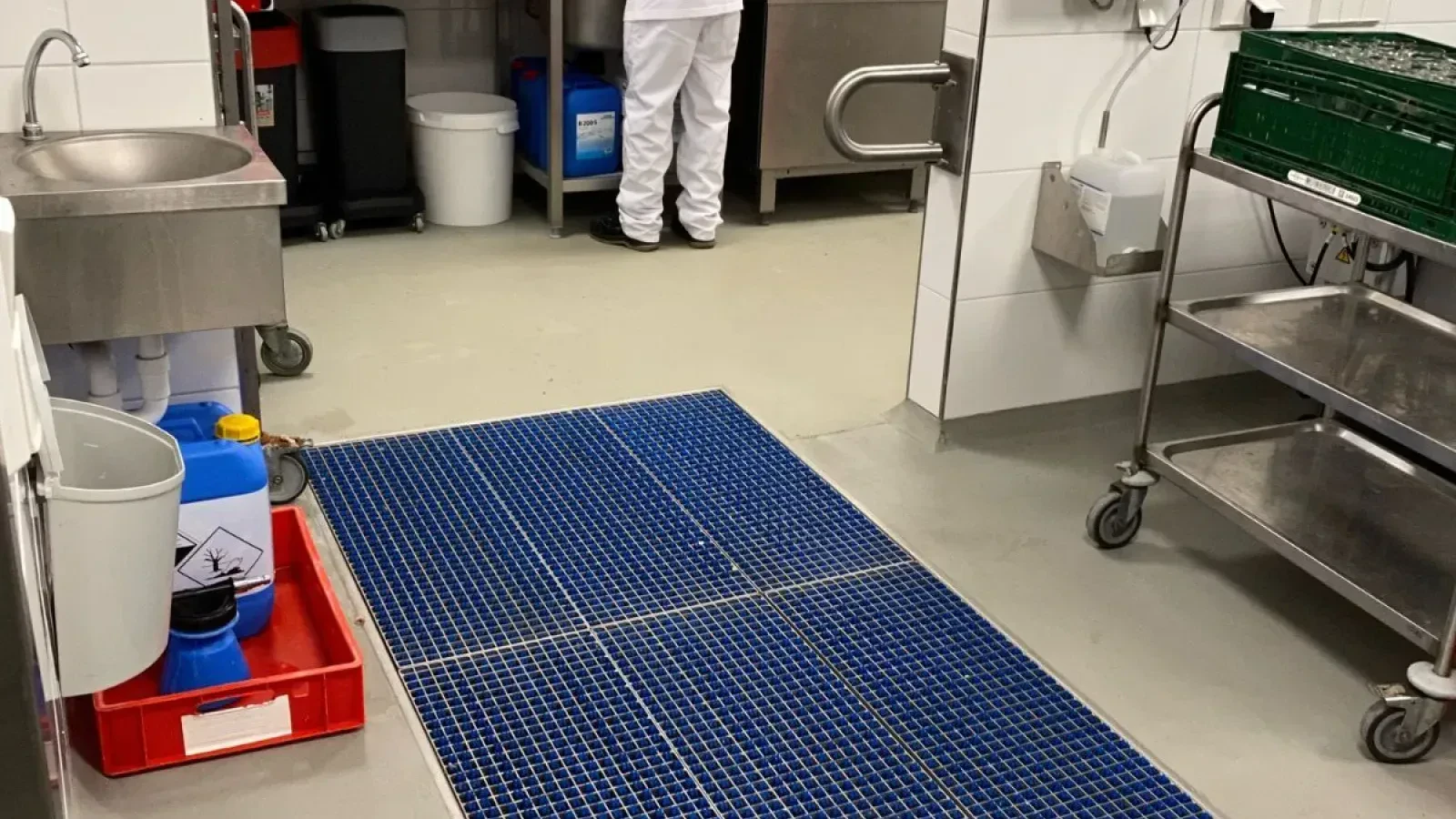
Some points combine heavier wheels, pedestrian traffic and cleanliness expectations. The decision should not be forced into one product family. Separate the traffic, check the natural route and decide whether the point needs active cleaning, polymer matting or two measures in different zones.
A good comparison reduces the risk of buying the right product in the wrong place.
The first data set is the route: who crosses, with which wheels, where the traffic comes from and whether the point can create contact without bypass.
Active cleaning has an advantage when the wheel needs mechanical action. Polymer matting has an advantage when contact is sufficient, traffic is lighter and the surface can be cleaned consistently.
Every control point needs a routine. If no one cleans, checks or documents the measure, performance drops regardless of technology.
In clean areas, pharma, medical or electronics, material documentation, cleaning instructions and alignment with the internal procedure can matter as much as the physical product.
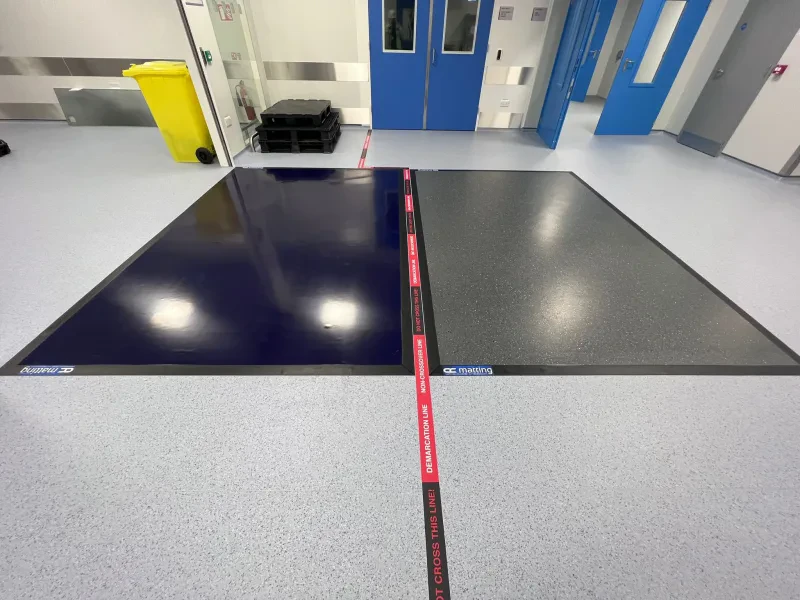
How to choose between peel-off adhesive mats, reusable polymer matting and active route cleaning in cleanrooms and controlled environments.
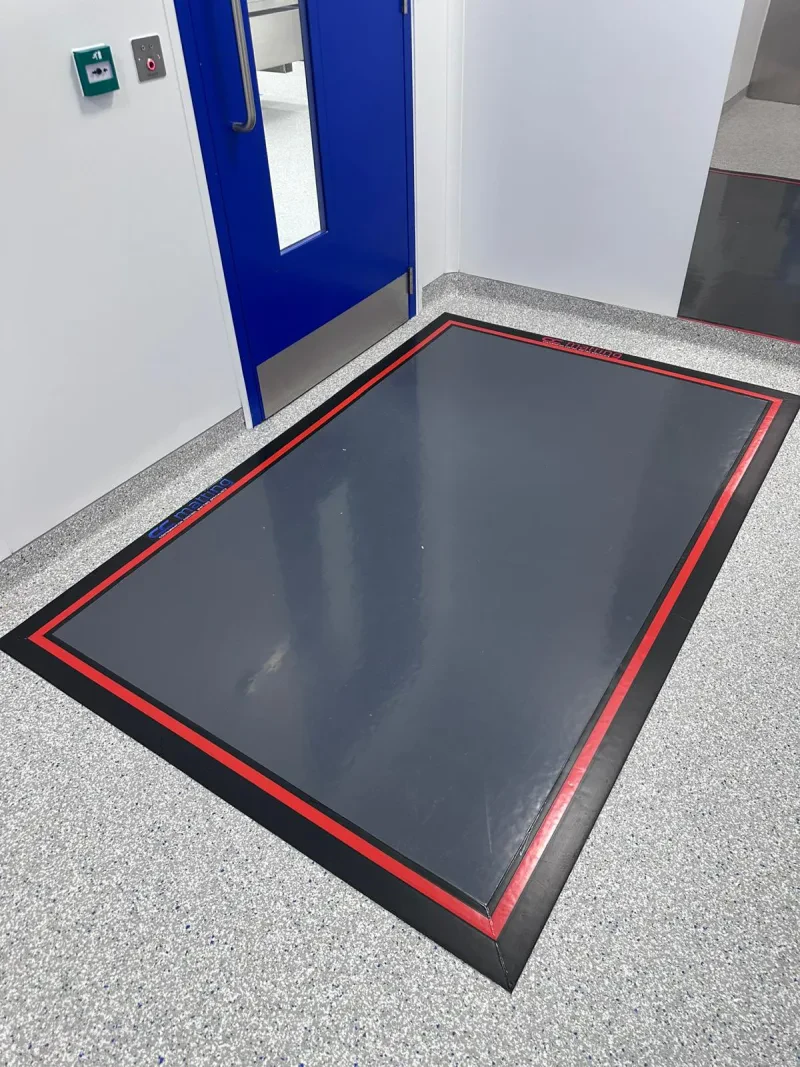
How to use CC Matting Heavy Duty documentation when the area needs ISO Class 5 material, particle control, clear cleaning and quality traceability.
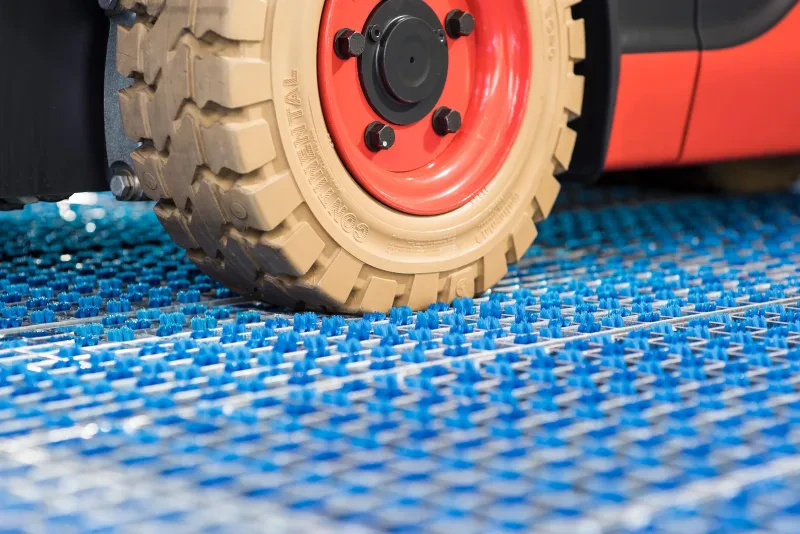
A practical guide for routes where wheels, casters, carts and soles can carry dirt or contamination between food-production zones.
Do you have a point where active cleaning and polymer matting both seem possible?

Active cleaning becomes the primary direction when contamination remains trapped in a wheel, roller or sole and simply crossing a surface is not enough.
ProfilGate is checked especially where the route can guide traffic across the active field and the system can be cleaned as part of the area routine.
Reusable polymer matting fits controlled points with footwear, light wheels, trolleys or carts crossing straight over the surface.
CC Matting becomes relevant where the point is permanent, peel-off consumables create cost or waste, and the team can include mat cleaning in the area routine.
Weight alone does not decide. Wheel type, load, crossing direction, turning, braking, shear and contamination type all change the direction.
If the vehicle turns or brakes on the surface, the application needs closer review regardless of product.
ISO Class 5 documentation helps in discussions about material, particles and selection for controlled areas. Area class and validation remain tied to the operator procedure, monitoring and internal criteria.
The practical wording stays clear: the product can support the control strategy, while room class or process compliance is established through the site procedure.
Outside-to-inside usually means dirtier wheels, moisture, sand or coarse particles. Cleanroom or controlled-area entry often means fine particles, documented material, controlled cleaning and a verifiable routine.
That is why a logistics route may need active wheel cleaning, while an entry into a controlled area may need polymer matting, sole hygiene or a combination of points.
A first orientation only needs a few concrete details about the real point.
With this information, the direction can be set faster: active cleaning, polymer matting, combined point or application test.